What is Arthrogryposis Multiplex Congenita?
Arthrogryposis Multiplex Congenita (AMC) is a rare congenital condition that is characterized by
an individual being born with multiple joint contractures, involving two or more areas of the body
(Khurana et al., 2024). AMC is a general term that describes over 400 different medical
conditions that involve joint contractures, instead of just describing one specific diagnosis
(National Organization for Rare Disorders, 2024). Although the exact cause of AMC is still
unknown, the condition has been linked to various genetic and environmental factors (Cleveland
Clinic, 2022). There are two types of AMC: Amyoplasia and Distal Arthrogryposis. Amyoplasia is
diagnosed when the contractures are in an individual’s limbs, and Distal arthrogryposis is
diagnosed when the contractures occur in an individual’s 手s and feet instead of their limbs.
What are the Symptoms of AMC?
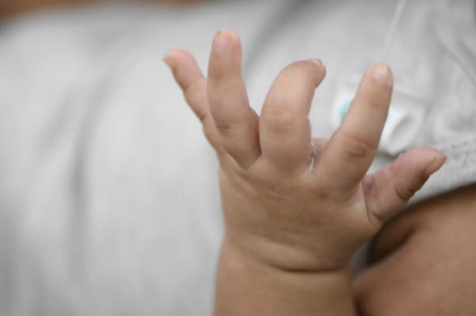
Symptoms of AMC and their severity vary from person to person, but there are some universal symptoms that are commonly seen in the majority of cases (Cleveland Clinic, 2022). Individuals born with AMC can have distinctive physical features like sloped shoulders, extended elbows, and curled wrists and fingers (Cleveland Clinic, 2022). Their joints seem frozen in place because they are fixed in curled or straightened positions.
Other universal symptoms of AMC include the following:
- Inability or limited ability to move small and large joints
- Hypoplastic, or underdeveloped, muscles
- Soft, tube-shaped limbs, and/or
- Soft tissue webbing over joints that keep them from moving
Along with those symptoms, individuals with AMC may have physical features like cleft palates
and/or undescended testes in males (National Organization for Rare Disorders, 2024). Also,
depending on other underlying conditions, an individual may also experience issues connected
to their central nervous system. It is important to note that the contractures will not spread to
previously unaffected joints in the body; however, they can change due to natural growth of the
individual or from therapeutic interventions.
What Does Treatment Look Like for Hand Contractures from AMC?
手 therapy is recommended as a non-surgical treatment for AMC-related 手 挛缩
to improve joint range of motion (ROM) and reduce muscle atrophy (Cleveland Clinic, 2025;
National Organization for Rare Disorders, 2024). Non-surgical treatment for AMC should begin
in early infancy to maximize progress due to newborn tissue being more flexible and responsive
to gentle stretching and early 夹板固定/bracing (John Hopkins Medicine, 2024; Paley Orthopedic
& Spine Institute, 2025). During the first few months of therapy, the focus is on stretching to
increase joint ROM and stimulating muscle activity in the patient (Paley Orthopedic & Spine
Institute, 2025). Since frequent and consistent stretching is essential, weekly therapy sessions
alone is not sufficient; therefore, parent and caregiver education is critical, so they can perform
gentle consistent stretching on their child with AMC at home. In therapy, therapists can also
provide splints for prolonged stretching, functional positioning, and stiffness prevention, and therapists can educate families on how to adapt and modify daily tasks to support independence
as the child grows up.
There are also surgical interventions like soft tissue releases, osteotomies and bony
procedures, muscle/tendon transfers, and/or limb lengthening or amputations that can be
beneficial to individuals with AMC (Paley Orthopedic & Spine Institute, 2025). If an individual
decides to have surgery, 手 therapy can be beneficial to do in preparation for surgery and for
post-op rehab afterwards.
手 therapy will continue throughout childhood for a child with AMC, so therapy might just be a
few sessions for the child and their parent or caregiver to get the tools they need to manage the
symptoms from home. Then when symptoms progress or change, they can come back to
therapy for a few sessions to gather new tools they need to manage the new symptoms from
home. Treatment for 手 contractures related to AMC is not intended to completely correct
them. Instead, the goal for therapy is to maintain what the patient already has, and if possible,
achieve modest improvements that allow for better functional use.
Why Does this Matter to Occupational Therapists?
AMC occurs in 1 out of 3,000 live births, making it a very rare condition (Cleveland Clinic, 2022).
However, even though it is rare, there are still individuals in the world who are affected by it due
to their inability to function and effectively use their bodies to do tasks in their daily lives.
Specifically, joint contractures that occur in an individual’s hands can make it difficult for them to
independently participate in meaningful occupations like grooming/hygiene tasks, dressing,
eating with utensils, writing in school, playing outdoor activities with friends, etc. The inability to
complete these tasks due to this condition can decrease an individual’s quality of life. As
occupational therapists, this condition and how it is treated is important to know about, so
therapy can be successful and make positive changes in these individuals’ daily lives.
参考
Cleveland Clinic. (2022, May 18). Arthrogryposis. Retrieved November 30, 2025, from
https://my.clevelandclinic.org/health/diseases/23190-arthrogryposis
Johns Hopkins Medicine. (2024, January). Arthrogryposis. Retrieved November 30, 2025, from
https://www.hopkinsmedicine.org/health/conditions-and-diseases/arthrogryposis
Khurana, A., Taksande, A., Meshram, R. J., Damam, S., Javvaji, C. K., Desai, K., Patel, A., &
Khandelwal, R. (2024). Early diagnosis and management of arthrogryposis multiplex
congenita in a neonate: A case study. Cureus, 16(5), e60729.
https://doi.org/10.7759/cureus.60729
National Organization for Rare Disorders. (2024). Arthrogryposis multiplex congenita. Retrieved
November 30, 2025, from https://rarediseases.org/rare-diseases/arthrogryposis-
multiplex-congenita/
Paley Orthopedic & Spine Institute. (2025, June 2). Arthrogryposis: Treatment options and goals
for improving mobility. Retrieved November 30, 2025, from
https://paleyinstitute.org/arthrogryposis-treatment-options-and-goals-for-improving-
mobility/
更多阅读内容
腕骨骨折:简要概述
腕骨骨折占上肢骨折的 8%。腕骨位于(桡骨远端和尺骨)和掌骨之间。它们组成近端排——舟骨、月骨、三角骨和豌豆骨,远端排——梯形、梯形、头状骨和钩状骨。以下是一些最常见的腕骨骨折:舟状骨……
手和前臂受伤后肘部、肩部和颈部肌肉骨骼疾病的发生率是多少?
Winiarski, LM、Livoni, JD、Madsen, PV、Rathleff, MS 和 Larsen, P. (2021)。常见手部和前臂损伤或病症后肘部、肩部和颈部并发肌肉骨骼疾病:一项针对 600 名患者的横断面研究。手部治疗杂志:美国手部治疗师协会官方期刊,34(4), 543–548。 https://doi.org/10.1016/j.jht.2020.05.002 瘦子:…
不同拉伸技术对改善关节活动范围的效果。
参考文献:Oba, K.、Samukawa, M.、Abe, Y.、Suzuki, Y.、Komatsuzaki, M.、Kasahara, S.、Ishida, T. 和 Tohyama, H. (2021)。基于持续时间匹配方案的间歇和连续静态拉伸对运动范围和肌腱粘弹性特性的影响。国际环境研究和公共卫生杂志,18(20), 10632。https://doi-org.libproxy.nau.edu/10.3390/ijerph182010632 瘦人:这项研究使用了交叉......
K 型胶带和脑瘫
Allah-Rastii, Z.、Shamsoddini, A.、Dalvand, H. 和 Labaf, S. (2017)。肌内效贴布对脑瘫儿童握力和手部主动活动范围的影响伊朗儿童神经病学杂志,11(4), 43-51。瘦:脑瘫是一种非进行性运动障碍,由发育中的大脑损伤引起,可以……

注册即可直接将更新发送到您的收件箱!
注册我们,我们将定期向您发送有关手部治疗的所有内容的博客文章、每次上传新视频和教程时的通知,以及讲义、协议和其他有用信息。