
Dog Bites to the Hand: What Every Hand Therapist Should Know
archivado en Tratos
What to Expect with a Dog Bite to the Hand for Hand Therapists
By: Kathryn Harada
Prevalence and Severity:
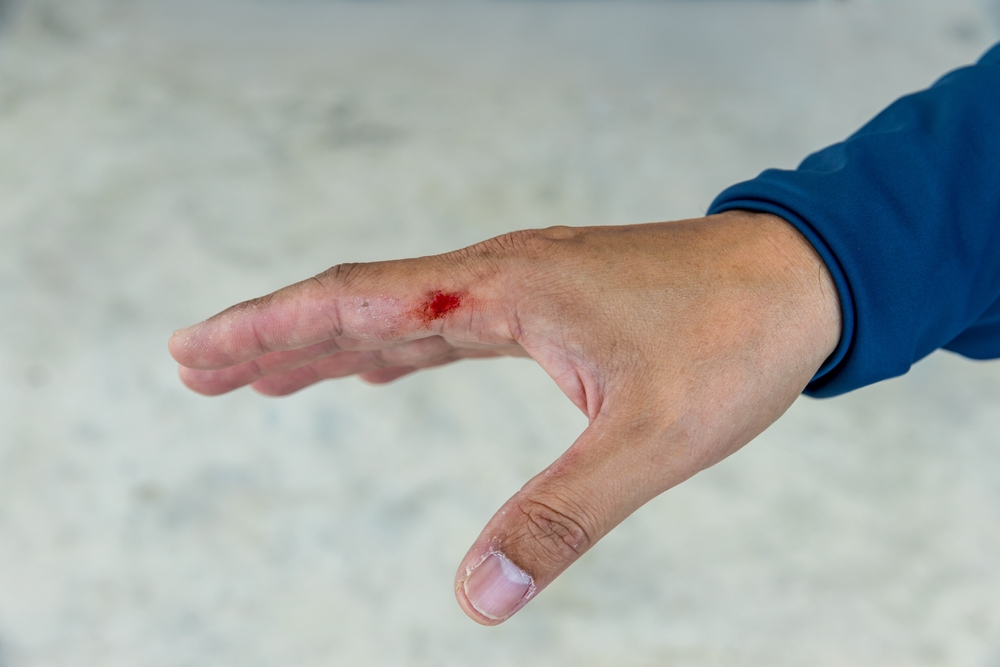
One reason people seek hand therapy is for rehabilitation after an animal bites. In the US alone, 1% of emergency department visits are due to animal bites each year, resulting in 2 to 5 million animal bites annually (Maniscalco et al., 2025). Dog bites are the most common, followed by cats; however, other less frequent injuries can be from rats, bats, and even monkeys (Maniscalco et al., 2025). Animal bites seen by hand therapists can vary in severity, ranging from superficial abrasions to more complex traumas, including punctures, lacerations, avulsions, crushed tissue, and/or a combination of all (Maniscalco et al., 2025). Additionally, animal bites pose a significant risk of infection due to the high level of bacterial exposure associated with these wounds (Maniscalco et al., 2025).
Damage Done to Digits:
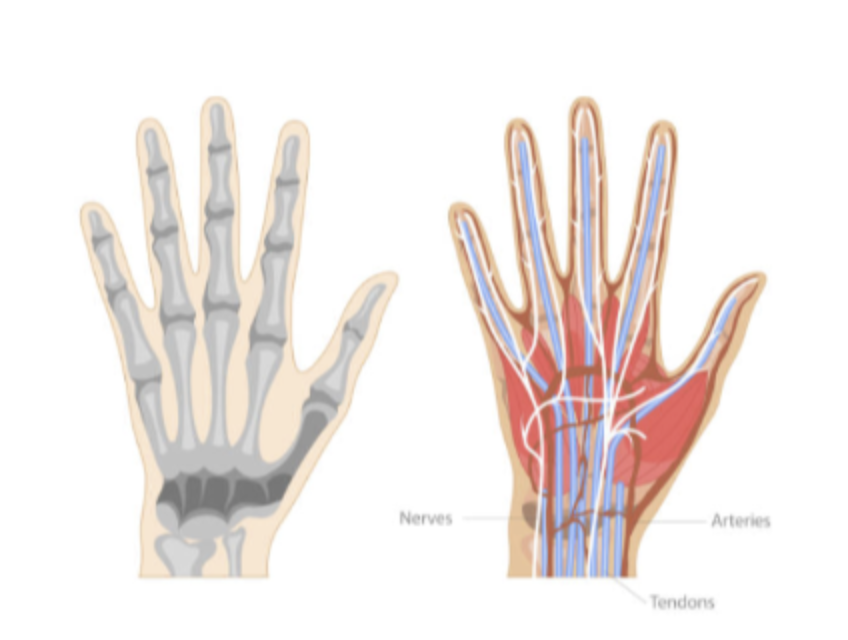
Digit anatomy consists of bones,tendons, ligaments, nerves, arteries, and skin. Depending on the severity of the animal bite, an individual can experience various symptoms due to what structures are
damaged. Animal bites to a digit can cause bone fractures, torn or lacerated tendons, stretched or severed nerves, and open skin wounds (American Academy of Orthopaedic Surgeons, n.d.). Along with risk of infection, these injuries can lead to digit deformities, stiffness, pain, edema, scar tissue development, hypersensitivity, numbness/tingling, and/or burning sensations in the affected digits (American Academy of Orthopaedic Surgeons, n.d.). Collectively, these impairments can result in decreased functional use of the digits.
Treatment for Animal Bites:
When a patient presents with an animal bite, it is essential for hand therapists to screen the wound site for infection. Indicators of infection include purulent discharge, redness around the wound, increased warmth at wound site, foul odor, and escalating pain and swelling (American Academy of Orthopaedic Surgeons, n.d.). In addition to infection screening, therapists may also be responsible for wound care which can include the following: cleaning the wound with sterile saline, dressing the wound with sterile gauze, debridement of devitalized tissue, and/or removal of sutures if present (American Academy of Orthopaedic Surgeons, n.d.). Therapists should also provide patient education on wound management at home to promote optimal healing and prevent complications. Manual therapy is another key component of rehabilitation following an animal bite.
Manual therapy interventions should include soft tissue mobilization to reduce edema and minimize scar formation, as well as PROM of the affected digits to address stiffness (Results Physiotherapy, n.d.). To manage hypersensitivity on and around the wound area, graded sensory input, such as vibration, may be incorporated to facilitate desensitization. Therapists should initially prioritize digit mobility exercises to restore AROM and dexterity (Maniscalco et al., 2025).
Once sufficient mobility has been achieved, strengthening exercises may be introduced to improve digit strength and overall functional use of the hand (Maniscalco et al., 2025). Neuromuscular retraining may also be needed to restore both sensory and motor function (Maniscalco et al., 2025). The timeline for therapeutic progress varies based on the severity of the injury and whether surgical intervention was required. Overall, rehabilitation following an animal bite is multifaceted, addressing wound management, scar management, edema management, mobility, strength, sensation, and overall functional recovery due to the complexity of digit anatomy and the structures potentially involved.
Referencias
American Academy of Orthopaedic Surgeons. (n.d.). Animal bites. OrthoInfo. Retrieved January
17, 2026, from https://orthoinfo.aaos.org/en/diseases–conditions/animal-bites/
Maniscalco, K., Marietta, M., & Edens, M. A. (2025). Animal bites. In StatPearls [Internet].
StatPearls Publishing. Retrieved from https://www.ncbi.nlm.nih.gov/books/NBK430852/
Results Physiotherapy. (n.d.). Physical therapy for dog bites. Results Physiotherapy. Retrieved
January 16, 2026, from https://www.resultspt.com/blog/posts/physical-therapy-for-dog-
bites
Más para leer
Ángulo de lanzamiento de dardos en la terapia de la mano para lesiones del ligamento escafolunar (SL).
¿La altura del objeto afecta el ángulo de movimiento del lanzamiento de dardos durante las actividades de la vida diaria sentado? Cohen, Y., Portnoy, S., Levanon, Y., Friedman, J. (2020). ¿La altura del objeto afecta el ángulo de movimiento del lanzador de dardos durante las actividades de la vida diaria sentado? Journal of Motor Behavior, (52) 4. Revisión del artículo por: Rita Steffes The Skinny: Dart Throwers Motion…

Dedo en gatillo… ¡Rápido y sucio!
Esto es para ustedes… ¡Terapeutas de Manos! La tenosinovitis estenosante, también conocida como dedo en gatillo, es una afección común que afecta a niños y adultos de todas las edades. Datos breves El dedo en gatillo generalmente ocurre en la polea A1 Ocurre con inflamación de los tendones y las vainas de fds y fdp El dedo puede bloquearse tanto en flexión como...

Sensibilidad y especificidad en las pruebas del síndrome de salida torácica (TOS) en terapia de la mano
Por: Mikayla Murphy Sensibilidad y especificidad en las pruebas del síndrome de salida torácica (TOS) en terapia de la mano El síndrome de salida torácica (TOS) describe la compresión de nervios, arterias y venas a medida que pasan a través de la salida torácica. La compresión puede ocurrir en el triángulo interescalénico, el triángulo costoclavicular y el espacio subcoracoideo (Physiopedia, sf). Hay tres tipos de…

Tratamiento del túnel carpiano: solo entablillado versus entablillado y tratamiento conservador
Resultado clínico a corto plazo de la ortesis sola versus una combinación de ortesis, ejercicios de deslizamiento de nervios y tendones y terapia con ultrasonido para el tratamiento del síndrome del túnel carpiano. Sim, Sze En et al. Journal of Hand Therapy, Volumen 32, Número 4, 411 – 416 El síndrome del túnel carpiano flaco (CTS) es la neuropatía por compresión más común. Compresión del…

¡Regístrese para recibir actualizaciones directamente en su bandeja de entrada!
Regístrese con nosotros y le enviaremos publicaciones periódicas en el blog sobre todo lo relacionado con la terapia de manos, avisos cada vez que subamos nuevos videos y tutoriales, junto con folletos, protocolos y otra información útil.