

Dog Bites to the Hand: What Every Hand Therapist Should Know
Classé sous Traitements
What to Expect with a Dog Bite to the Hand for Hand Therapists
By: Kathryn Harada
Prevalence and Severity:
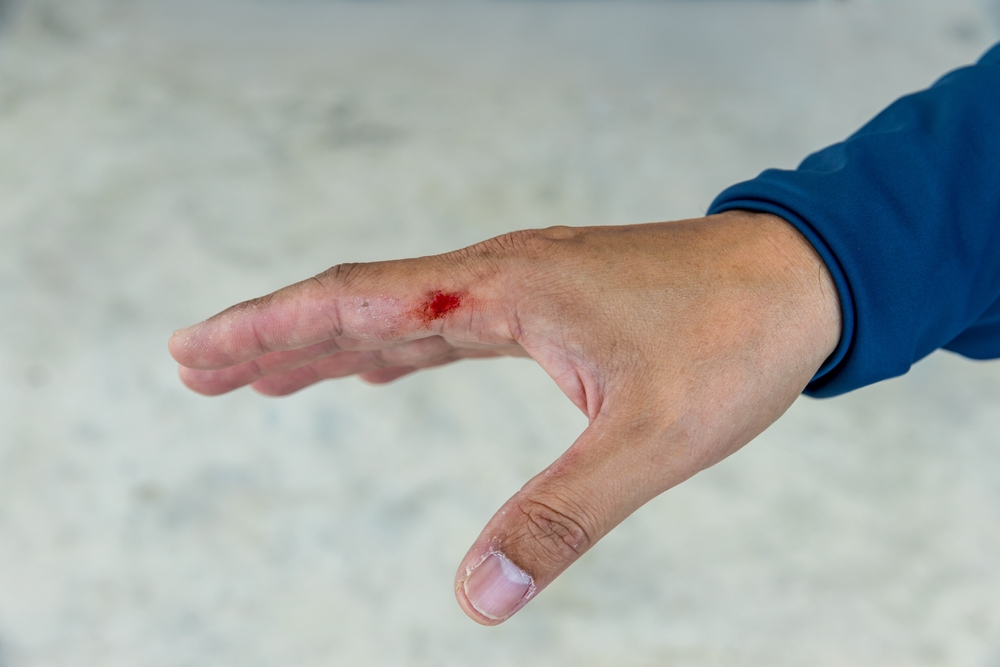
One reason people seek hand therapy is for rehabilitation after an animal bites. In the US alone, 1% of emergency department visits are due to animal bites each year, resulting in 2 to 5 million animal bites annually (Maniscalco et al., 2025). Dog bites are the most common, followed by cats; however, other less frequent injuries can be from rats, bats, and even monkeys (Maniscalco et al., 2025). Animal bites seen by hand therapists can vary in severity, ranging from superficial abrasions to more complex traumas, including punctures, lacerations, avulsions, crushed tissue, and/or a combination of all (Maniscalco et al., 2025). Additionally, animal bites pose a significant risk of infection due to the high level of bacterial exposure associated with these wounds (Maniscalco et al., 2025).
Damage Done to Digits:
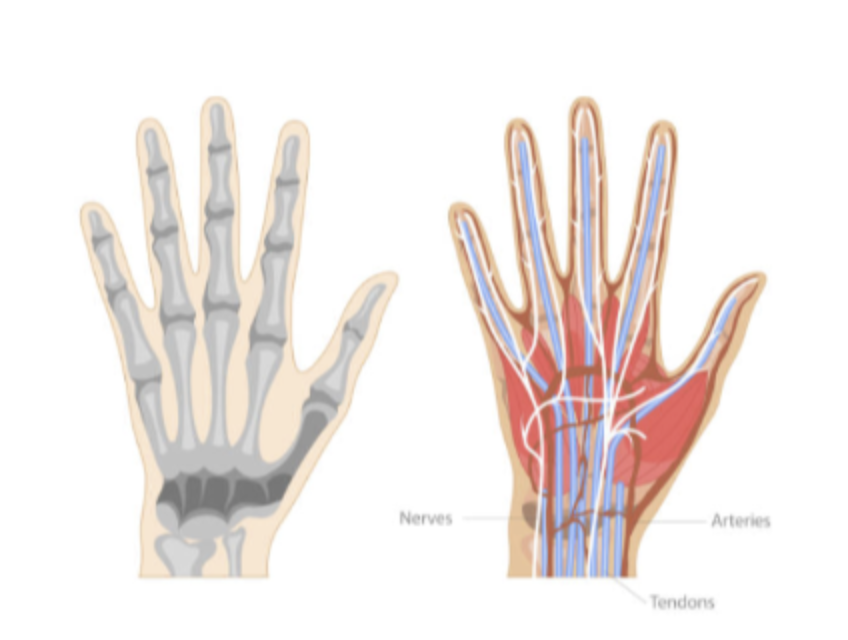
Digit anatomy consists of bones,tendons, ligaments, nerves, arteries, and skin. Depending on the severity of the animal bite, an individual can experience various symptoms due to what structures are
damaged. Animal bites to a digit can cause bone fractures, torn or lacerated tendons, stretched or severed nerves, and open skin wounds (American Academy of Orthopaedic Surgeons, n.d.). Along with risk of infection, these injuries can lead to digit deformities, stiffness, pain, edema, scar tissue development, hypersensitivity, numbness/tingling, and/or burning sensations in the affected digits (American Academy of Orthopaedic Surgeons, n.d.). Collectively, these impairments can result in decreased functional use of the digits.
Treatment for Animal Bites:
When a patient presents with an animal bite, it is essential for hand therapists to screen the wound site for infection. Indicators of infection include purulent discharge, redness around the wound, increased warmth at wound site, foul odor, and escalating pain and swelling (American Academy of Orthopaedic Surgeons, n.d.). In addition to infection screening, therapists may also be responsible for wound care which can include the following: cleaning the wound with sterile saline, dressing the wound with sterile gauze, debridement of devitalized tissue, and/or removal of sutures if present (American Academy of Orthopaedic Surgeons, n.d.). Therapists should also provide patient education on wound management at home to promote optimal healing and prevent complications. Manual therapy is another key component of rehabilitation following an animal bite.
Manual therapy interventions should include soft tissue mobilization to reduce edema and minimize scar formation, as well as PROM of the affected digits to address stiffness (Results Physiotherapy, n.d.). To manage hypersensitivity on and around the wound area, graded sensory input, such as vibration, may be incorporated to facilitate desensitization. Therapists should initially prioritize digit mobility exercises to restore AROM and dexterity (Maniscalco et al., 2025).
Once sufficient mobility has been achieved, strengthening exercises may be introduced to improve digit strength and overall functional use of the hand (Maniscalco et al., 2025). Neuromuscular retraining may also be needed to restore both sensory and motor function (Maniscalco et al., 2025). The timeline for therapeutic progress varies based on the severity of the injury and whether surgical intervention was required. Overall, rehabilitation following an animal bite is multifaceted, addressing wound management, scar management, edema management, mobility, strength, sensation, and overall functional recovery due to the complexity of digit anatomy and the structures potentially involved.
Les références
American Academy of Orthopaedic Surgeons. (n.d.). Animal bites. OrthoInfo. Retrieved January
17, 2026, from https://orthoinfo.aaos.org/en/diseases–conditions/animal-bites/
Maniscalco, K., Marietta, M., & Edens, M. A. (2025). Animal bites. In StatPearls [Internet].
StatPearls Publishing. Retrieved from https://www.ncbi.nlm.nih.gov/books/NBK430852/
Results Physiotherapy. (n.d.). Physical therapy for dog bites. Results Physiotherapy. Retrieved
January 16, 2026, from https://www.resultspt.com/blog/posts/physical-therapy-for-dog-
bites
Plus à lire
Thérapie miroir vidéo-augmentée pour la rééducation des membres supérieurs après un AVC
Kim, H., Kim, J., Jo, S., Lee, K., Kim, J. et Song, C. (2023). Thérapie miroir vidéo augmentée pour la rééducation des membres supérieurs après un accident vasculaire cérébral : un essai contrôlé randomisé. Journal de neurologie, 270(2), 831-842. Revue de l'article : Shannon Skowbo The Skinny : Cet essai contrôlé randomisé en simple aveugle visait à évaluer les effets de la thérapie miroir pour les patients victimes d'un AVC…

Tout sur le taping kinésiologique pour les blessures et affections des membres supérieurs !
Tout sur le taping de kinésiologie ! L'élastique est également connu sous le nom de k-tape, Kinesio-tape et taping de kinésiologie. Le ruban élastique est omniprésent sur le marché et on le voit souvent sur les athlètes professionnels. On le trouve dans la plupart des cliniques thérapeutiques et est utilisé pour traiter les affections orthopédiques et neurologiques. Il existe peu d’études soutenant l’utilisation de…
Kit Sensoriel pour Hypersensibilité
Écrit par Melissa Miller Introduction Après une blessure ou une intervention chirurgicale, les nerfs de la peau et autour de la zone blessée peuvent devenir trop sensibles. Cela peut provoquer une douleur ou une sensation désagréable due à des stimuli qui ne causeraient généralement pas d'inconfort. Par exemple, une légère touche d’une chemise ou d’un certain tissu peut ressembler à des aiguilles pour…
Exemple de cas de plexopathie brachiale en thérapie de la main
Exemple de cas de plexopathie brachiale en thérapie de la main (exemples de plexopathie) L'un des cas récents que nous avons vu est celui d'un jeune de 13 ans présentant une lésion du plexus brachial. Nous suivons le patient post-opératoire pour des transferts tendineux afin d'augmenter l'utilisation fonctionnelle de son membre supérieur gauche (LUE). Avant l’opération, il ne pouvait pas étendre le poignet et…

Inscrivez-vous pour recevoir des mises à jour directement dans votre boîte de réception !
Inscrivez-vous avec nous et nous vous enverrons régulièrement des articles de blog sur tout ce qui concerne la thérapie des mains, des notifications chaque fois que nous mettons en ligne de nouvelles vidéos et tutoriels, ainsi que des documents, des protocoles et d'autres informations utiles.