

Tendonitis can make routine activities such as gripping, lifting, typing, texting, or opening containers painful and difficult. In many cases, symptoms develop when a tendon is repeatedly stressed or irritated and does not have enough time to recover. When this happens, continued use of the hand, wrist, or elbow can keep the tendon irritated and delay improvement.
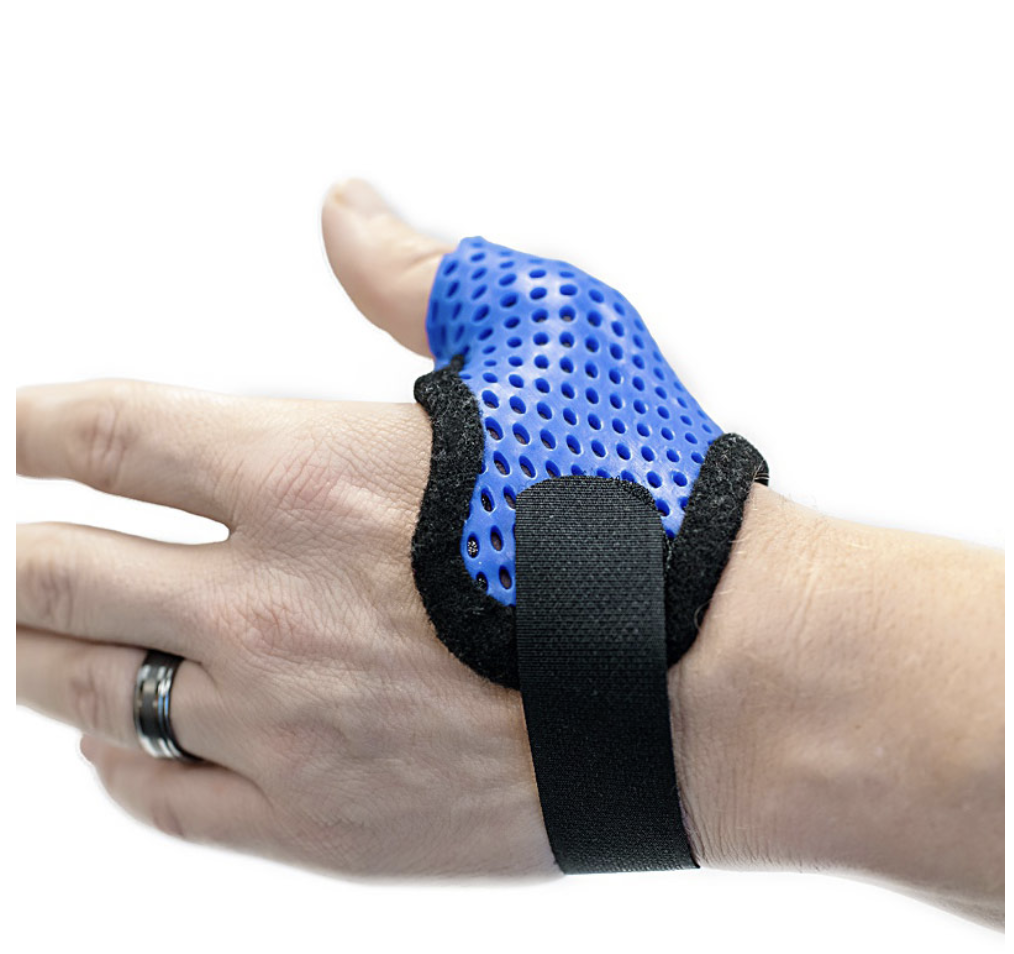
One treatment option commonly used in thérapie de la main is an orthosis, also commonly referred to as a splint or brace. For tendonitis, an orthosis is used to support the involved area, reduce strain on the irritated tendon, and allow symptoms to calm down while healing occurs.
What Is Tendonitis?
Tendons connect muscles to bones and allow the body to move. When a tendon becomes irritated from repetitive use, overloading, poor positioning, or a sudden increase in activity, it may become painful, tender, and sensitive with movement. Although the term “tendonitis” is commonly used, some tendon conditions involve irritation and tissue changes rather than inflammation alone.
In the upper extremity, tendon irritation can affect the hand, wrist, thumb, fingers, forearm, or elbow. Symptoms often depend on which tendon is involved. A person may notice pain with gripping, pinching, lifting, wrist motion, thumb motion, or repeated hand use.
Common examples include:
- De Quervain’s tenosynovitis
- Wrist tendonitis
- Doigt à gâchette
- Tennis elbow
- Golfer’s elbow
- Thumb or finger tendon irritation
How an Orthosis Can Help
An orthosis helps by limiting or modifying the movements that place stress on the irritated tendon. By positioning the involved joints in a more supported position, the tendon does not have to work as hard during daily activity.
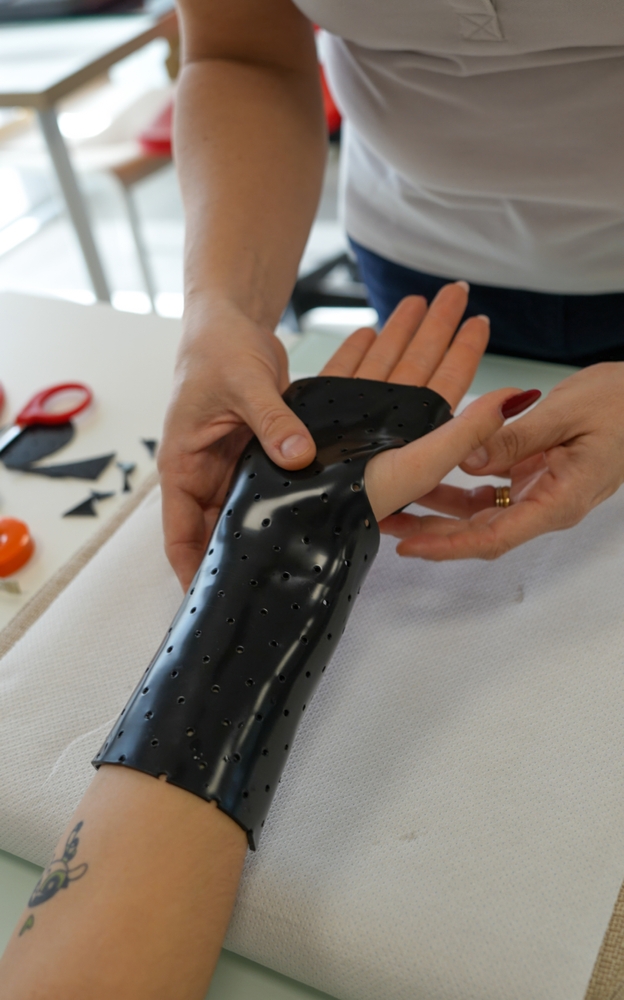
For example, a person with thumb-sided wrist pain may benefit from a thumb orthosis that limits painful thumb and wrist motion. A person with wrist tendonitis may benefit from a wrist orthosis that keeps the wrist in a more neutral position while performing daily tasks.
Orthoses may help by:
- Reducing stress on the involved tendon
- Limiting painful motion
- Supporting improved joint positioning
- Decreasing strain during daily activities
- Protecting the tendon during a flare-up
- Allowing functional use with less discomfort
The purpose is not simply to immobilize the hand or wrist. Instead, the orthosis provides support while the tendon recovers and while the patient gradually returns to activity.
Why the Wear Schedule Matters
Orthosis use should be guided by the diagnosis, symptom severity, stage of healing, and the patient’s daily activities. Some tendon conditions require more protection early on, especially when symptoms are easily aggravated. Other conditions benefit from controlled motion and gradual strengthening.
Wearing an orthosis too much without a plan may contribute to stiffness or weakness. Wearing it too little may allow the tendon to remain irritated. A therapist helps determine when the orthosis should be worn and when movement should be encouraged.
Depending on the condition, an orthosis may be recommended:
- During painful activities
- At night
- During work or school tasks
- During short-term flare-ups
- More consistently at first, then gradually reduced as symptoms improve
The goal is to reduce irritation while still maintaining safe and appropriate use of the hand.
Orthoses as Part of a Larger Treatment Plan
An orthosis can be an important part of treatment, but it is rarely the only intervention needed. Tendonitis often improves best when the contributing factors are also addressed. This may include activity modification, posture changes, ergonomic adjustments, strengthening, or gradual return to activity.
Hand therapy treatment may include:
- Education on activity modification
- Positioning and ergonomic recommendations
- Gentle stretching when appropriate
- Progressive strengthening
- Manual therapy
- Edema or inflammation management
- Home exercises
- Guidance for returning to daily or work tasks
For many patients, the orthosis helps reduce symptoms during daily use, while therapy addresses the underlying movement patterns, weakness, or overuse that may be contributing to the problem.
Importance of Proper Fit
A properly fitting orthosis should feel supportive without causing increased pain or skin irritation. If an orthosis is too tight, it may cause pressure, redness, numbness, or tingling. If it is too loose, it may not provide enough support to be effective.
Patients should contact their therapist if they notice:
- Redness that does not fade after removing the orthosis
- Numbness or tingling
- Increased pain while wearing the orthosis
- Skin rubbing or pressure areas
- The orthosis sliding or not staying in place
- Difficulty completing daily activities safely
Often, small adjustments can improve comfort, fit, and effectiveness.
When to see a patient with tendinitis
A patient may benefit from seeing a hand therapist or medical provider if tendon pain is not improving, continues to return, or begins to limit daily activities. Early treatment can help reduce irritation before symptoms become more persistent.
A hand therapist can help determine whether an orthosis is appropriate, what type of orthosis is needed, and how often it should be worn. The therapist can also provide exercises and activity modifications to support recovery and reduce the risk of symptoms returning.
Why this is Key
Orthoses can be helpful for tendonitis because they reduce stress on irritated tendons and support the hand, wrist, thumb, fingers, or elbow during recovery. They are most effective when they fit properly, are worn according to an appropriate schedule, and are used as part of a complete therapy plan.
The overall goal is to decrease pain, protect the involved tendon, and help the patient return to daily activities with improved comfort and function.
Plus à lire
K-tape et paralysie cérébrale
Allah-Rastii, Z., Shamsoddini, A., Dalvand, H. et Labaf, S. (2017). L'effet du kinesio taping sur la poignée et l'amplitude active des mouvements de la main chez les enfants atteints de paralysie cérébrale. Journal iranien de neurologie infantile, 11(4), 43-51. Le maigre : La paralysie cérébrale est une déficience motrice non progressive causée par une lésion du cerveau en développement qui peut…
5+ attelles de doigt en maillet courantes
Les orthèses de doigt peuvent être résistantes, et l’orthèse de doigt en maillet ne fait pas exception. Le protocole d'extension DIP à 15 degrés avec les doigts en maillet est délicat à gérer lors de la fabrication d'une attelle. Les petites attelles sur les petits doigts sont également difficiles à dimensionner correctement et à utiliser des sangles aux bons endroits. Demandez à n’importe quel expérimenté…
Douleur à l'épaule : l'efficacité du traitement conservateur
Référence : Steuri, R., Sattelmayer, M., Elsig, S., Kolly, C., Tal, A., Taeymans, J. et Hilfiker, R. (2017). Efficacité des interventions conservatrices comprenant l'exercice, la thérapie manuelle et la prise en charge médicale chez les adultes présentant un conflit d'épaule : une revue systématique et une méta-analyse des ECR. Journal britannique de médecine du sport, 51(18), 1340-1347. https://doi.org/10.1136/bjsports-2016-096515 Par : Tayler Roost The Skinny : Cette étude…
Douleur dorsale au poignet ?
Intégration de preuves émergentes dans la pratique clinique pour les patients souffrant de douleurs dorsales au poignet lors d'activités de mise en charge Par : Brittany Day Preuves à l'appui Une étude contrôlée randomisée récemment publiée dans le Journal of Hand Therapy a révélé que des bandes rigides de stabilisation du carpe (CST) augmentent considérablement l'amplitude de mouvement passive. , une amplitude de mouvement active et une diminution de la douleur chez les patients souffrant…

Inscrivez-vous pour recevoir des mises à jour directement dans votre boîte de réception !
Inscrivez-vous avec nous et nous vous enverrons régulièrement des articles de blog sur tout ce qui concerne la thérapie des mains, des notifications chaque fois que nous mettons en ligne de nouvelles vidéos et tutoriels, ainsi que des documents, des protocoles et d'autres informations utiles.