
What to Expect with a Dog Bite to the Hand for Hand Therapists
By: Kathryn Harada
Prevalence and Severity:
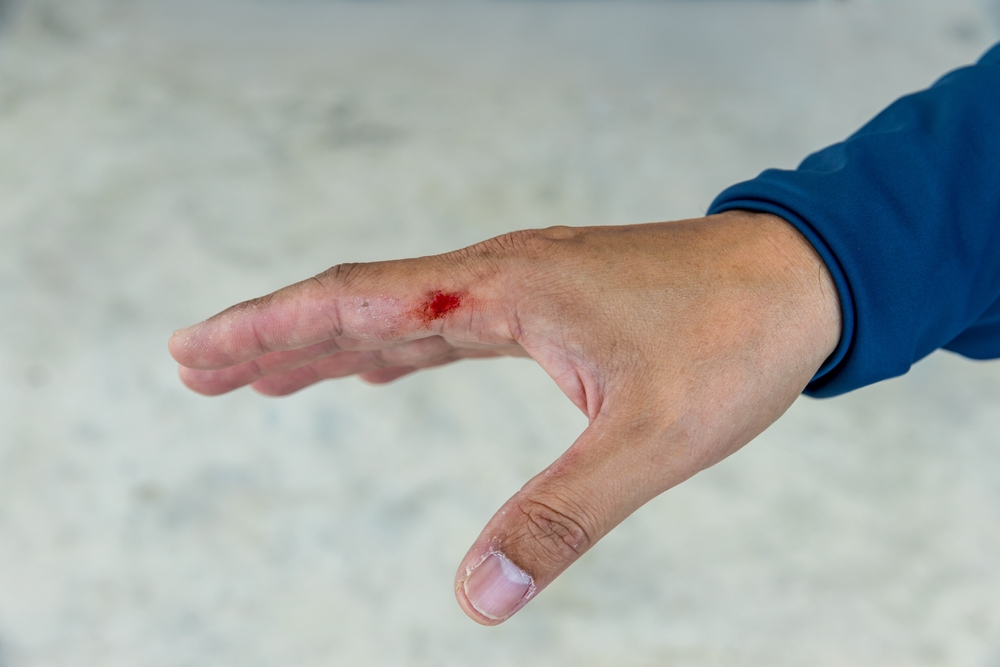
One reason people seek hand therapy is for rehabilitation after an animal bites. In the US alone, 1% of emergency department visits are due to animal bites each year, resulting in 2 to 5 million animal bites annually (Maniscalco et al., 2025). Dog bites are the most common, followed by cats; however, other less frequent injuries can be from rats, bats, and even monkeys (Maniscalco et al., 2025). Animal bites seen by hand therapists can vary in severity, ranging from superficial abrasions to more complex traumas, including punctures, lacerations, avulsions, crushed tissue, and/or a combination of all (Maniscalco et al., 2025). Additionally, animal bites pose a significant risk of infection due to the high level of bacterial exposure associated with these wounds (Maniscalco et al., 2025).
Damage Done to Digits:
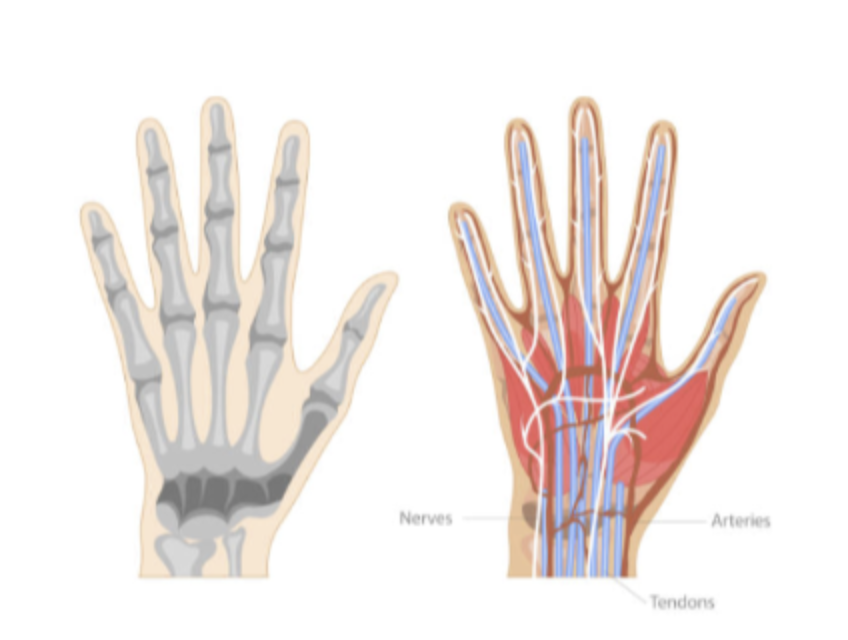
Digit anatomy consists of bones,tendons, ligaments, nerves, arteries, and skin. Depending on the severity of the animal bite, an individual can experience various symptoms due to what structures are
damaged. Animal bites to a digit can cause bone fractures, torn or lacerated tendons, stretched or severed nerves, and open skin wounds (American Academy of Orthopaedic Surgeons, n.d.). Along with risk of infection, these injuries can lead to digit deformities, stiffness, pain, edema, scar tissue development, hypersensitivity, numbness/tingling, and/or burning sensations in the affected digits (American Academy of Orthopaedic Surgeons, n.d.). Collectively, these impairments can result in decreased functional use of the digits.
Treatment for Animal Bites:
When a patient presents with an animal bite, it is essential for hand therapists to screen the wound site for infection. Indicators of infection include purulent discharge, redness around the wound, increased warmth at wound site, foul odor, and escalating pain and swelling (American Academy of Orthopaedic Surgeons, n.d.). In addition to infection screening, therapists may also be responsible for wound care which can include the following: cleaning the wound with sterile saline, dressing the wound with sterile gauze, debridement of devitalized tissue, and/or removal of sutures if present (American Academy of Orthopaedic Surgeons, n.d.). Therapists should also provide patient education on wound management at home to promote optimal healing and prevent complications. Manual therapy is another key component of rehabilitation following an animal bite.
Manual therapy interventions should include soft tissue mobilization to reduce edema and minimize scar formation, as well as PROM of the affected digits to address stiffness (Results Physiotherapy, n.d.). To manage hypersensitivity on and around the wound area, graded sensory input, such as vibration, may be incorporated to facilitate desensitization. Therapists should initially prioritize digit mobility exercises to restore AROM and dexterity (Maniscalco et al., 2025).
Once sufficient mobility has been achieved, strengthening exercises may be introduced to improve digit strength and overall functional use of the hand (Maniscalco et al., 2025). Neuromuscular retraining may also be needed to restore both sensory and motor function (Maniscalco et al., 2025). The timeline for therapeutic progress varies based on the severity of the injury and whether surgical intervention was required. Overall, rehabilitation following an animal bite is multifaceted, addressing wound management, scar management, edema management, mobility, strength, sensation, and overall functional recovery due to the complexity of digit anatomy and the structures potentially involved.
参考
American Academy of Orthopaedic Surgeons. (n.d.). Animal bites. OrthoInfo. Retrieved January
17, 2026, from https://orthoinfo.aaos.org/en/diseases–conditions/animal-bites/
Maniscalco, K., Marietta, M., & Edens, M. A. (2025). Animal bites. In StatPearls [Internet].
StatPearls Publishing. Retrieved from https://www.ncbi.nlm.nih.gov/books/NBK430852/
Results Physiotherapy. (n.d.). Physical therapy for dog bites. Results Physiotherapy. Retrieved
January 16, 2026, from https://www.resultspt.com/blog/posts/physical-therapy-for-dog-
bites
更多阅读内容
扳机指保守治疗的回顾
Lunsford, D.、Valdes, K. 和 Hengy, S. (2017)。扳机指的保守治疗:系统评价。手部治疗杂志,32(2), 212-221。 https://doi.org/10.1016/j.jht.2017.10.016 The Skinny 文献综述的主要目的是确定除治疗外通过使用矫形器保守治疗扳机指 (TF) 的疗效。评价…
文章评论:梯形切除术和 LRTI:CMC 骨关节炎患者术后 12 个月可以期待什么?
Janakiramanan, N.、Miles, O.、Collon, S.、Crammond, B.、McCombe, D. 和 Tham, SK (2021)。梯形切除术、韧带重建和肌腱介入(梯形切除术和 LRTI)后的功能恢复:一项前瞻性纵向研究。手外科杂志,S0363-5023(21)00304-X。提前在线出版。 https://doi.org/10.1016/j.jhsa.2021.04.036 瘦者:患有斜方掌 (TMC) 骨关节炎的患者,适合接受斜方切除术,并且……
如何使用运动学贴布治疗肩部半脱位
如何使用运动学胶带治疗肩部半脱位 作者:Tayler Roost 什么是肩部半脱位?肩部半脱位是盂肱关节脱位。这可以分为创伤性、非创伤性或神经性的。创伤性肩部半脱位可能是由接触性运动或重复性肩部运动引起的。非外伤性肩部半脱位可能是间接引起的……

单独拉伸可以改变弯曲指畸形患者的 P1 骨形状
Woo Hong, S. Kim, J.、Sang Kwon, O.、Ho Lee, M.、Sik Kong, H.、Hyun Baek, G., (2019)。使用伸展运动对屈指畸形患者的近端指骨进行放射学重塑。 J Hand Surg Am,1.e1-1.e10 瘦 - 弯曲指畸形是一种先天性、非创伤性的手指 PIP 屈曲挛缩,除了……

注册即可直接将更新发送到您的收件箱!
注册我们,我们将定期向您发送有关手部治疗的所有内容的博客文章、每次上传新视频和教程时的通知,以及讲义、协议和其他有用信息。