

EDS in the Hand Therapy Setting

General Overview:
Ehlers Danlos Syndrome (EDS) is a group of heritable connective tissue disorders caused by
genetic changes that affect collagen production, the protein responsible for strength and elasticity
in skin, ligaments and tendons (The Ehlers Danlos Society, 2016).
There are thirteen forms of EDS that each have their own set of features with distinct diagnostic
criteria. Of the thirteen the most common subtype of EDS is hypermobile Ehlers-Danlos
Syndrome (hEDS) which can include symptoms such as chronic muscle and 关节疼痛,
subluxations/dislocations, joint pain, muscle pain, etc.
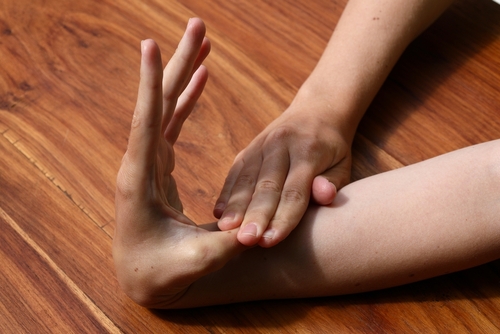
Many individuals also experience coexisting conditions that need to be considered during
evaluation and treatment planning, as these can significantly affect activity tolerance and
participation.
Common comorbidities include:
- Postural Orthostatic Tachycardia Syndrome (POTS) – A Condition that causes an
individual’s heart to beat faster than normal when transitioning from sitting or lying down
to standing up. POTS is a type of orthostatic intolerance that limits the body’s ability to
balance blood vessel constriction and heart rate response. (Clevland Clinic, 2022) - Fibromyalgia: A chronic health condition which causes pain and tenderness throughout
the body, often causing musculoskeletal pain and fatigue. (Clevland Clinic, 2022)
Treatment Goals and Focus:
The primary goals of therapy are to improve joint stability, strengthen and support function, not
to “fix” hypermobility, but to improve control and confidence in movement. - 治疗性运动: Brittian et al. (2024) reported that muscle strengthening and joint
position exercises to neutral and hyperextended ranges help to improve strength pain and
quality of life. - 夹板固定: Assists with stabilizing joints, reducing pain, and dislocation. Splints for EDS
can include plastic ring splints (oval 8 splints), silver ring splints, wrist supports and
stainless-steel ring splints. Jensen et al. (2020) found that finger orthoses may have a
positive effect on hand function for individuals with EDS. - Pain management strategies: Physical modalities, dry needling, and complementary
therapies may be incorporated to address chronic pain. - Patient education: Instruction on joint protection strategies, ergonomic modification and
energy conservation is essential. Brittian et al. (2024) explain there was an improved understanding of necessary lifestyle modification when there was a multimodal approach such as education on diagnosis and activity modification.
Why it Matters for Therapists:
Understanding EDS is crucial for clinicians because these clients often present with non-specific
pain and instability that may not fit the classic injury or overuse patterns that are taught. Early
recognition of hypermobility and connective tissue symptoms can help prevent unnecessary
interventions. Hakim (2018) emphasizes how occupational therapists can assist with assistive
devices, pain management tailored to symptoms, joint stability, and splints to improve alignment
and control.
Evidence shows that strengthening, joint protection, splinting, and patient education can
significantly improve function and quality of life for those with EDS. As a provider, it is
important that how we deliver care is just as important as what we deliver. By understanding the
patient’s unique presentation and tailoring interventions accordingly, therapists can help
individuals with EDS move and feel better.
参考
Brittain, M., Flanagan, S., Foreman, L., & Teran-Yengle, P. (2023). Physical therapy
interventions in generalized hypermobility spectrum disorder and hypermobile Ehlers-
Danlos syndrome: a scoping review. Disability and Rehabilitation, 46(10), 1–18.
https://doi.org/10.1080/09638288.2023.2216028
Cleveland Clinic. (2022). Fibromyalgia. Cleveland Clinic.
https://my.clevelandclinic.org/health/diseases/4832-fibromyalgia
Cleveland Clinic. (2022). Postural orthostatic tachycardia syndrome (POTS). Cleveland Clinic.
https://my.clevelandclinic.org/health/diseases/16560-postural-orthostatic-tachycardia-
syndrome-pots
Colin M.E. Halverson, Cao, S., Perkins, S. M., & Francomano, C. A. (2023). Comorbidity,
misdiagnoses, and the diagnostic odyssey in patients with hypermobile Ehlers-Danlos
Syndrome. Genetics in Medicine Open, 1(1), 100812–100812.
https://doi.org/10.1016/j.gimo.2023.100812
Hakim, A. (2018). Hypermobile Ehlers-Danlos Syndrome. Nih.gov; University of Washington,
Seattle. https://www.ncbi.nlm.nih.gov/books/NBK1279/
Jensen, A.-M., Andersen, J. Q., Quisth, L., & Ramstrand, N. (2020). Finger orthoses for
management of joint hypermobility disorders: Relative effects on hand function and
cognitive load. Prosthetics and Orthotics International, 030936462095686.
https://doi.org/10.1177/0309364620956866
Mast cell activation disorder Archives – The Ehlers-Danlos Support UK. (2024). The Ehlers-
Danlos Support UK. https://www.ehlers-danlos.org/what-is-eds/information-on-eds/mast-
cell-activation-disorder/
The Ehlers Danlos Society. (2016). The Ehlers-Danlos Society. The Ehlers Danlos Society.
https://www.ehlers-danlos.com/
更多阅读内容

扣动扳机的手指……又快又脏!
这是给你的……手部治疗师!狭窄性腱鞘炎,也称为扳机指,是影响所有年龄段儿童和成人的常见疾病。事实快报 扳机指通常发生在 A1 滑轮处 它会因 fds 和 fdp 的肌腱和鞘发炎而发生 手指可以锁定屈曲和……

针对上肢远端损伤和病症的手部治疗干预措施
高田 (SC)、韦德 (ET) 和罗尔 (SC) (2019)。过去 10 年评估的手部治疗干预措施、结果和诊断:将研究与实践联系起来的绘图回顾。手部治疗杂志,32(1),1-9。作者:Brittany Carrie The Skinny 全世界大约有 26.9% 的上肢骨科损伤和疾病发生。受伤最多的是……
5+ 常见槌状手指夹板
手指矫形器可能很坚固,在手部治疗中槌形矫形器也不例外。在制作普通的槌状手指夹板时,用槌状手指进行 15 度 DIP 延伸的协议很难管理。小手指上的小夹板也很难调整尺寸并用绑带固定......
探索独特的手部解剖结构
探索独特的手部解剖结构 人类的手部设计精巧,结合了精细运动能力和力量,使我们能够执行精细运动任务,从精细手术到更粗大的运动任务,例如搬运重物。然而,没有两只手是完全相同的。解剖学差异虽然……

注册即可直接将更新发送到您的收件箱!
注册我们,我们将定期向您发送有关手部治疗的所有内容的博客文章、每次上传新视频和教程时的通知,以及讲义、协议和其他有用信息。