
Tendonitis can make routine activities such as gripping, lifting, typing, texting, or opening containers painful and difficult. In many cases, symptoms develop when a tendon is repeatedly stressed or irritated and does not have enough time to recover. When this happens, continued use of the hand, wrist, or elbow can keep the tendon irritated and delay improvement.
One treatment option commonly used in 手部治疗 is an orthosis, also commonly referred to as a splint or brace. For tendonitis, an orthosis is used to support the involved area, reduce strain on the irritated tendon, and allow symptoms to calm down while healing occurs.
What Is Tendonitis?
Tendons connect muscles to bones and allow the body to move. When a tendon becomes irritated from repetitive use, overloading, poor positioning, or a sudden increase in activity, it may become painful, tender, and sensitive with movement. Although the term “tendonitis” is commonly used, some tendon conditions involve irritation and tissue changes rather than inflammation alone.
In the upper extremity, tendon irritation can affect the hand, wrist, thumb, fingers, forearm, or elbow. Symptoms often depend on which tendon is involved. A person may notice pain with gripping, pinching, lifting, wrist motion, thumb motion, or repeated hand use.
Common examples include:
- De Quervain’s tenosynovitis
- Wrist tendonitis
- 扣扳机的手指
- Tennis elbow
- Golfer’s elbow
- Thumb or finger tendon irritation
How an Orthosis Can Help
An orthosis helps by limiting or modifying the movements that place stress on the irritated tendon. By positioning the involved joints in a more supported position, the tendon does not have to work as hard during daily activity.
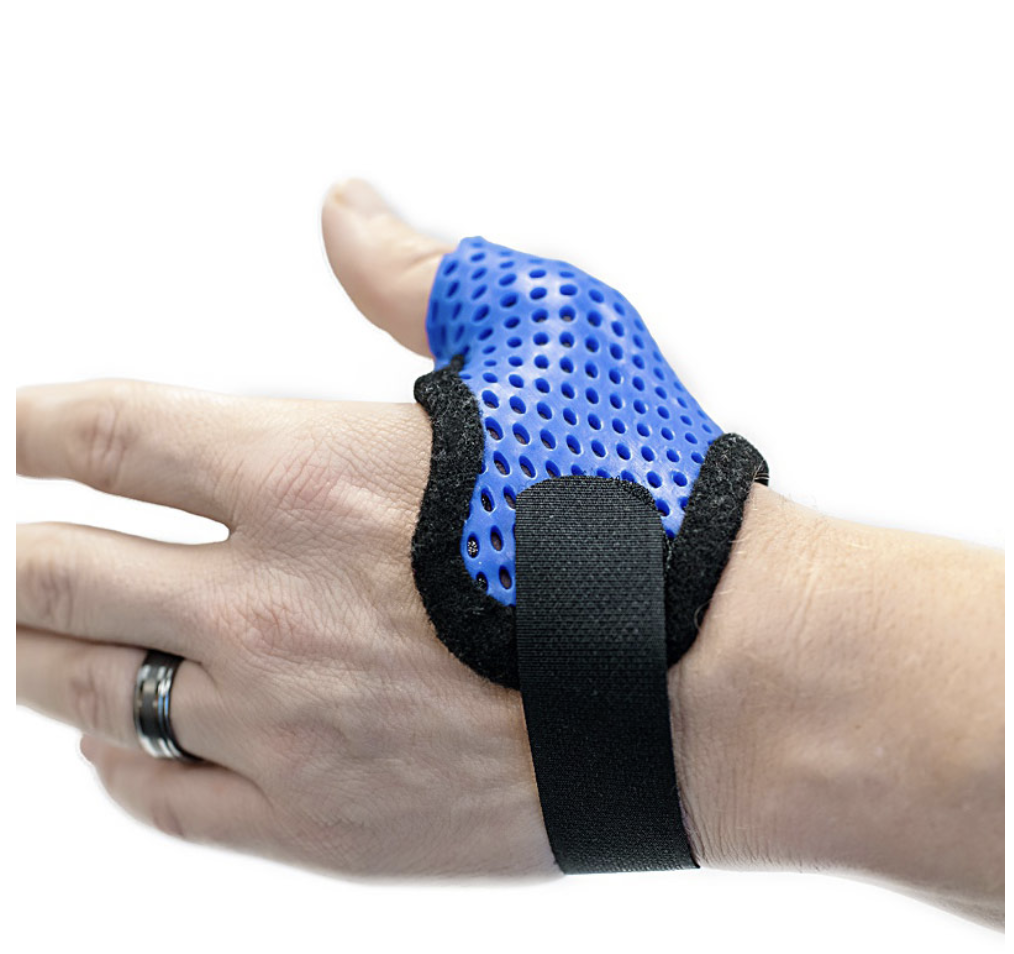
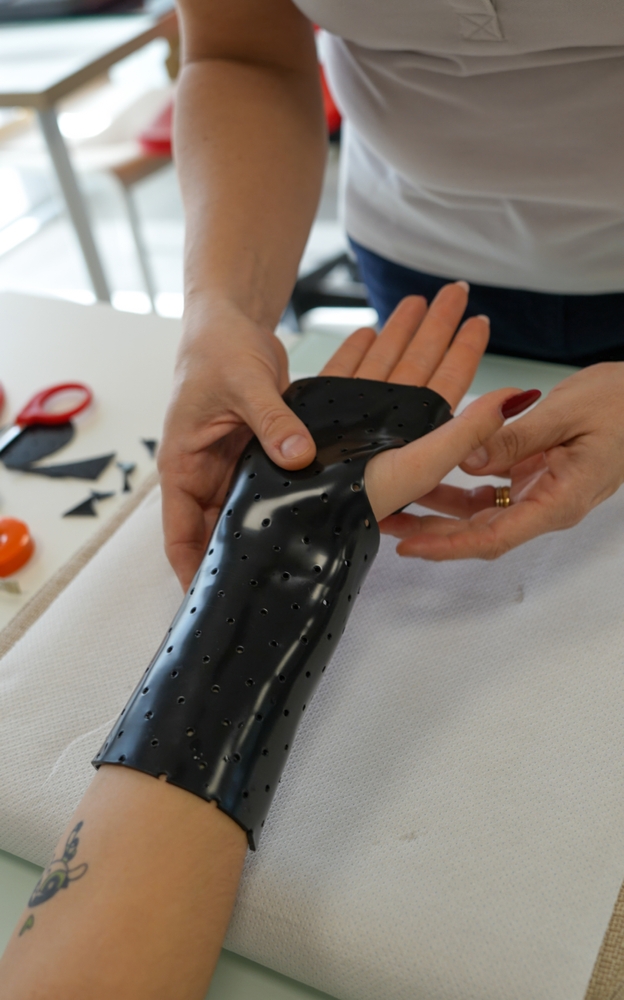
For example, a person with thumb-sided wrist pain may benefit from a thumb orthosis that limits painful thumb and wrist motion. A person with wrist tendonitis may benefit from a wrist orthosis that keeps the wrist in a more neutral position while performing daily tasks.
Orthoses may help by:
- Reducing stress on the involved tendon
- Limiting painful motion
- Supporting improved joint positioning
- Decreasing strain during daily activities
- Protecting the tendon during a flare-up
- Allowing functional use with less discomfort
The purpose is not simply to immobilize the hand or wrist. Instead, the orthosis provides support while the tendon recovers and while the patient gradually returns to activity.
Why the Wear Schedule Matters
Orthosis use should be guided by the diagnosis, symptom severity, stage of healing, and the patient’s daily activities. Some tendon conditions require more protection early on, especially when symptoms are easily aggravated. Other conditions benefit from controlled motion and gradual strengthening.
Wearing an orthosis too much without a plan may contribute to stiffness or weakness. Wearing it too little may allow the tendon to remain irritated. A therapist helps determine when the orthosis should be worn and when movement should be encouraged.
Depending on the condition, an orthosis may be recommended:
- During painful activities
- At night
- During work or school tasks
- During short-term flare-ups
- More consistently at first, then gradually reduced as symptoms improve
The goal is to reduce irritation while still maintaining safe and appropriate use of the hand.
Orthoses as Part of a Larger Treatment Plan
An orthosis can be an important part of treatment, but it is rarely the only intervention needed. Tendonitis often improves best when the contributing factors are also addressed. This may include activity modification, posture changes, ergonomic adjustments, strengthening, or gradual return to activity.
Hand therapy treatment may include:
- Education on activity modification
- Positioning and ergonomic recommendations
- Gentle stretching when appropriate
- Progressive strengthening
- Manual therapy
- Edema or inflammation management
- Home exercises
- Guidance for returning to daily or work tasks
For many patients, the orthosis helps reduce symptoms during daily use, while therapy addresses the underlying movement patterns, weakness, or overuse that may be contributing to the problem.
Importance of Proper Fit
A properly fitting orthosis should feel supportive without causing increased pain or skin irritation. If an orthosis is too tight, it may cause pressure, redness, numbness, or tingling. If it is too loose, it may not provide enough support to be effective.
Patients should contact their therapist if they notice:
- Redness that does not fade after removing the orthosis
- Numbness or tingling
- Increased pain while wearing the orthosis
- Skin rubbing or pressure areas
- The orthosis sliding or not staying in place
- Difficulty completing daily activities safely
Often, small adjustments can improve comfort, fit, and effectiveness.
When to see a patient with tendinitis
A patient may benefit from seeing a hand therapist or medical provider if tendon pain is not improving, continues to return, or begins to limit daily activities. Early treatment can help reduce irritation before symptoms become more persistent.
A hand therapist can help determine whether an orthosis is appropriate, what type of orthosis is needed, and how often it should be worn. The therapist can also provide exercises and activity modifications to support recovery and reduce the risk of symptoms returning.
Why this is Key
Orthoses can be helpful for tendonitis because they reduce stress on irritated tendons and support the hand, wrist, thumb, fingers, or elbow during recovery. They are most effective when they fit properly, are worn according to an appropriate schedule, and are used as part of a complete therapy plan.
The overall goal is to decrease pain, protect the involved tendon, and help the patient return to daily activities with improved comfort and function.
更多阅读内容

5 次重返烹饪活动(不需要厨房)
手部治疗可以而且应该以职业为基础。每周,我们都会听到患者的评论支持这一说法:“我需要回去工作”“我只是想再次打高尔夫球”“我什至无法打开水瓶”“我的配偶必须做所有的事情”烹饪”虽然标准练习很有帮助,但它......
拔罐疗法的治疗干预和禁忌症
作者:Kaylen Kallander 拔罐疗法用于对肌肉或神经疼痛的局部区域施加负压,以缓解神经压力并增加流向患处的血流量。这种方式通常用于运动员,但也是物理治疗、职业治疗或手部治疗中的常见治疗方法。拔罐时……
不同拉伸技术对改善关节活动范围的效果。
参考文献:Oba, K.、Samukawa, M.、Abe, Y.、Suzuki, Y.、Komatsuzaki, M.、Kasahara, S.、Ishida, T. 和 Tohyama, H. (2021)。基于持续时间匹配方案的间歇和连续静态拉伸对运动范围和肌腱粘弹性特性的影响。国际环境研究和公共卫生杂志,18(20), 10632。https://doi-org.libproxy.nau.edu/10.3390/ijerph182010632 瘦人:这项研究使用了交叉......

Neurolutions IpsiHand 助力偏瘫患者中风康复
Neurolutions IpsiHand 助力偏瘫患者中风康复 约 77% 的新发中风病例会出现偏瘫,并且通常持续至慢性期 (Humphries 等人,2021)。脑机接口 (BCI) 等最新创新技术,即使在中风数年后也能为运动功能康复带来新的机会。Neurolutions IpsiHand 系统就是这样一种解决方案,它……

注册即可直接将更新发送到您的收件箱!
注册我们,我们将定期向您发送有关手部治疗的所有内容的博客文章、每次上传新视频和教程时的通知,以及讲义、协议和其他有用信息。