

Why Desensitization Matters After Hand Injury
Classé sous Traitements, Non classé
After any type of main injury or surgery, the main can become sensitive to touch and different textures. Everyday tasks can become difficult or even painful due to hypersensitivity. Without intervention, this sensitivity can interfere with a patient’s ability to participate in meaningful daily activities and the recovery process.
Why does hypersensitivity occur?
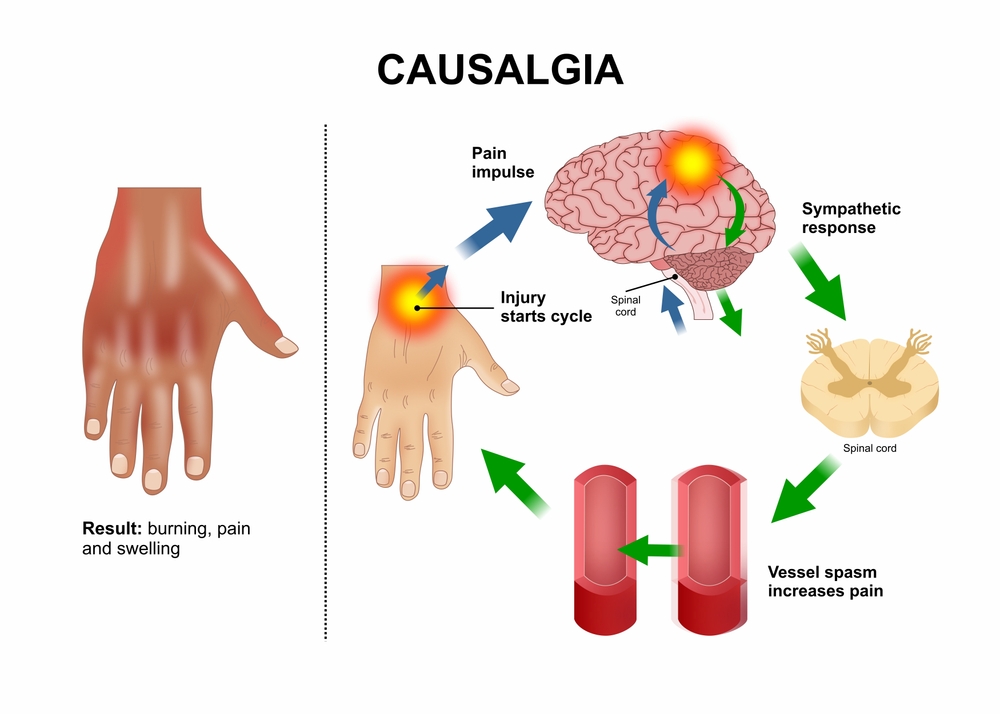
Hypersensitivity can be common after any type of main injury, including but not limited to surgery, trauma, nerve injury, burns, and amputation. Hypersensitivity can result from an increased number of pain-sensing nerve fibers migrating to the affected area, making it more sensitive (American Society for Surgery of the Hand, n.d.). Daily activities and tasks can become difficult for someone with hypersensitivity, as different textures, pressure, and temperature can be painful, touching objects can be uncomfortable, and individuals may avoid using their hands. Someone’s avoidance of using their main can lead to longer recovery times and further functional loss of their affected hand (American Society for Surgery of the Hand n.d.). This can also lead to worsening conditions such a CRPS.
What is desensitization and why is it needed?
Désensibilisation is a variety of techniques used to help retrain the nervous system to recognize everyday touch as safe and non-threatening. Using repeated, controlled desensitization techniques, the affected main can be exposed to various stimuli to help normalize an individual’s sensory processing. When someone is experiencing adverse reactions and feelings to certain stimuli, they may avoid certain textures and stimuli, which can lead to avoidance of using the affected extremity altogether. When patients avoid using the extremity, it can lead to stiffness, weakness, and poor functional outcomes. It is the therapist’s job to encourage progressive exposure to different textures and stimuli in the affected areas, and to allow the patient to adapt to different sensations over time.
According to Quintal et al. (2021), there is varied literature on how often desensitization programs should be used, but treatment sessions ranged from 1 to 10 minutes and 1 to 12 times per day. Duration and intensity should be tailored to the individual, meaning that they should be individualized to the patient’s tolerance and progressed gradually, rather than starting with highly irritating stimuli.
As patients begin to tolerate a variety of stimuli, they can gradually return to meaningful daily activities with greater comfort and confidence, leading to improved use of their affected extremity.
Common Desensitization Interventions
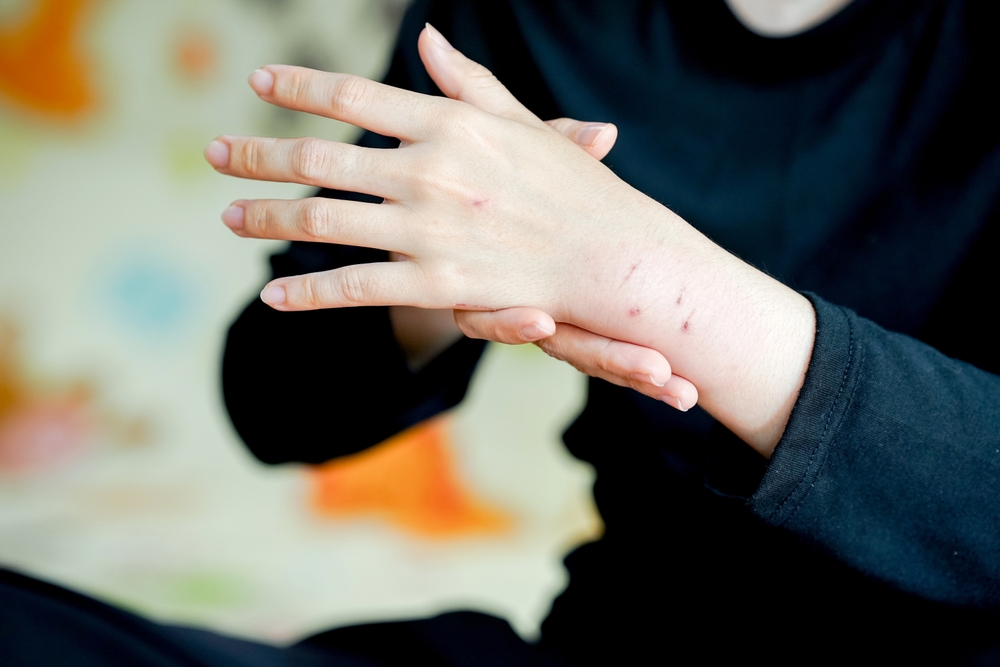
Several desensitization techniques can be used for patients after a hand injury, but it is important to tailor them to the patient you are working with; each patient will present differently. Interventions should be tolerable for the patient and not excessively painful. There should be a variety of textures, ranging from everyday items such as cotton to rougher ones such as Velcro hooks (Goransson & Cederlund, 2011). The purpose of desensitization is to help the patient return to meaningful occupations, not simply to touch a variety of textures. Other techniques that could be used in both at-home and clinical settings include massage, taping, vibration, immersion bins, and functional exposure, such as folding towels, getting dressed, handling coins, typing, etc. (Quintal et al., 2021). The most important aspect of using desensitization techniques is to have the patient use their affected hand in everyday activities and situations and to gradually expose them to a variety of textures to touch and feel.
Patient Education
The patient must continue working on desensitization techniques both in and out of the clinic. Education is an essential part of desensitization after a hand injury. Clinicians should educate their patients to use their affected hand during daily activities and introduce the hypersensitive areas to different textures found in their home. Additionally, patients need to understand that discomfort may occur during desensitization techniques, but it should not cause prolonged pain.
Conclusion
While there is no standardized desensitization program, existing evidence supports the use of desensitization techniques after a hand injury. A patient experiencing hypersensitivity can experience various negative impacts on their daily life. It is our job as hand therapists to assist them in returning to their meaningful daily occupations by improving comfort and confidence and promoting participation in daily activities. When desensitization techniques are incorporated both within the home and in the clinic, patients have a greater chance of reducing hypersensitivity and improving functional outcomes.
Göransson, I., & Cederlund, R. (2011). A study of the effect of desensitization on hyperaesthesia in the hand and upper extremity after injury or surgery. Thérapie de la main, 16(1), 12–18. https://doi.org/10.1258/ht.2010.010023
Hand therapy for hypersensitivity. HandCare: The Upper Extremity Expert. (n.d.). https://www.assh.org/handcare/condition/hand-therapy-for-hypersensitivity
Quintal, I., Carrier, A., Packham, T., Bourbonnais, D., & Dyer, J.-O. (2021). Tactile stimulation programs in patients with hand dysesthesia after a peripheral nerve injury: A systematic review. Journal de thérapie de la main, 34(1), 3–17. https://doi.org/10.1016/j.jht.2020.05.003
Plus à lire
Les effets de la thérapie par ventouses comme nouvelle approche dans la prise en charge physiothérapeutique du syndrome du canal carpien
Revue de l'article par : Rachel Reed Mohammadi, S., Roostayi, MM, Naimi, SS et Baghban, AA (2019). Les effets de la thérapie par ventouses comme nouvelle approche dans la prise en charge physiothérapeutique du syndrome du canal carpien. Recherche internationale en physiothérapie : le journal des chercheurs et cliniciens en physiothérapie, 24(3), e1770. https://doi.org/10.1002/pri.1770 The Skinny : Le but de ce…
Nouveau test de provocation de la tendinopathie distale du biceps pour le thérapeute de la main
Caekebeke, P., Schenkels, E., Bell, SN et van Riet, R. (2021). Test de provocation du biceps distal. Le Journal de Chirurgie de la Main. The Skinny : Ces chirurgiens recherchaient un test de provocation pour la tendinopathie distale du biceps (test de tendinite distale du biceps), en particulier les déchirures partielles, qui soit plus sensible et spécifique. Les larmes complètes sont plus facilement testées dans…
Interventions basées sur l'occupation en thérapie de la main
Maintenir les interventions basées sur l'occupation dans la thérapie de la main Par : Tristany Hightower Vos traitements sont-ils basés sur l'occupation ? Adaptez-vous vos choix d’activités aux besoins de chaque patient ? En tant qu'ergothérapeutes, nous devrions être des spécialistes dans la création d'objectifs et d'interventions visant à ramener nos patients à des occupations significatives. Trop souvent, la thérapie de la main peut…

Comment utiliser le taping de kinésiologie pour la subluxation de l'épaule
Comment utiliser la bande de kinésiologie pour la subluxation de l'épaule Par : Tayler Roost Qu'est-ce que la subluxation de l'épaule ? La subluxation de l'épaule est une luxation de l'articulation glénohumérale. Cela peut être classé comme traumatique, non traumatique ou neurologique. Une subluxation traumatique de l’épaule peut être provoquée par des sports de contact ou des mouvements répétitifs de l’épaule. Une subluxation non traumatique de l’épaule peut être causée indirectement…

Inscrivez-vous pour recevoir des mises à jour directement dans votre boîte de réception !
Inscrivez-vous avec nous et nous vous enverrons régulièrement des articles de blog sur tout ce qui concerne la thérapie des mains, des notifications chaque fois que nous mettons en ligne de nouvelles vidéos et tutoriels, ainsi que des documents, des protocoles et d'autres informations utiles.