

Why Desensitization Matters After Hand Injury
Classé sous Traitements, Non classé
After any type of main injury or surgery, the main can become sensitive to touch and different textures. Everyday tasks can become difficult or even painful due to hypersensitivity. Without intervention, this sensitivity can interfere with a patient’s ability to participate in meaningful daily activities and the recovery process.
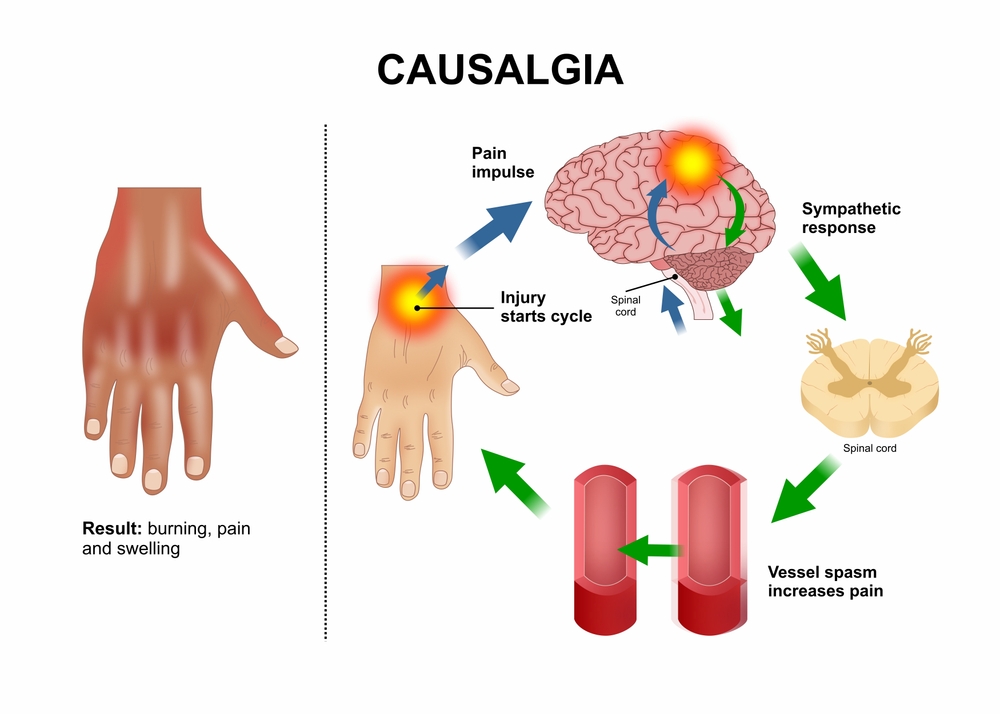
Why does hypersensitivity occur?
Hypersensitivity can be common after any type of main injury, including but not limited to surgery, trauma, nerve injury, burns, and amputation. Hypersensitivity can result from an increased number of pain-sensing nerve fibers migrating to the affected area, making it more sensitive (American Society for Surgery of the Hand, n.d.). Daily activities and tasks can become difficult for someone with hypersensitivity, as different textures, pressure, and temperature can be painful, touching objects can be uncomfortable, and individuals may avoid using their hands. Someone’s avoidance of using their main can lead to longer recovery times and further functional loss of their affected hand (American Society for Surgery of the Hand n.d.). This can also lead to worsening conditions such a CRPS.
What is desensitization and why is it needed?
Désensibilisation is a variety of techniques used to help retrain the nervous system to recognize everyday touch as safe and non-threatening. Using repeated, controlled desensitization techniques, the affected main can be exposed to various stimuli to help normalize an individual’s sensory processing. When someone is experiencing adverse reactions and feelings to certain stimuli, they may avoid certain textures and stimuli, which can lead to avoidance of using the affected extremity altogether. When patients avoid using the extremity, it can lead to stiffness, weakness, and poor functional outcomes. It is the therapist’s job to encourage progressive exposure to different textures and stimuli in the affected areas, and to allow the patient to adapt to different sensations over time.
According to Quintal et al. (2021), there is varied literature on how often desensitization programs should be used, but treatment sessions ranged from 1 to 10 minutes and 1 to 12 times per day. Duration and intensity should be tailored to the individual, meaning that they should be individualized to the patient’s tolerance and progressed gradually, rather than starting with highly irritating stimuli.
As patients begin to tolerate a variety of stimuli, they can gradually return to meaningful daily activities with greater comfort and confidence, leading to improved use of their affected extremity.
Common Desensitization Interventions
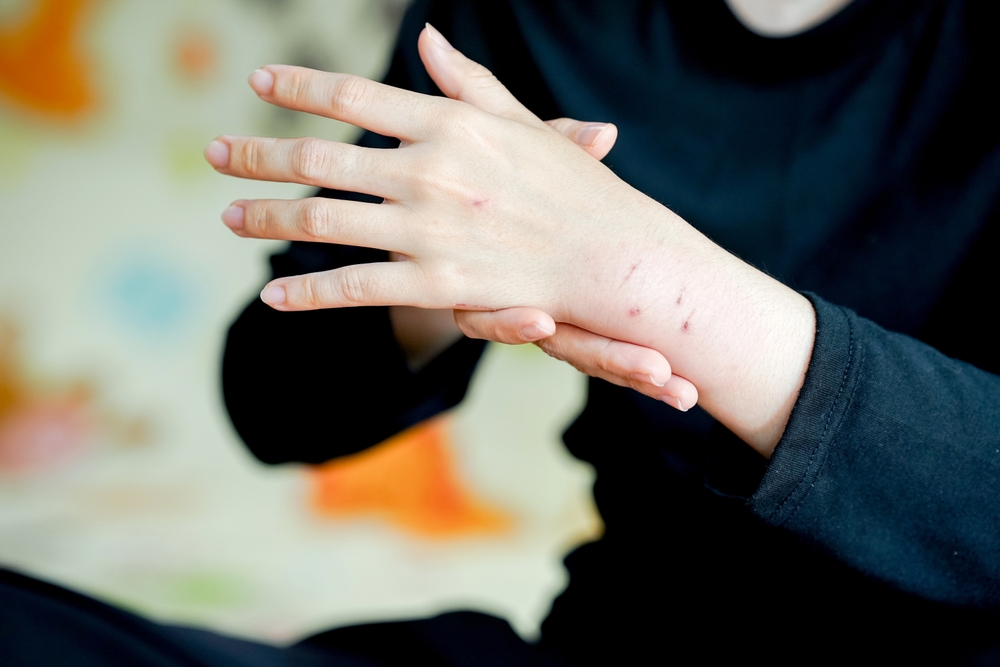
Several desensitization techniques can be used for patients after a hand injury, but it is important to tailor them to the patient you are working with; each patient will present differently. Interventions should be tolerable for the patient and not excessively painful. There should be a variety of textures, ranging from everyday items such as cotton to rougher ones such as Velcro hooks (Goransson & Cederlund, 2011). The purpose of desensitization is to help the patient return to meaningful occupations, not simply to touch a variety of textures. Other techniques that could be used in both at-home and clinical settings include massage, taping, vibration, immersion bins, and functional exposure, such as folding towels, getting dressed, handling coins, typing, etc. (Quintal et al., 2021). The most important aspect of using desensitization techniques is to have the patient use their affected hand in everyday activities and situations and to gradually expose them to a variety of textures to touch and feel.
Patient Education
The patient must continue working on desensitization techniques both in and out of the clinic. Education is an essential part of desensitization after a hand injury. Clinicians should educate their patients to use their affected hand during daily activities and introduce the hypersensitive areas to different textures found in their home. Additionally, patients need to understand that discomfort may occur during desensitization techniques, but it should not cause prolonged pain.
Conclusion
While there is no standardized desensitization program, existing evidence supports the use of desensitization techniques after a hand injury. A patient experiencing hypersensitivity can experience various negative impacts on their daily life. It is our job as hand therapists to assist them in returning to their meaningful daily occupations by improving comfort and confidence and promoting participation in daily activities. When desensitization techniques are incorporated both within the home and in the clinic, patients have a greater chance of reducing hypersensitivity and improving functional outcomes.
Göransson, I., & Cederlund, R. (2011). A study of the effect of desensitization on hyperaesthesia in the hand and upper extremity after injury or surgery. Thérapie de la main, 16(1), 12–18. https://doi.org/10.1258/ht.2010.010023
Hand therapy for hypersensitivity. HandCare: The Upper Extremity Expert. (n.d.). https://www.assh.org/handcare/condition/hand-therapy-for-hypersensitivity
Quintal, I., Carrier, A., Packham, T., Bourbonnais, D., & Dyer, J.-O. (2021). Tactile stimulation programs in patients with hand dysesthesia after a peripheral nerve injury: A systematic review. Journal de thérapie de la main, 34(1), 3–17. https://doi.org/10.1016/j.jht.2020.05.003
Plus à lire
Blessures dues aux poulies fermées chez les grimpeurs
Mécanisme de la blessure Grades de blessure à la poulie Options de traitement pour une rupture fermée Mesures des résultats Retour à l'escalade Considérations relatives à l'exercice Ressources Bollen SR (1990). Blessures des membres supérieurs chez les grimpeurs d'élite. Journal du Collège royal des chirurgiens d'Édimbourg, 35(6 Suppl), S18–S20. Bosco, F., Giustra, F., Lusso, A., Faccenda, C., Artiaco, S., & Massè, A. (2022).…
Douleur dorsale au poignet ?
Intégration de preuves émergentes dans la pratique clinique pour les patients souffrant de douleurs dorsales au poignet lors d'activités de mise en charge Par : Brittany Day Preuves à l'appui Une étude contrôlée randomisée récemment publiée dans le Journal of Hand Therapy a révélé que des bandes rigides de stabilisation du carpe (CST) augmentent considérablement l'amplitude de mouvement passive. , une amplitude de mouvement active et une diminution de la douleur chez les patients souffrant…
Rotator Cuff Pain: K Tape + Rehab Short-Term Effects
Nguyen, T. N. A., Nguyen, N. H., Vu, D. K., & Cu, L. T. N. (2025). Short-term effects ofKinesiotaping combined with a rehabilitation program for rotator cuff-related shoulder pain: Arandomized, assessor-blinded clinical trial. Journal of Manual & Manipulative Therapy, 33(2),112–121. https://doi.org/10.1080/10669817.2024.2387913 The Skinny:The term rotator cuff related shoulder pain (RCRSP) encompasses a range of disordersassociated…
L'identification des applications mobiles pour la réadaptation des fractures du radius distal.
Par Taylor Landholm Chen, Y., Yu, Y., Lin, X., Han, Z., Feng, Z., Hua, X., Chen, D., Xu, X., Zhang, Y. et Wang , G. (2020). Outils intelligents d'aide à la réadaptation pour les fractures du radius distal : une revue systématique basée sur la littérature et les magasins d'applications mobiles. Méthodes informatiques et mathématiques en médecine, 2020, 7613569. https://doi-org.methodistlibrary.idm.oclc.org/10.1155/2020/7613569 The Skinny The…

Inscrivez-vous pour recevoir des mises à jour directement dans votre boîte de réception !
Inscrivez-vous avec nous et nous vous enverrons régulièrement des articles de blog sur tout ce qui concerne la thérapie des mains, des notifications chaque fois que nous mettons en ligne de nouvelles vidéos et tutoriels, ainsi que des documents, des protocoles et d'autres informations utiles.