

Why Desensitization Matters After Hand Injury
abgelegt unter Behandlungen, Nicht kategorisiert
After any type of Hand injury or surgery, the Hand can become sensitive to touch and different textures. Everyday tasks can become difficult or even painful due to hypersensitivity. Without intervention, this sensitivity can interfere with a patient’s ability to participate in meaningful daily activities and the recovery process.
Why does hypersensitivity occur?
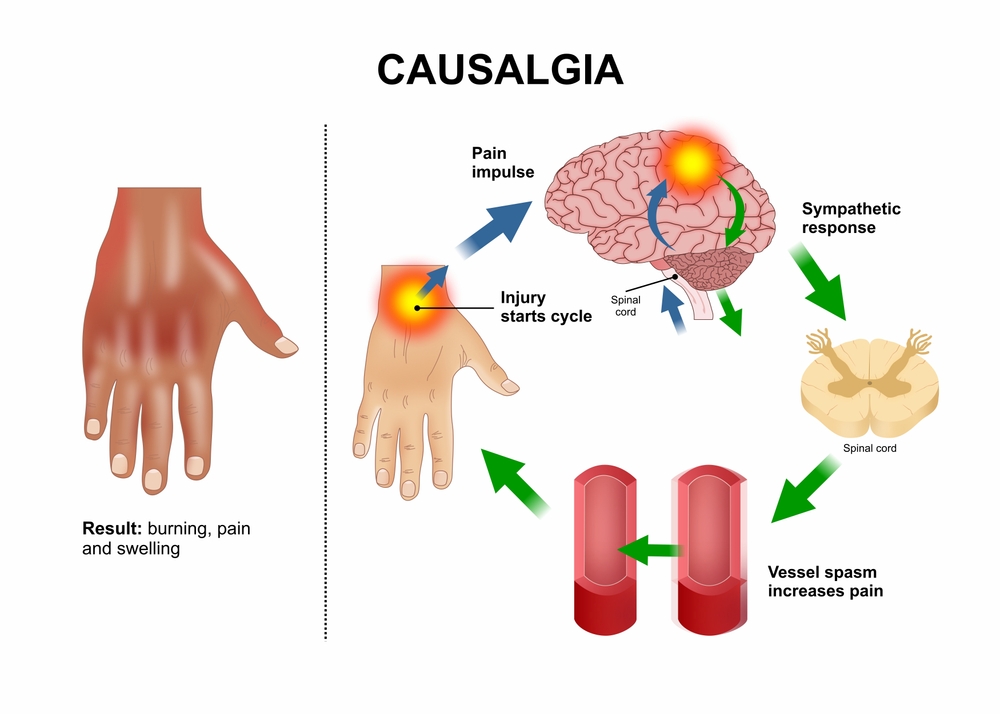
Hypersensitivity can be common after any type of Hand injury, including but not limited to surgery, trauma, nerve injury, burns, and amputation. Hypersensitivity can result from an increased number of pain-sensing nerve fibers migrating to the affected area, making it more sensitive (American Society for Surgery of the Hand, n.d.). Daily activities and tasks can become difficult for someone with hypersensitivity, as different textures, pressure, and temperature can be painful, touching objects can be uncomfortable, and individuals may avoid using their hands. Someone’s avoidance of using their Hand can lead to longer recovery times and further functional loss of their affected hand (American Society for Surgery of the Hand n.d.). This can also lead to worsening conditions such a CRPS.
What is desensitization and why is it needed?
Desensibilisierung is a variety of techniques used to help retrain the nervous system to recognize everyday touch as safe and non-threatening. Using repeated, controlled desensitization techniques, the affected Hand can be exposed to various stimuli to help normalize an individual’s sensory processing. When someone is experiencing adverse reactions and feelings to certain stimuli, they may avoid certain textures and stimuli, which can lead to avoidance of using the affected extremity altogether. When patients avoid using the extremity, it can lead to stiffness, weakness, and poor functional outcomes. It is the therapist’s job to encourage progressive exposure to different textures and stimuli in the affected areas, and to allow the patient to adapt to different sensations over time.
According to Quintal et al. (2021), there is varied literature on how often desensitization programs should be used, but treatment sessions ranged from 1 to 10 minutes and 1 to 12 times per day. Duration and intensity should be tailored to the individual, meaning that they should be individualized to the patient’s tolerance and progressed gradually, rather than starting with highly irritating stimuli.
As patients begin to tolerate a variety of stimuli, they can gradually return to meaningful daily activities with greater comfort and confidence, leading to improved use of their affected extremity.
Common Desensitization Interventions
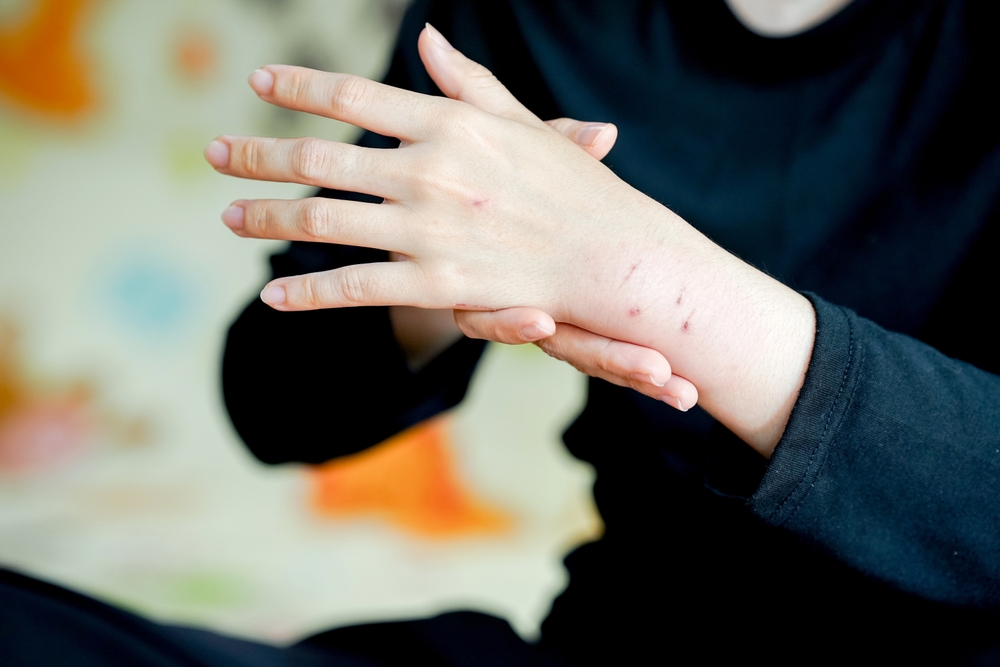
Several desensitization techniques can be used for patients after a hand injury, but it is important to tailor them to the patient you are working with; each patient will present differently. Interventions should be tolerable for the patient and not excessively painful. There should be a variety of textures, ranging from everyday items such as cotton to rougher ones such as Velcro hooks (Goransson & Cederlund, 2011). The purpose of desensitization is to help the patient return to meaningful occupations, not simply to touch a variety of textures. Other techniques that could be used in both at-home and clinical settings include massage, taping, vibration, immersion bins, and functional exposure, such as folding towels, getting dressed, handling coins, typing, etc. (Quintal et al., 2021). The most important aspect of using desensitization techniques is to have the patient use their affected hand in everyday activities and situations and to gradually expose them to a variety of textures to touch and feel.
Patient Education
The patient must continue working on desensitization techniques both in and out of the clinic. Education is an essential part of desensitization after a hand injury. Clinicians should educate their patients to use their affected hand during daily activities and introduce the hypersensitive areas to different textures found in their home. Additionally, patients need to understand that discomfort may occur during desensitization techniques, but it should not cause prolonged pain.
Abschluss
While there is no standardized desensitization program, existing evidence supports the use of desensitization techniques after a hand injury. A patient experiencing hypersensitivity can experience various negative impacts on their daily life. It is our job as hand therapists to assist them in returning to their meaningful daily occupations by improving comfort and confidence and promoting participation in daily activities. When desensitization techniques are incorporated both within the home and in the clinic, patients have a greater chance of reducing hypersensitivity and improving functional outcomes.
Göransson, I., & Cederlund, R. (2011). A study of the effect of desensitization on hyperaesthesia in the hand and upper extremity after injury or surgery. Handtherapie, 16(1), 12–18. https://doi.org/10.1258/ht.2010.010023
Hand therapy for hypersensitivity. HandCare: The Upper Extremity Expert. (n.d.). https://www.assh.org/handcare/condition/hand-therapy-for-hypersensitivity
Quintal, I., Carrier, A., Packham, T., Bourbonnais, D., & Dyer, J.-O. (2021). Tactile stimulation programs in patients with hand dysesthesia after a peripheral nerve injury: A systematic review. Zeitschrift für Handtherapie, 34(1), 3–17. https://doi.org/10.1016/j.jht.2020.05.003
Mehr zum Lesen

Pfeilwurfwinkel in der Handtherapie bei Verletzungen des Skapholunären Bandes.
Beeinflusst die Objekthöhe den Bewegungswinkel beim Dartwerfen bei sitzenden Aktivitäten des täglichen Lebens? Cohen, Y., Portnoy, S., Levanon, Y., Friedman, J. (2020). Beeinflusst die Objekthöhe den Bewegungswinkel des Dartwerfers bei sitzenden Aktivitäten des täglichen Lebens? Journal of Motor Behavior, (52) 4. Artikelrezension von: Rita Steffes The Skinny: Dart Throwers Motion…

So führen Sie eine schnelle, aber gründliche Beurteilung der Handtherapie durch
Wir haben nicht viel Zeit. Manchmal kommen unerwartet neue Patienten oder jemand kommt zur falschen Zeit und Ihr 1-Stunden-Block für eine Untersuchung beträgt plötzlich nur noch 30 Minuten. Wissen Sie, wie Sie Ihre Zeit mit dem Patienten optimal nutzen können? Wissen Sie, was die Dinger sind?
Schmerzen im dorsalen Handgelenk?
Einbeziehung neuer Erkenntnisse in die klinische Praxis für Patienten, die bei Belastungsaktivitäten unter Schmerzen im dorsalen Handgelenk leiden Von: Brittany Day Unterstützende Beweise Eine kürzlich im Journal of Hand Therapy veröffentlichte randomisierte Kontrollstudie ergab, dass starres karpales stabilisierendes Taping (CST) den passiven Bewegungsbereich deutlich erhöht , aktive Bewegungsfreiheit und Schmerzlinderung bei Patienten mit…
Ergebnisse von dorsalen Überbrückungsplatten
Ergebnisse von Dorsal Bridging Plates Fares, AB, Childs, BR, Polmear, MM, Clark, DM, Nesti, LJ, & Dunn, JC (2021). Dorsale Brückenplatte für distale Radiusfrakturen: Eine systematische Übersicht. Das Journal of Hand Surgery. https://doi-org.methodistlibrary.idm.oclc.org/10.1016/j.jhsa.2020.11.026 Die Skinny Distal Radius Frakturen (DRF) sind eine häufige Verletzung, die wir bei… sehen.

Melden Sie sich an, um Updates direkt in Ihren Posteingang zu erhalten!
Melden Sie sich bei uns an und wir senden Ihnen regelmäßig Blogbeiträge zum Thema Handtherapie, Benachrichtigungen jedes Mal, wenn wir neue Videos und Tutorials hochladen, zusammen mit Handzetteln, Protokollen und anderen nützlichen Informationen.