

Does Obesity or Smoking change the outcomes for Distal Radius Fractures
Filed under Reviews
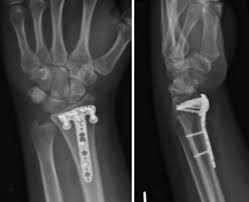
Hall, Matthew J., Ostergaard, P., Dowlatshahi, A., Harper, C., Earp, B. Rozental, T. (2019). The Impact of Obesity and Smoking on Outcomes After Volar Plate Fixation of Distal Radius Fractures. The Journal of Hand Surgery. In Press, Corrected Proof, Available online 31 October 2019. Doi: https://doi.org/10.1016/j.jhsa.2019.08.017
The Skinny- Distal radius fractures are one of the most common fractures seen in the clinic. Few studies have focused on the effect of risk factors such as BMI or smoking on outcomes after volar plate distal radius fracture. This retrospective study examined 200 patients between 2006-2017 experiencing a BMI >30 or have smoked at least 100 cigarettes in their lifetime and had smoked within 28 days of the injury. Patients had to have undergone a volar ORIF and had at least 1 year follow-up to meet inclusion criteria.
In the Weeds- For each patient in the database radiographs were examined and Radiographic Union Scoring System (RUSS) was noted. Functional measurements were obtained through QuickDASH scores, and ROM measurements were collected.
Results: Patients with a BMI >30 reported minimally greater QuickDASH scores at 1 year follow-up. Smokers displayed delayed bone healing and reported lower QuickDASH scores at 3 months but achieved excellent functional and radiographic outcomes at the final follow-up. Neither cohort experienced significant complications or poor RUSS scores at 1 year follow-up. Obesity or smoking were not linked to any ROM deficits.
Bring it Home- This study demonstrates that neither obesity or smoking had a significant negative impact on the outcomes of patients who underwent an ORIF for distal radius fractures. Smoking appears to delay bone healing, but did not have a significant effect on QuickDASH or RUSS scores at 1 year follow-up. These results may be in part due to the exclusive method of volar plate fixation in this study, providing the wound with an envelope of soft tissue to facilitate healing (distal radius fracture repair with volar plate).
This study’s strengths include a large cohort size with longitudinal follow-up. Data analysis measures were taken to isolate the risk factors of obesity and smoking, making the results reliable for this cohort. A limitation of this study is that it relies heavily on the accuracy of patient-reported history. QuickDASH scores can be negatively influenced if the patient is experiencing other upper extremity injuries. RUSS scores were a way to obtain subjective data on the healing of the fractures, being the only scoring system available to quantify the amount of healing in distal radius fractures, despite it not being an officially validated measure.
More To Read
Therapeutic Interventions and Contraindications of Cupping
By Kaylen Kallander Cupping therapy is used to apply negative pressure to a localized area of muscular or neurological pain to relieve nerve pressure and increase blood flow to an affected area. This modality is commonly used for athletes, but is also a frequent treatment in physical therapy, occupational therapy, or hand therapy. While cupping…
Management of a TFCC Injury in Hand Therapy
By: Taylor Volentine The wrist is composed of very complex joints that assists with movement in individuals of all ages and abilities. For instance, an active individual who participates in sports such as tennis, football, or gymnastics may increase the probability for wrist complications and injury (Morrison, 2019). Individuals with repetitive trauma from work or…
Mirror therapy after a peripheral nerve repair in hand therapy
Rapid Review Paula, M. H., Barbosa, R. I., Marcolino, A. M., Elui, V. M., Rosén, B., & Fonseca, M. C. (2016). Early sensory re-education of the hand after a peripheral nerve repair based on mirror therapy: a randomized controlled trial. Brazilian journal of physical therapy, 20(1), 58–65. https://doi.org/10.1590/bjpt-rbf.2014.0130 The Skinny: Therapy is often provided following an…

Outcomes of Rigid Night Splinting and Activity Modification in the Treatment of Cubital Tunnel Syndrome
Shah, C. M., Calfee, R. P., Gelberman, R. H., & Goldfarb, C. A. (2013). Outcomes of rigid night splinting and activity modification in the treatment of cubital tunnel syndrome (night splint for cubital tunnel syndrome). The Journal of Hand Surgery, 38(6), 1125–1130.e1. https://doi.org/10.1016/j.jhsa.2013.02.039 By: Sophia Grimm The Skinny: The purpose of this study was to…

Sign-up to Get Updates Straight to Your Inbox!
Sign up with us and we will send you regular blog posts on everything hand therapy, notices every time we upload new videos and tutorials, along with handout, protocols, and other useful information.