

The Identification of Mobile Applications for Distal Radius Fractures Rehab.
Filed under Treatments
By Taylor Landholm
Chen, Y., Yu, Y., Lin, X., Han, Z., Feng, Z., Hua, X., Chen, D., Xu, X., Zhang, Y., & Wang, G. (2020). Intelligent Rehabilitation Assistance Tools for Distal Radius Fracture: A Systematic Review Based on Literatures and Mobile Application Stores. Computational and Mathematical Methods in Medicine, 2020, 7613569. https://doi-org.methodistlibrary.idm.oclc.org/10.1155/2020/7613569
The Skinny
The use of mobile applications (such as rehab therapy mobile app) to enhance Distal Radius Fracture HEP adherence and provide a greater understanding of the potential of a new form of Health Care. In this systematic review, the authors begin to identify categories of consumer use applications to be implemented within distal radius fracture rehabilitation. There were four main categories for the mobile applications:
1: Intelligent intervention focused on apps that enhanced functional exercises to increase mobility in the later stages of fracture healing.
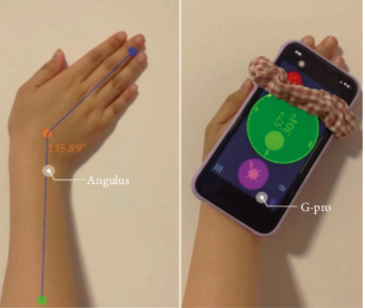
2: Angle measurements consist of applications that function as a digital goniometer so patients can track their progress.
3: Intelligent monitoring includes online consultations and offline care for remote services and functions more as a new medical model.
4: Auxiliary rehabilitation games provides activities to perform to increase range of motion in hand joints.
In the Weeds
The authors searched for articles relating to DRFs and intelligent apps for rehabilitation. The authors started with 2960 articles, narrowed down to 8 articles based upon their inclusion and exclusion criteria. Then the authors also performed a search on smartphone app stores. They searched for apps that had at least 100 downloads within the app stores, had ratings above ⅗, and included a description of the app. From there, the authors identified a total of 97 intelligent rehabilitation apps in the initial search, which was narrowed down to a total of 31 intelligent rehabilitation apps to include in the review.
Bringing it Home
This analysis of existing literature and software for DRF rehabilitation allows for therapists and other healthcare providers to begin implementing the advancing technology at our disposal into intervention sessions and HEPs to increase patient’s mobility. The top three apps from the app store analysis were: “Fisioterapia a tu alcance”, “OASIS Healthcare,” and “Gold Nurse.” These apps had over 100,000 downloads and have a user score greater than 4 points.
Within the 8 studies identified, “G-Pro,” “Compass,” “Gyroscope,” “Goniometer Records,” and “DrGoniometer” are five apps that were effective in goniometer measurements. Then “ReValidate” and “Tilt Maze Labyrinth” were effective applications for increasing mobility and promoting useful exercise. “Rehabilitation Assistant” was effective for health education for the patients and increased patient satisfaction.
We can use this information to make informed HEP decisions and intervention planning to help patients maximize their rehabilitation potential. By providing patients with the tools to increase their at-home performance of exercises and help them track their progress independently, we can increase patient self-efficacy and independence in managing their own health conditions, increasing their overall functional outcome.
Rating (3)
The review does provide a comprehensive insight into the available intelligent rehabilitation technology to be implemented into practice. However, within the review, the authors included 31 applications not involved in a research study. This may lead to potential inaccuracies within those apps reliability and validity. Finally, the study for the app, “Tilt Maze Labyrinth,” offered limited data, which may also lead to inaccuracies of the app’s utility. This study is relatively new, published in 2020. However, due to the rapid turnover in the tech world, some of the apps have altered names or are only available on either IOS or google app stores rather than being universal to all app stores. This review offers valuable tools to help patients and therapists form an engaging and functional HEP and interventions, which increases a patient’s adherence and satisfaction in their rehabilitation journey.
Goniometer reading for ulnar deviation from the app “G-Pro.”
Chen, Y., Yu, Y., Lin, X., Han, Z., Feng, Z., Hua, X., Chen, D., Xu, X., Zhang, Y., & Wang, G. (2020). Intelligent Rehabilitation Assistance Tools for Distal Radius Fracture: A Systematic Review Based on Literatures and Mobile Application Stores. Computational and Mathematical Methods in Medicine, 2020, 7613569. https://doi-org.methodistlibrary.idm.oclc.org/10.1155/2020/7613569
1 Comment
Leave a Comment
More To Read

Sensitivity and Specificity in Thoracic Outlet Syndrome (TOS) Tests in Hand Therapy
By: Mikayla Murphy Sensitivity and Specificity in Thoracic Outlet Syndrome (TOS) Tests in Hand Therapy Thoracic outlet syndrome (TOS) describes the compression of nerves, arteries, and veins as they pass through the thoracic outlet. Compression can occur at the interscalene triangle, the costoclavicular triangle, and the subcoracoid space (Physiopedia, n.d.). There are three types of…
Which is better for DeQuervain’s: Splinting or Injection?
Rapid Review Cavaleri, R., Schabrun, S. M., Te, M., & Chipchase, L. S. (2016). Hand therapy versus corticosteroid injections in de Quervain’s disease treatment: A systematic review and meta-analysis. Journal of hand therapy: official journal of the American Society of Hand Therapists, 29(1), 3–11. https://doi.org/10.1016/j.jht.2015.10.004 The Skinny: DeQuervain’s Tenosynovitis is a stenosing tenosynovial inflammation affecting the…
Carpal Tunnel Syndrome: How does traditional hand therapy compare with neurodynamic therapy?
Hamzeh, H., Mohammad, M., Alghwiri, A., & Hawamdeh, Z. (2021). The long-term effect of neurodynamics vs. exercise therapy on pain and function in people with carpal tunnel syndrome: A randomized parallel-group clinical trial. Journal of Hand Therapy, 34, 521-530. The Skinny: Carpal tunnel is the most common peripheral nerve compression problem. There is now some…
INTEROSSEOUS MUSCLE TIGHTNESS TESTING
May 2012 No. 19 INTEROSSEOUS MUSCLE TIGHTNESS TESTING Judy Colditz, OT/L, CHT, FAOTA INTEROSSEOUS MUSCLE TIGHTNESS TESTING – ARE YOU DOING IT CORRECTLY? The common term “Intrinsic Tightness Testing” is a misnomer as it describes a maneuver specifically designed to test tightness of the interosseous muscles. The interosseous muscles are small, short-fibered muscles contained within…

Sign-up to Get Updates Straight to Your Inbox!
Sign up with us and we will send you regular blog posts on everything hand therapy, notices every time we upload new videos and tutorials, along with handout, protocols, and other useful information.
Great!!!