

After any type of 手 injury or surgery, the 手 can become sensitive to touch and different textures. Everyday tasks can become difficult or even painful due to hypersensitivity. Without intervention, this sensitivity can interfere with a patient’s ability to participate in meaningful daily activities and the recovery process.
Why does hypersensitivity occur?
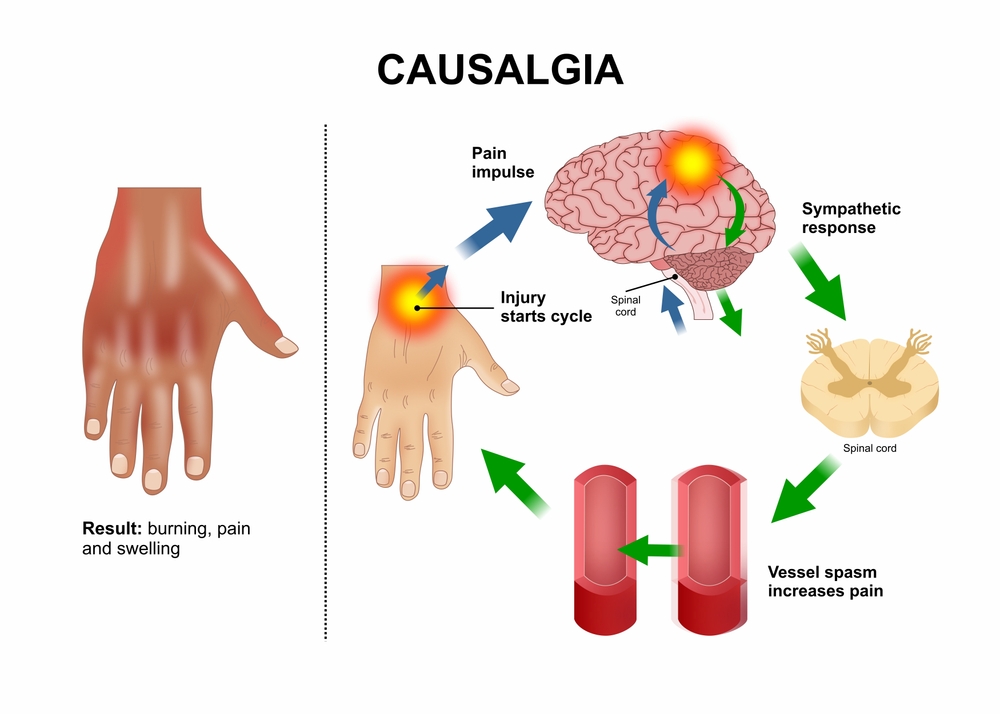
Hypersensitivity can be common after any type of 手 injury, including but not limited to surgery, trauma, nerve injury, burns, and amputation. Hypersensitivity can result from an increased number of pain-sensing nerve fibers migrating to the affected area, making it more sensitive (American Society for Surgery of the Hand, n.d.). Daily activities and tasks can become difficult for someone with hypersensitivity, as different textures, pressure, and temperature can be painful, touching objects can be uncomfortable, and individuals may avoid using their hands. Someone’s avoidance of using their 手 can lead to longer recovery times and further functional loss of their affected hand (American Society for Surgery of the Hand n.d.). This can also lead to worsening conditions such a CRPS.
What is desensitization and why is it needed?
脱敏 is a variety of techniques used to help retrain the nervous system to recognize everyday touch as safe and non-threatening. Using repeated, controlled desensitization techniques, the affected 手 can be exposed to various stimuli to help normalize an individual’s sensory processing. When someone is experiencing adverse reactions and feelings to certain stimuli, they may avoid certain textures and stimuli, which can lead to avoidance of using the affected extremity altogether. When patients avoid using the extremity, it can lead to stiffness, weakness, and poor functional outcomes. It is the therapist’s job to encourage progressive exposure to different textures and stimuli in the affected areas, and to allow the patient to adapt to different sensations over time.
According to Quintal et al. (2021), there is varied literature on how often desensitization programs should be used, but treatment sessions ranged from 1 to 10 minutes and 1 to 12 times per day. Duration and intensity should be tailored to the individual, meaning that they should be individualized to the patient’s tolerance and progressed gradually, rather than starting with highly irritating stimuli.
As patients begin to tolerate a variety of stimuli, they can gradually return to meaningful daily activities with greater comfort and confidence, leading to improved use of their affected extremity.
Common Desensitization Interventions
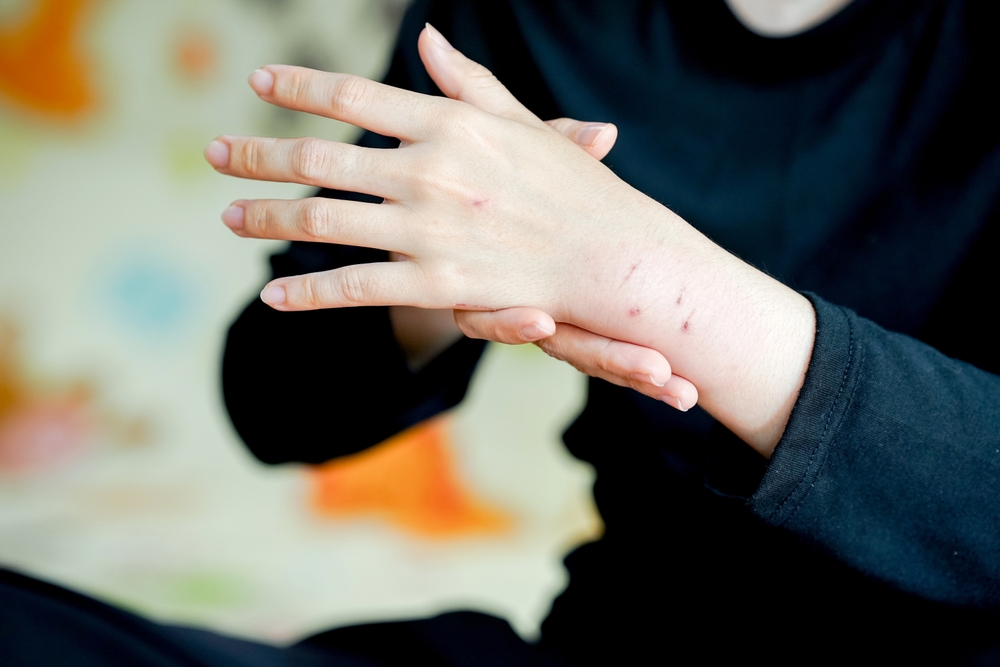
Several desensitization techniques can be used for patients after a hand injury, but it is important to tailor them to the patient you are working with; each patient will present differently. Interventions should be tolerable for the patient and not excessively painful. There should be a variety of textures, ranging from everyday items such as cotton to rougher ones such as Velcro hooks (Goransson & Cederlund, 2011). The purpose of desensitization is to help the patient return to meaningful occupations, not simply to touch a variety of textures. Other techniques that could be used in both at-home and clinical settings include massage, taping, vibration, immersion bins, and functional exposure, such as folding towels, getting dressed, handling coins, typing, etc. (Quintal et al., 2021). The most important aspect of using desensitization techniques is to have the patient use their affected hand in everyday activities and situations and to gradually expose them to a variety of textures to touch and feel.
Patient Education
The patient must continue working on desensitization techniques both in and out of the clinic. Education is an essential part of desensitization after a hand injury. Clinicians should educate their patients to use their affected hand during daily activities and introduce the hypersensitive areas to different textures found in their home. Additionally, patients need to understand that discomfort may occur during desensitization techniques, but it should not cause prolonged pain.
结论
While there is no standardized desensitization program, existing evidence supports the use of desensitization techniques after a hand injury. A patient experiencing hypersensitivity can experience various negative impacts on their daily life. It is our job as hand therapists to assist them in returning to their meaningful daily occupations by improving comfort and confidence and promoting participation in daily activities. When desensitization techniques are incorporated both within the home and in the clinic, patients have a greater chance of reducing hypersensitivity and improving functional outcomes.
Göransson, I., & Cederlund, R. (2011). A study of the effect of desensitization on hyperaesthesia in the hand and upper extremity after injury or surgery. 手部治疗, 16(1), 12–18. https://doi.org/10.1258/ht.2010.010023
Hand therapy for hypersensitivity. HandCare: The Upper Extremity Expert. (n.d.). https://www.assh.org/handcare/condition/hand-therapy-for-hypersensitivity
Quintal, I., Carrier, A., Packham, T., Bourbonnais, D., & Dyer, J.-O. (2021). Tactile stimulation programs in patients with hand dysesthesia after a peripheral nerve injury: A systematic review. 手部治疗杂志, 34(1), 3–17. https://doi.org/10.1016/j.jht.2020.05.003
更多阅读内容

镜子疗法
镜像疗法对治疗有很多意义,可用于治疗许多通常涉及上肢的诊断。其中包括我们上周强调的一些神经疾病,包括中风和局灶性手肌张力障碍。顺便说一句,您可以在这里免费下载 pdf 镜像疗法练习。患者需要多长时间...

腕管松解手术后的支柱疼痛
腕管松解手术后的支柱疼痛 腕管松解 (CTR) 手术是一种常见手术,大多数患者对其结果感到满意。然而,对于某些人来说,可能会出现一种称为“支柱疼痛”的暂时并发症,影响接受 CTR 的大约 13% 患者。支柱痛表现为鱼际隆起和小鱼际……
影响手部急性创伤性肌腱损伤患者矫形器依从性的因素
萨瓦什 (Savaş) 和艾多安 (Aydoğan) Ç. (2020)。急性创伤性手肌腱修复后影响矫形器依从性的因素:一项前瞻性队列研究。手部治疗杂志,S0894113020301848。 https://doi.org/10.1016/j.jht.2020.10.005 世界卫生组织。 (2003)。坚持长期治疗:行动的证据。世界卫生组织。紧身矫形器的佩戴对于保护肌腱创伤后愈合至关重要……
斜方掌关节融合术后 MCP ROM 的变化
快速回顾:斜方掌关节融合术后 MCP ROM 的变化 Hayashi, M.、Kato, H.、Komatsu, M.、Yamazaki, H.、Uchiyama, S. 和 Takahashi, J. (2021)。晚期斜方掌骨关节炎患者斜方掌关节融合术后拇指掌指关节运动功能范围的变化。手外科杂志,S0363-5023(21)00613-4。提前在线出版。 https://doi.org/10.1016/j.jhsa.2021.09.018。瘦瘦的:有几篇发表了……

注册即可直接将更新发送到您的收件箱!
注册我们,我们将定期向您发送有关手部治疗的所有内容的博客文章、每次上传新视频和教程时的通知,以及讲义、协议和其他有用信息。