

The effects of cupping therapy as a new approach in the physiotherapeutic management of carpal tunnel syndrome
Filed under Treatments
Article Review By: Rachel Reed
Mohammadi, S., Roostayi, M. M., Naimi, S. S., & Baghban, A. A. (2019). The effects of cupping therapy as a new approach in the physiotherapeutic management of carpal tunnel syndrome. Physiotherapy research international : the journal for researchers and clinicians in physical therapy, 24(3), e1770. https://doi.org/10.1002/pri.1770
The Skinny:
The purpose of this randomized controlled trial was to determine the clinical effect of cupping therapy on patients with carpal tunnel syndrome (CTS). Cupping for carpal tunnel is the application of negative pressure on the skin, which results in the release of myofascial and scar tissue and decreased skin stiffness. In cases of CTS, cupping can help remove pressure on the median nerve and improve nerve tissue viscoelastic function, blood flow, and nerve conduction.
In the Weeds:
This was a randomized clinical trial with 56 participants who had been diagnosed with CTS. The participants, who were between the ages of 18-60 years old, were divided equally into test and control groups. The severity of their CTS diagnoses was not a factor when allocating participants to these groups.
In the control group, 28 participants were treated with routine therapy, including transcutaneous electrical nerve stimulation (TENS) and ultrasound. TENS and ultrasound modalities were standardized and consistent between both groups.
In the test group, the other 28 participants were treated with routine therapy (including TENS and ultrasound) in addition to cupping therapy. The cupping therapy was standardized to include a manual pump for negative pressure, a plastic cup of 3cm in diameter with a silicone interface, and a calibrated pressure gauge to consistently measure air pressure used in the system. Cupping was used on the wrist for 4 minutes at a pressure of 50 mmHg, and it was moved along the nerve pathway during treatment in order to cover all areas of the wrist.
The measures used to determine the effects of cupping therapy were symptom severity scale, functional status scale, distal sensory latency, and distal motor latency. Researchers used the Boston Carpal Tunnel Syndrome Questionnaire to determine severity of symptoms, such as pain and numbness, and the participants’ functional status. Electromyography was used to evaluate distal latency. Treatment took place during 10 sessions, alternating days, and participants were assessed prior to the start of treatment and again at the end of the last session. Treatment included using cupping points for carpal tunnel.
The researchers determined that participants in the test group who received cupping therapy demonstrated a significant improvement in symptom severity (p = 0.006) and a significant decrease in distal sensory latency (p = 0.007) when compared to the control group. However, there was not a statistically significant mean difference in functional status or distal motor latency between the two groups.
Bringing it Home:
Because the study found that the incorporation of cupping therapy demonstrated a significant decrease in the severity of symptoms, cupping therapy should be considered as a convenient and low-cost intervention to improve treatment for patients with CTS (cupping for hand pain). However, cupping therapy should not be the primary treatment for CTS, as it was not shown to improve functional status.

This study was well-controlled in terms of consistency of variables and treatment modalities, and the researchers standardized the use of TENS and ultrasound with the test and control groups. Unfortunately, the sample size was relatively small. Because the severity of participants’ CTS was not a factor in allocation to test or control groups, one group may have had more patients with severe presentations of CTS, which may have skewed the data. Additionally, if a participant had bilateral CTS, the researchers considered each hand as a separate “participant,” not taking into account that the individual may have chronic inflammation or preexisting conditions affecting the development of bilateral CTS and thereby skewing the data. This is a good study overall, and this is the only study (as of 2019) that addresses cupping therapy with CTS (cupping therapy for carpal tunnel syndrome). There needs to be more research to determine the efficacy of cupping therapy as a treatment modality for individuals with CTS.
More To Read
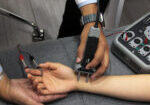
Do you know the difference between an Electromyography (EMG) and a Nerve Conduction Velocity (NCV) Study?
Do you know the difference between EMG and NCV (an Electromyography and a Nerve Conduction Velocity Study? The term nerve test is usually a broad term that typically indicates both an Electromyography (EMG) and a Nerve Conduction Velocity (NCV) study (EMG vs NCV). An EMG looks at the electrical signals your muscle makes when at…
Arteriovenous Malformation (AVM hand)
By: Amalia Garcia Introduction After completing three weeks of my Level II hand therapy rotation, I have seen a wide variety of common upper extremity injuries such as carpal tunnel syndrome, distal radius fractures, mallet finger, flexor tendon lacerations, arthritis, and more. One condition that stood out to me was one that I hadn’t heard…
Which is better for DeQuervain’s: Splinting or Injection?
Rapid Review Cavaleri, R., Schabrun, S. M., Te, M., & Chipchase, L. S. (2016). Hand therapy versus corticosteroid injections in de Quervain’s disease treatment: A systematic review and meta-analysis. Journal of hand therapy: official journal of the American Society of Hand Therapists, 29(1), 3–11. https://doi.org/10.1016/j.jht.2015.10.004 The Skinny: DeQuervain’s Tenosynovitis is a stenosing tenosynovial inflammation affecting the…
Test for Distal Radial Ulnar Joint of the Wrist
Ballottment Test for Wrist DRUJ Reliability and Validity Analysis of the Distal Radioulnar Joint Ballottement Test Nagashima, M., Omokawa, S., Hasegawa, H., Nakanishi, Y., Kawamura, K., & Tanaka, Y. (2024). Reliability and validity analysis of the distal radioulnar joint ballottement test. The Journal of Hand Surgery, 49(1), 15–22. https://doi.org/10.1016/j.jhsa.2023.10.006 The Skinny: Distal radioulnar joint (DRUJ)…

Sign-up to Get Updates Straight to Your Inbox!
Sign up with us and we will send you regular blog posts on everything hand therapy, notices every time we upload new videos and tutorials, along with handout, protocols, and other useful information.