

Dog Bites to the Hand: What Every Hand Therapist Should Know
Filed under Treatments
What to Expect with a Dog Bite to the Hand for Hand Therapists
By: Kathryn Harada
Prevalence and Severity:
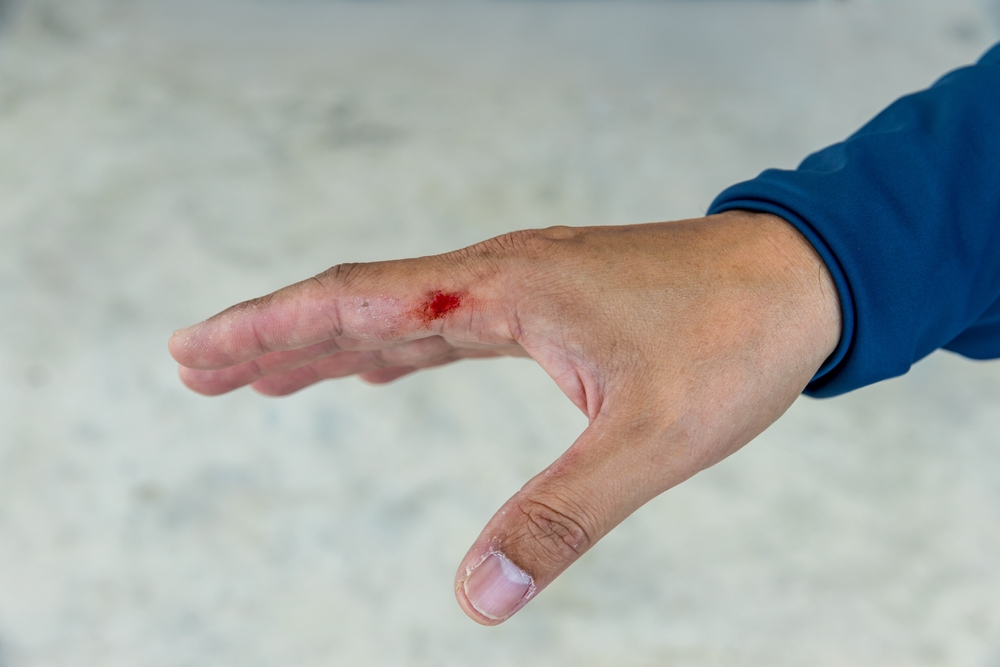
One reason people seek hand therapy is for rehabilitation after an animal bites. In the US alone, 1% of emergency department visits are due to animal bites each year, resulting in 2 to 5 million animal bites annually (Maniscalco et al., 2025). Dog bites are the most common, followed by cats; however, other less frequent injuries can be from rats, bats, and even monkeys (Maniscalco et al., 2025). Animal bites seen by hand therapists can vary in severity, ranging from superficial abrasions to more complex traumas, including punctures, lacerations, avulsions, crushed tissue, and/or a combination of all (Maniscalco et al., 2025). Additionally, animal bites pose a significant risk of infection due to the high level of bacterial exposure associated with these wounds (Maniscalco et al., 2025).
Damage Done to Digits:
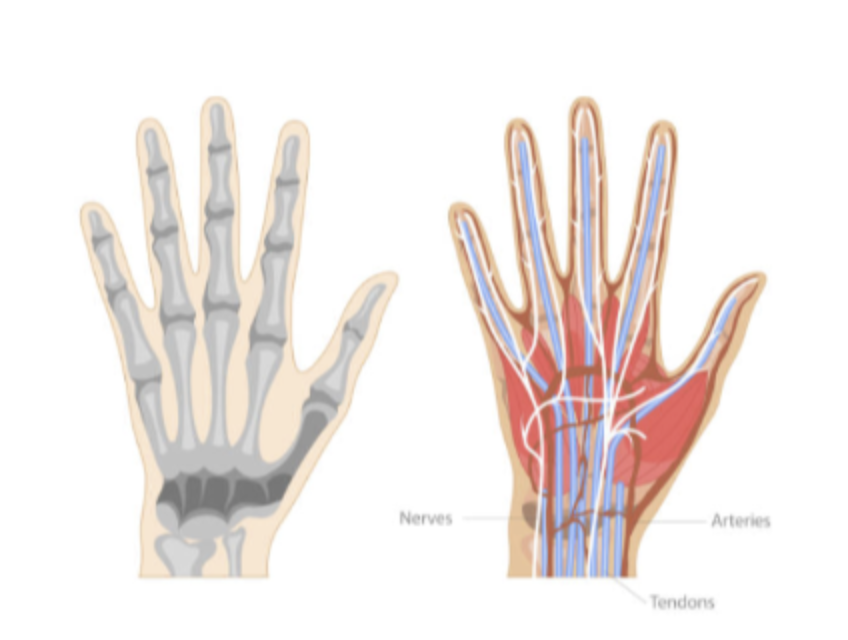
Digit anatomy consists of bones,tendons, ligaments, nerves, arteries, and skin. Depending on the severity of the animal bite, an individual can experience various symptoms due to what structures are
damaged. Animal bites to a digit can cause bone fractures, torn or lacerated tendons, stretched or severed nerves, and open skin wounds (American Academy of Orthopaedic Surgeons, n.d.). Along with risk of infection, these injuries can lead to digit deformities, stiffness, pain, edema, scar tissue development, hypersensitivity, numbness/tingling, and/or burning sensations in the affected digits (American Academy of Orthopaedic Surgeons, n.d.). Collectively, these impairments can result in decreased functional use of the digits.
Treatment for Animal Bites:
When a patient presents with an animal bite, it is essential for hand therapists to screen the wound site for infection. Indicators of infection include purulent discharge, redness around the wound, increased warmth at wound site, foul odor, and escalating pain and swelling (American Academy of Orthopaedic Surgeons, n.d.). In addition to infection screening, therapists may also be responsible for wound care which can include the following: cleaning the wound with sterile saline, dressing the wound with sterile gauze, debridement of devitalized tissue, and/or removal of sutures if present (American Academy of Orthopaedic Surgeons, n.d.). Therapists should also provide patient education on wound management at home to promote optimal healing and prevent complications. Manual therapy is another key component of rehabilitation following an animal bite.
Manual therapy interventions should include soft tissue mobilization to reduce edema and minimize scar formation, as well as PROM of the affected digits to address stiffness (Results Physiotherapy, n.d.). To manage hypersensitivity on and around the wound area, graded sensory input, such as vibration, may be incorporated to facilitate desensitization. Therapists should initially prioritize digit mobility exercises to restore AROM and dexterity (Maniscalco et al., 2025).
Once sufficient mobility has been achieved, strengthening exercises may be introduced to improve digit strength and overall functional use of the hand (Maniscalco et al., 2025). Neuromuscular retraining may also be needed to restore both sensory and motor function (Maniscalco et al., 2025). The timeline for therapeutic progress varies based on the severity of the injury and whether surgical intervention was required. Overall, rehabilitation following an animal bite is multifaceted, addressing wound management, scar management, edema management, mobility, strength, sensation, and overall functional recovery due to the complexity of digit anatomy and the structures potentially involved.
References
American Academy of Orthopaedic Surgeons. (n.d.). Animal bites. OrthoInfo. Retrieved January
17, 2026, from https://orthoinfo.aaos.org/en/diseases–conditions/animal-bites/
Maniscalco, K., Marietta, M., & Edens, M. A. (2025). Animal bites. In StatPearls [Internet].
StatPearls Publishing. Retrieved from https://www.ncbi.nlm.nih.gov/books/NBK430852/
Results Physiotherapy. (n.d.). Physical therapy for dog bites. Results Physiotherapy. Retrieved
January 16, 2026, from https://www.resultspt.com/blog/posts/physical-therapy-for-dog-
bites
More To Read
Mirror therapy after a peripheral nerve repair in hand therapy
Rapid Review Paula, M. H., Barbosa, R. I., Marcolino, A. M., Elui, V. M., Rosén, B., & Fonseca, M. C. (2016). Early sensory re-education of the hand after a peripheral nerve repair based on mirror therapy: a randomized controlled trial. Brazilian journal of physical therapy, 20(1), 58–65. https://doi.org/10.1590/bjpt-rbf.2014.0130 The Skinny: Therapy is often provided following an…

Use of Proprioception in Rotator Cuff Repair
Article Review By Brittany Day Upper Limb Active Joint Repositioning During a Multijoint Task in Participants with and without Rotator Cuff Tendinopathy and Effect of a Rehabilitation Program Pairot de Fontenay, Benoit, Mercier, Catherine, Bouyer, Laurent, Savoie, Alexandre, & Roy, Jean-Sébastien. (2019). Upper limb active joint repositioning during a multijoint task in participants with and…
Hand Contractures from Arthrogryposis Multiplex Congenita
What is Arthrogryposis Multiplex Congenita?Arthrogryposis Multiplex Congenita (AMC) is a rare congenital condition that is characterized byan individual being born with multiple joint contractures, involving two or more areas of the body(Khurana et al., 2024). AMC is a general term that describes over 400 different medicalconditions that involve joint contractures, instead of just describing one…

Stretching Alone Can Change P1 Bone Shape in Patients with Camptodactyly
Woo Hong, S. Kim, J., Sang Kwon, O., Ho Lee, M., Sik Gong, H., Hyun Baek, G., (2019). Radiographic Remodeling of the Proximal Phalangeal Head Using a Stretching Exercise in Patients With Camptodactyly. J Hand Surg Am, 1.e1-1.e10 The Skinny – Camptodactyly is a congenital, nontraumatic flexion contracture of the PIP in fingers other than…

Sign-up to Get Updates Straight to Your Inbox!
Sign up with us and we will send you regular blog posts on everything hand therapy, notices every time we upload new videos and tutorials, along with handout, protocols, and other useful information.