

Article Review: Relative Motion for Extensor Tendon Repair zone V-VI? Is a night-time resting hand orthosis beneficial?
Filed under Reviews
Hirth, M. J., Hunt, I., Briody, K., Milner, Z., Sleep, K., Chu, A., Donovan, E. & O’Brien, L. (2021). Comparison of two relative motion extension orthotic programs following surgical repair of finger extensor tendons in zones V-VI: A randomized equivalence trial. Journal of Hand Therapy-to be published.
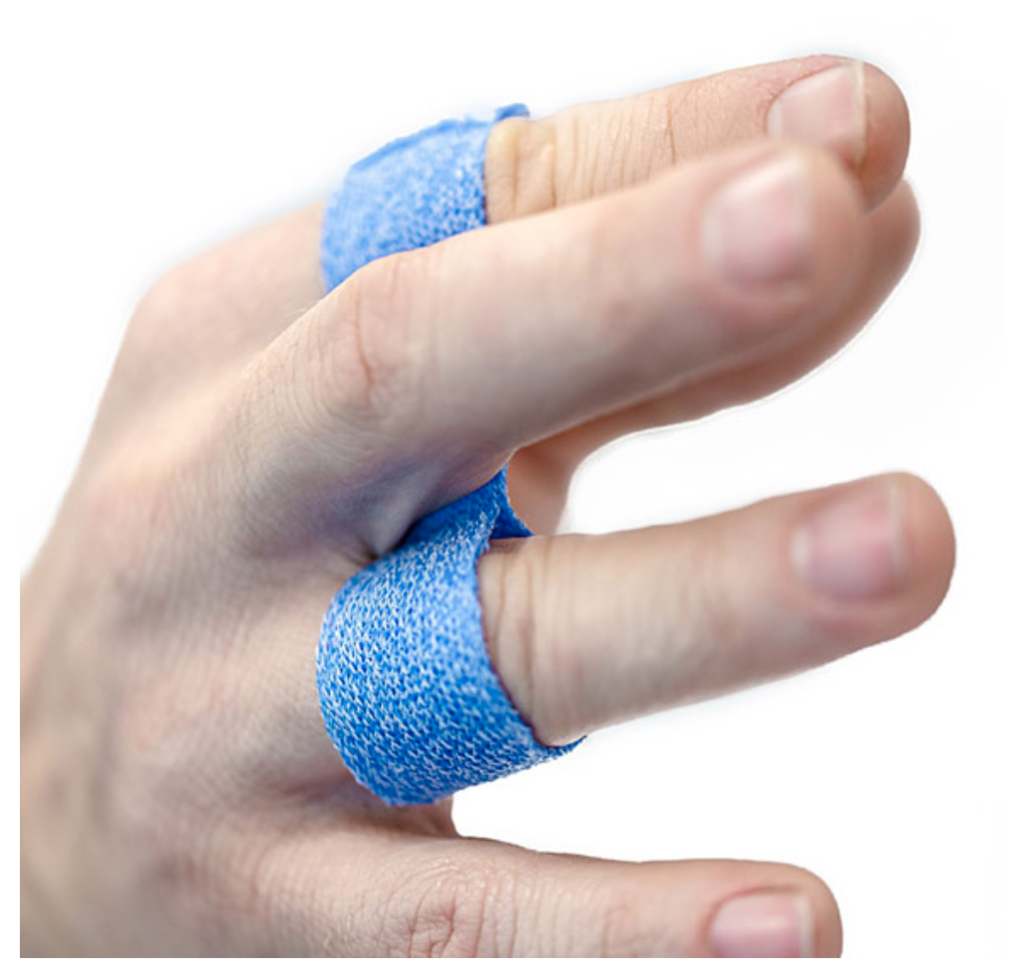
The Skinny: Following a zone V-VI tendon repair, relative motion splint is an effective option in providing adequate protection and preventing tendon rupture/attenuation. There is variability in relative motion splinting approaches, including replacing the relative motion orthosis with a larger orthosis overnight or adding a wrist orthosis. Due to this variability, the authors looked to determine if the splinting regime mattered. The study compared two splinting regimes following an extensor tendon repair in zone V-VI. Group one was a relative motion orthosis alone, and group two was a relative motion orthosis and a night-time orthosis.
In the Weeds: The study compared two splinting regimes (relative extension splint) following an extensor tendon repair in zone V-VI. Group one was a relative motion orthosis alone, and group two was a relative motion orthosis and a night-time orthosis following. They termed the groups as follows RME and wrist orthoses worn at the same times are terms ‘RME plus,’ and without a wrist, orthosis was termed‘ RME only.’ A total of 32 subjected were enrolled in the study and 17 were randomized into the RME and night-time splinting group, and 15 were enrolled in the RME at all times groups.
Outcomes measures included a range of motion, grip strength, return to work, pain, hand function, satisfaction, and orthotic adherence.
Bringing it Home: Both interventions produced similar outcomes and with no increase in rupture rate and similar results in the outcome measures.
Rating: The authors recommenced tailoring therapy interventions based on patient needs rather than being protocol-based. The study limitations include a small sample size. Also, it was a multisite study, so difficult to control for variations in therapeutic approaches and surgical techniques. A night-time resting hand orthosis may provide more comfort for patients.
4 Comments
Leave a Comment
More To Read

Assessments Seen in the Hand Therapy World
By: Dalton Busch Below I have created a list of some of the common assessments that are seen in the hand therapy world. Keep in mind that this list is not inclusive of all the assessments you might come across in this setting. With each assessment, I describe what it is, who the assessment is…

Hand Therapy Interventions for Distal Upper Extremity Injuries and Conditions
Takata, S.C., Wade, E.T., & Roll, S.C. (2019). Hand therapy interventions, outcomes, and diagnoses evaluated over the last 10 years: A mapping review linking research to practice. Journal of Hand Therapy, 32(1), 1–9. Written by Brittany Carrie The Skinny Approximately 26.9% of orthopedic injuries and disorders of the upper extremity occur worldwide. Injuries are most…
Differential Diagnosis: Trigger Finger vs. Subluxing Sagittal Band Injury vs. Subluxing Lateral Band
Differential Diagnosis: Trigger Finger vs. Subluxing Sagittal Band Injury vs. Subluxing Lateral Band Hand therapists frequently encounter patients presenting with finger pain, clicking, and difficulty with tendon glide. Among the most commonly confused conditions are trigger finger, subluxing sagittal band injury, and subluxing lateral band. Each of these pathologies involves different anatomical structures and biomechanical…
Flexor tendon rehabilitation in the 21st century: A systematic review
Neiduski, R. L. & Powell, R. K. (2019). Flexor tendon rehabilitation in the 21st century: A systematic review. Journal of Hand Therapy, 32, 165-174. The Skinny The objective of the study was to determine if there was evidence to support 1 type of exercise regimen. Exercise regimens reviewed include place and holds, early passive or…

Sign-up to Get Updates Straight to Your Inbox!
Sign up with us and we will send you regular blog posts on everything hand therapy, notices every time we upload new videos and tutorials, along with handout, protocols, and other useful information.
my mother’s middle finger is severely pulling over top of her ring finger. Doc said tendon damage. He put her in this type of splint which isn’t going to help stretch the tendon back to the middle. HOW is this supposed to fix her hand??
Hello, It depends on the degree of the injury. I would recommend your mother see a certified hand therapist
Hello ,
I would like to know how many weeks is time right time to use de the relative motion splint for extensors and flexors tendons?
like most things, it depends. It depends on the severity of the injury and if there was a repair done.