

Dog Bites to the Hand: What Every Hand Therapist Should Know
abgelegt unter Behandlungen
What to Expect with a Dog Bite to the Hand for Hand Therapists
By: Kathryn Harada
Prevalence and Severity:
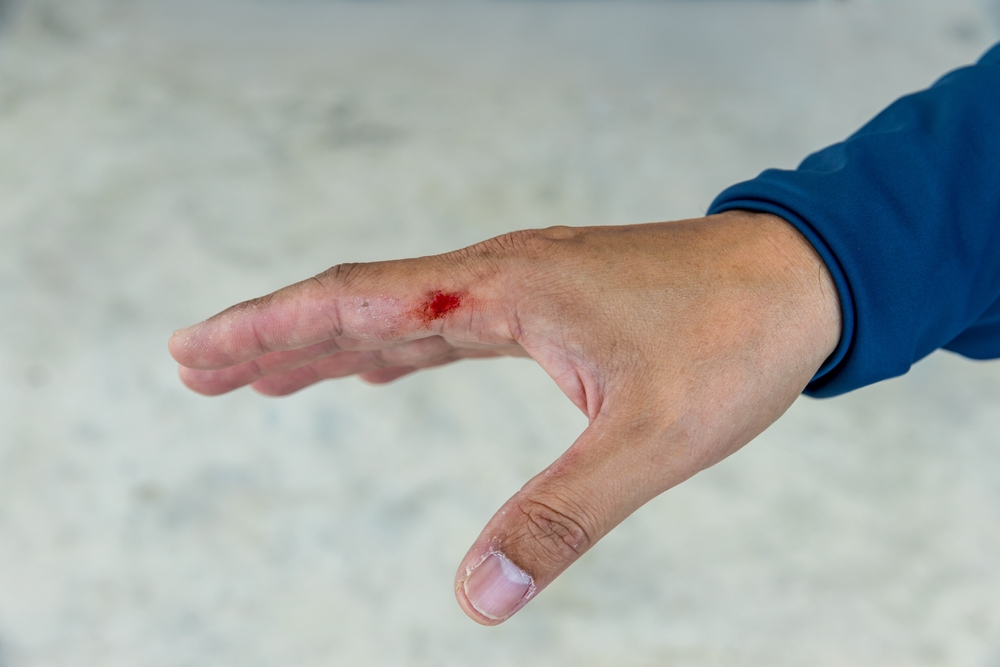
One reason people seek hand therapy is for rehabilitation after an animal bites. In the US alone, 1% of emergency department visits are due to animal bites each year, resulting in 2 to 5 million animal bites annually (Maniscalco et al., 2025). Dog bites are the most common, followed by cats; however, other less frequent injuries can be from rats, bats, and even monkeys (Maniscalco et al., 2025). Animal bites seen by hand therapists can vary in severity, ranging from superficial abrasions to more complex traumas, including punctures, lacerations, avulsions, crushed tissue, and/or a combination of all (Maniscalco et al., 2025). Additionally, animal bites pose a significant risk of infection due to the high level of bacterial exposure associated with these wounds (Maniscalco et al., 2025).
Damage Done to Digits:
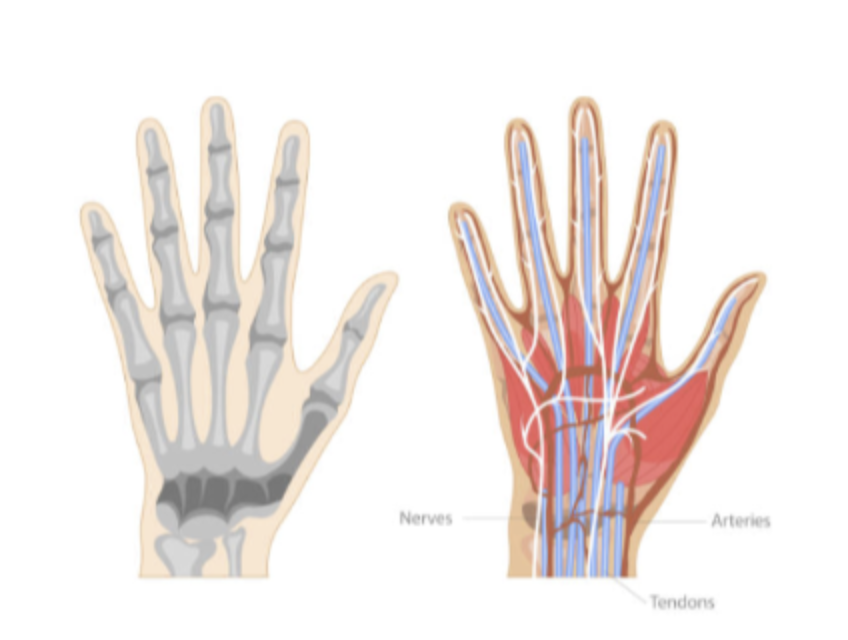
Digit anatomy consists of bones,tendons, ligaments, nerves, arteries, and skin. Depending on the severity of the animal bite, an individual can experience various symptoms due to what structures are
damaged. Animal bites to a digit can cause bone fractures, torn or lacerated tendons, stretched or severed nerves, and open skin wounds (American Academy of Orthopaedic Surgeons, n.d.). Along with risk of infection, these injuries can lead to digit deformities, stiffness, pain, edema, scar tissue development, hypersensitivity, numbness/tingling, and/or burning sensations in the affected digits (American Academy of Orthopaedic Surgeons, n.d.). Collectively, these impairments can result in decreased functional use of the digits.
Treatment for Animal Bites:
When a patient presents with an animal bite, it is essential for hand therapists to screen the wound site for infection. Indicators of infection include purulent discharge, redness around the wound, increased warmth at wound site, foul odor, and escalating pain and swelling (American Academy of Orthopaedic Surgeons, n.d.). In addition to infection screening, therapists may also be responsible for wound care which can include the following: cleaning the wound with sterile saline, dressing the wound with sterile gauze, debridement of devitalized tissue, and/or removal of sutures if present (American Academy of Orthopaedic Surgeons, n.d.). Therapists should also provide patient education on wound management at home to promote optimal healing and prevent complications. Manual therapy is another key component of rehabilitation following an animal bite.
Manual therapy interventions should include soft tissue mobilization to reduce edema and minimize scar formation, as well as PROM of the affected digits to address stiffness (Results Physiotherapy, n.d.). To manage hypersensitivity on and around the wound area, graded sensory input, such as vibration, may be incorporated to facilitate desensitization. Therapists should initially prioritize digit mobility exercises to restore AROM and dexterity (Maniscalco et al., 2025).
Once sufficient mobility has been achieved, strengthening exercises may be introduced to improve digit strength and overall functional use of the hand (Maniscalco et al., 2025). Neuromuscular retraining may also be needed to restore both sensory and motor function (Maniscalco et al., 2025). The timeline for therapeutic progress varies based on the severity of the injury and whether surgical intervention was required. Overall, rehabilitation following an animal bite is multifaceted, addressing wound management, scar management, edema management, mobility, strength, sensation, and overall functional recovery due to the complexity of digit anatomy and the structures potentially involved.
Verweise
American Academy of Orthopaedic Surgeons. (n.d.). Animal bites. OrthoInfo. Retrieved January
17, 2026, from https://orthoinfo.aaos.org/en/diseases–conditions/animal-bites/
Maniscalco, K., Marietta, M., & Edens, M. A. (2025). Animal bites. In StatPearls [Internet].
StatPearls Publishing. Retrieved from https://www.ncbi.nlm.nih.gov/books/NBK430852/
Results Physiotherapy. (n.d.). Physical therapy for dog bites. Results Physiotherapy. Retrieved
January 16, 2026, from https://www.resultspt.com/blog/posts/physical-therapy-for-dog-
bites
Mehr zum Lesen
Test für das distale radiale Ulnargelenk des Handgelenks
Ballottment-Test für das Handgelenk DRUJ Zuverlässigkeits- und Validitätsanalyse des Ballottment-Tests für das distale Radioulnargelenk Nagashima, M., Omokawa, S., Hasegawa, H., Nakanishi, Y., Kawamura, K., & Tanaka, Y. (2024). Zuverlässigkeits- und Validitätsanalyse des Ballottment-Tests für das distale Radioulnargelenk. The Journal of Hand Surgery, 49(1), 15–22. https://doi.org/10.1016/j.jhsa.2023.10.006 The Skinny: Distales Radioulnargelenk (DRUJ)…
Erhöhen Sie die Schulterreichweite, indem Sie den Scapulohumeral-Rhythmus verbessern
Der skapulohumerale Rhythmus ist oft die Schlüsselkomponente bei der Behandlung von Schulterbeschwerden und dem Mangel an vollständiger Beweglichkeit der Schulter. Dies kann auch eine entscheidende Komponente zur Vorbeugung von Schultererkrankungen während der Rehabilitation anderer Erkrankungen der oberen Extremitäten wie Frakturen des distalen Radius, Sehnenverletzungen und Ellenbogenverletzungen sein. Der skapulohumerale Rhythmus ist der Rhythmus in…
Lenkerlähmung, auch als Ulnarnervkompression bekannt
Lenkerlähmung, auch als Ulnarnervkompression bekannt. Lenkerlähmung, auch als Ulnarnervkompression bekannt, ist eine Erkrankung, die häufig bei Radfahrern auftritt und auf anhaltenden Druck auf den Ulnarnerv am Handgelenk in einem Bereich namens Guyon-Kanal zurückzuführen ist. Dieser Druck kann durch Druck auf den Lenker oder festes Greifen des Lenkers entstehen. …
Der Einsatz neuromuskulärer Elektrostimulation bei Lähmungen der oberen Extremitäten
Der Einsatz neuromuskulärer Elektrostimulation bei Lähmungen der oberen Extremitäten Von: Mikayla Murphy Martin, R., Johnston, K. & Sadowsky, C. (2012). Neuromuskuläre Elektrostimulation – unterstütztes Greiftraining und Wiederherstellung der Funktion in der tetraplegischen Hand: Eine Fallserie. Das American Journal of Occupational Therapy, 66(4), 471-477. https://doi.org/10.5014/ajot.2012.003004 The Skinny Der Zweck der Studie war es…

Melden Sie sich an, um Updates direkt in Ihren Posteingang zu erhalten!
Melden Sie sich bei uns an und wir senden Ihnen regelmäßig Blogbeiträge zum Thema Handtherapie, Benachrichtigungen jedes Mal, wenn wir neue Videos und Tutorials hochladen, zusammen mit Handzetteln, Protokollen und anderen nützlichen Informationen.