

Dog Bites to the Hand: What Every Hand Therapist Should Know
archivado en Tratos
What to Expect with a Dog Bite to the Hand for Hand Therapists
By: Kathryn Harada
Prevalence and Severity:
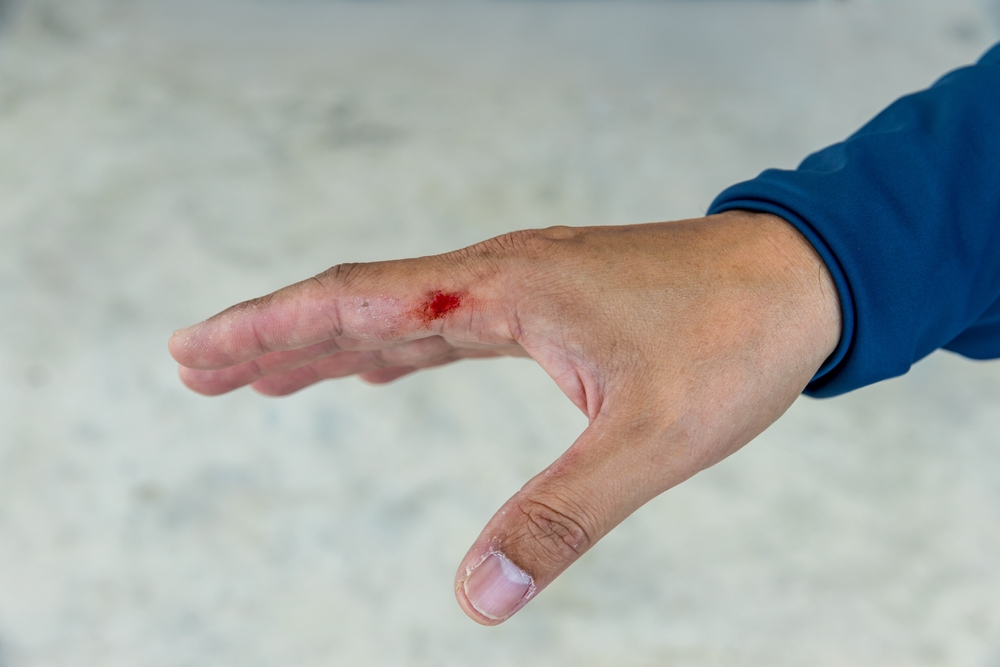
One reason people seek hand therapy is for rehabilitation after an animal bites. In the US alone, 1% of emergency department visits are due to animal bites each year, resulting in 2 to 5 million animal bites annually (Maniscalco et al., 2025). Dog bites are the most common, followed by cats; however, other less frequent injuries can be from rats, bats, and even monkeys (Maniscalco et al., 2025). Animal bites seen by hand therapists can vary in severity, ranging from superficial abrasions to more complex traumas, including punctures, lacerations, avulsions, crushed tissue, and/or a combination of all (Maniscalco et al., 2025). Additionally, animal bites pose a significant risk of infection due to the high level of bacterial exposure associated with these wounds (Maniscalco et al., 2025).
Damage Done to Digits:
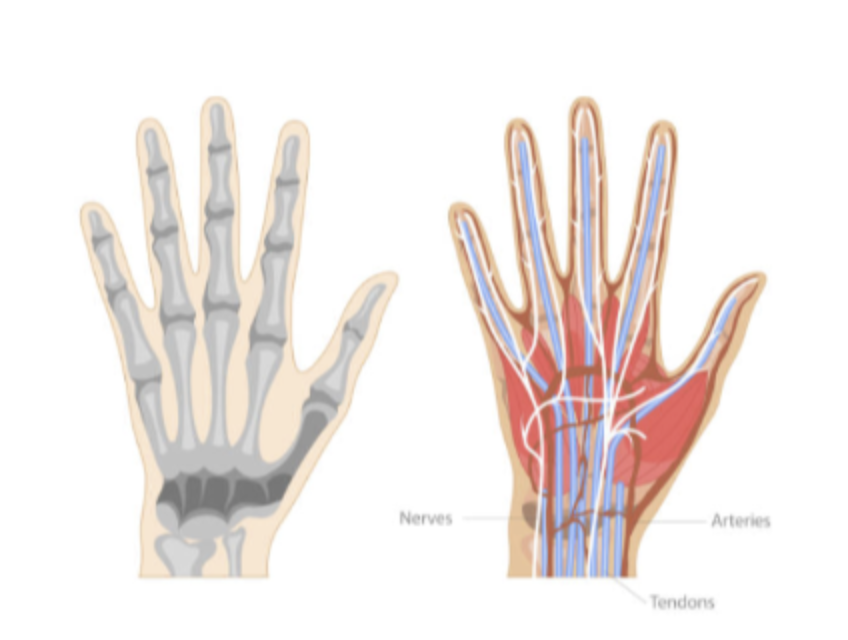
Digit anatomy consists of bones,tendons, ligaments, nerves, arteries, and skin. Depending on the severity of the animal bite, an individual can experience various symptoms due to what structures are
damaged. Animal bites to a digit can cause bone fractures, torn or lacerated tendons, stretched or severed nerves, and open skin wounds (American Academy of Orthopaedic Surgeons, n.d.). Along with risk of infection, these injuries can lead to digit deformities, stiffness, pain, edema, scar tissue development, hypersensitivity, numbness/tingling, and/or burning sensations in the affected digits (American Academy of Orthopaedic Surgeons, n.d.). Collectively, these impairments can result in decreased functional use of the digits.
Treatment for Animal Bites:
When a patient presents with an animal bite, it is essential for hand therapists to screen the wound site for infection. Indicators of infection include purulent discharge, redness around the wound, increased warmth at wound site, foul odor, and escalating pain and swelling (American Academy of Orthopaedic Surgeons, n.d.). In addition to infection screening, therapists may also be responsible for wound care which can include the following: cleaning the wound with sterile saline, dressing the wound with sterile gauze, debridement of devitalized tissue, and/or removal of sutures if present (American Academy of Orthopaedic Surgeons, n.d.). Therapists should also provide patient education on wound management at home to promote optimal healing and prevent complications. Manual therapy is another key component of rehabilitation following an animal bite.
Manual therapy interventions should include soft tissue mobilization to reduce edema and minimize scar formation, as well as PROM of the affected digits to address stiffness (Results Physiotherapy, n.d.). To manage hypersensitivity on and around the wound area, graded sensory input, such as vibration, may be incorporated to facilitate desensitization. Therapists should initially prioritize digit mobility exercises to restore AROM and dexterity (Maniscalco et al., 2025).
Once sufficient mobility has been achieved, strengthening exercises may be introduced to improve digit strength and overall functional use of the hand (Maniscalco et al., 2025). Neuromuscular retraining may also be needed to restore both sensory and motor function (Maniscalco et al., 2025). The timeline for therapeutic progress varies based on the severity of the injury and whether surgical intervention was required. Overall, rehabilitation following an animal bite is multifaceted, addressing wound management, scar management, edema management, mobility, strength, sensation, and overall functional recovery due to the complexity of digit anatomy and the structures potentially involved.
Referencias
American Academy of Orthopaedic Surgeons. (n.d.). Animal bites. OrthoInfo. Retrieved January
17, 2026, from https://orthoinfo.aaos.org/en/diseases–conditions/animal-bites/
Maniscalco, K., Marietta, M., & Edens, M. A. (2025). Animal bites. In StatPearls [Internet].
StatPearls Publishing. Retrieved from https://www.ncbi.nlm.nih.gov/books/NBK430852/
Results Physiotherapy. (n.d.). Physical therapy for dog bites. Results Physiotherapy. Retrieved
January 16, 2026, from https://www.resultspt.com/blog/posts/physical-therapy-for-dog-
bites
Más para leer
Cómo mejorar las habilidades de traducción motora fina
Por: Josh MacDonald Lo básico: coloco una pila de objetos pequeños sobre la mesa y un recipiente abierto para que el cliente los coloque. El objeto que uso depende del nivel del cliente. Llegaremos a eso más tarde. Luego, usan una pinza de 2 puntos para levantar uno y moverlo...

¡Todo sobre el vendaje de kinesiología para lesiones y afecciones de las extremidades superiores!
¡Todo sobre el vendaje de kinesiología! El elástico también se conoce como k-tape, Kinesio-tape y cinta de kinesiología. La cinta elástica está en todo el mercado y se ve a menudo en atletas profesionales. Se puede encontrar en la mayoría de las clínicas de terapia y se utiliza para tratar afecciones tanto ortopédicas como neurológicas. Hay estudios limitados que respaldan el uso de...
3 objetos domésticos para 9 actividades diferentes de terapia de manos
¿Tiene dificultades para desarrollar nuevas ideas de tratamiento o incluso ideas para sus visitas virtuales de terapia de manos? Pensar en formas únicas de utilizar los objetos que sus clientes tienen en sus hogares puede ser la mitad de la batalla. Esta publicación de blog presenta 3 formas diferentes de usar 3 artículos cotidianos. Artículo número 1: Una pelota de tenis (terapia de mano…
Tolerancia a la carga de peso de las extremidades superiores
Barlow, SJ, Scholtz, J. y Medeiros (2020). Tolerancia a la carga de peso en la muñeca en adultos sanos. Journal of Hand Therapy, xxx actualmente en prensa. El dolor y la inestabilidad de la muñeca flaca son fenómenos comunes y pueden ocurrir con lesiones agudas o crónicas. Esto conduce a una disfunción significativa, incluida la incapacidad de tolerar la carga axial a través de la extremidad superior. Hay…

¡Regístrese para recibir actualizaciones directamente en su bandeja de entrada!
Regístrese con nosotros y le enviaremos publicaciones periódicas en el blog sobre todo lo relacionado con la terapia de manos, avisos cada vez que subamos nuevos videos y tutoriales, junto con folletos, protocolos y otra información útil.