

Rapid Review: Is Finger Splinting Necessary after Flexor Tendon Repair?
archivado en Ortesis
Outcome of Tendón flexor Repair Using Eight-Strand Core Stitch Without Postoperative Finger entablillado
Reference: El-Gammal, T. A., Kotb, M. M., Ragheb, Y. F., El-Gammal, Y. T., & Anwar, M. M. (2024). Outcome of Flexor Tendon Repair Using Eight-Strand Core Stitch Without Postoperative Finger Splinting. HAND. https://doi.org/10.1177/15589447231220686
El delgado:
The purpose of this study was to evaluate the clinical outcomes of using an 8-strand double-cruciate core suture technique for tendón flexor repair, followed by early active motion without finger entablillado and with the wrist held in a neutral position.
En la maleza:
This prospective cohort study design involved 35 patients with 41 affected digits who sustained complete laceration of the flexor digitorum profundus (FDP) or flexor pollicis longus (FPL) tendon in zones II and III. All patients underwent a repair using an 8-strand double-cruciate core suture with four cross-grasping stitches under wide-awake local anesthesia without a tourniquet (WALANT). A running epitenon suture reinforced the repair, the FDS tendon was partially removed, and the A2 and A4 pulleys were vented as needed to improve tendon gliding. Postoperatively, on day one patients began passive motion and on day three began active motion without finger entablillado. Only a neutral wrist was used for entablillado. Light grasping was allowed at four weeks, and power grasping began at ten weeks. Outcomes were assessed for six months using the Strickland-Glocovac, Buck-Gramcko, and DASH measures.

Llévalo a casa:
The average total active motion (TAM) was 151° ± 22° (86% ± 13%). Based on the Strickland-Glocovac criteria, a combined 86.2% of finger repairs achieved excellent or good outcomes, while the Buck-Gramcko scale sowed a combined of 83.4% excellent or good results for thumb repairs. Mean thumb IP motion was 68° ± 23°, with extension lags of 21° ± 11° for fingers and 12° ± 4° for thumbs. The mean DASH score was 4.75, indicating excellent functional recovery with minimal disability. Four thumbs underwent complications in the study including bowstringing, flexion contracture, and/or ruptures.
Clasificación:
4/5 – This study effectively explores the outcomes of an 8-strand tendon repair with temprano activo motion and no finger entablillado in a well-designed manner. However, the small sample size, lack of control group, and potential bias from the surgeon-directed rehabilitation limits the strength of the study. This study highlights how the 8-strand tendon repair can allow for early active mobilization without the need for complex entablillado or continuous therapist supervision.
Más para leer
Actividades de intervención de terapia manual para la neuropatía periférica inducida por quimioterapia (CIPN)
Publicación de blog escrita por: Rita Steffes Los pacientes con CIPN pueden presentar síntomas que incluyen entumecimiento, hormigueo, hipersensibilidad al frío, pérdida de la sensibilidad táctil o de vibración, disminución del equilibrio y dolor ardiente y punzante en las manos. Estos síntomas dificultan que los pacientes de oncología participar en todas las actividades de la vida diaria como vestirse, preparar comidas,…
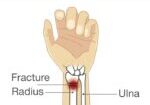
Tipos de fracturas del radio distal observadas en la clínica de terapia de la mano
Las fracturas del radio distal son una de las lesiones más comunes que se observan en la terapia de la mano. Se han desarrollado varios sistemas diferentes de clasificación de fracturas de radio distal y esta publicación de blog se centrará en los tipos más comunes de fracturas de radio distal y su clasificación. Las fracturas extraarticulares son fracturas no desplazadas o desplazadas. Estas fracturas ocurren afuera…
¿Cuál es la incidencia de molestias musculoesqueléticas en el codo, el hombro y el cuello después de lesiones en la mano y el antebrazo?
Winiarski, LM, Livoni, JD, Madsen, PV, Rathleff, MS y Larsen, P. (2021). Quejas musculoesqueléticas concurrentes en codos, hombros y cuello después de lesiones o afecciones comunes en manos y antebrazos: un estudio transversal entre 600 pacientes. Revista de terapia de manos: revista oficial de la Sociedad Estadounidense de Terapeutas de Manos, 34(4), 543–548. https://doi.org/10.1016/j.jht.2020.05.002 La Flaca: La…
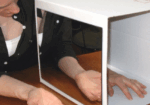
Imágenes motoras graduadas en terapia de manos
Las 3 etapas de las imágenes motoras graduadas Todos hemos oído hablar de la terapia con caja de espejos, pero ¿conoces los detalles de cómo funciona? En realidad, hay 3 etapas involucradas que ejercitan el cerebro y aprovechan su plasticidad. Hay una gran cantidad de evidencia que respalda estas tres etapas y puedes usarlas...

¡Regístrese para recibir actualizaciones directamente en su bandeja de entrada!
Regístrese con nosotros y le enviaremos publicaciones periódicas en el blog sobre todo lo relacionado con la terapia de manos, avisos cada vez que subamos nuevos videos y tutoriales, junto con folletos, protocolos y otra información útil.