

Rapid Review: Is Finger Splinting Necessary after Flexor Tendon Repair?
Filed under Orthoses
Outcome of Flexor Tendon Repair Using Eight-Strand Core Stitch Without Postoperative Finger Splinting
Reference: El-Gammal, T. A., Kotb, M. M., Ragheb, Y. F., El-Gammal, Y. T., & Anwar, M. M. (2024). Outcome of Flexor Tendon Repair Using Eight-Strand Core Stitch Without Postoperative Finger Splinting. HAND. https://doi.org/10.1177/15589447231220686
The Skinny:
The purpose of this study was to evaluate the clinical outcomes of using an 8-strand double-cruciate core suture technique for flexor tendon repair, followed by early active motion without finger splinting and with the wrist held in a neutral position.
In the Weeds:
This prospective cohort study design involved 35 patients with 41 affected digits who sustained complete laceration of the flexor digitorum profundus (FDP) or flexor pollicis longus (FPL) tendon in zones II and III. All patients underwent a repair using an 8-strand double-cruciate core suture with four cross-grasping stitches under wide-awake local anesthesia without a tourniquet (WALANT). A running epitenon suture reinforced the repair, the FDS tendon was partially removed, and the A2 and A4 pulleys were vented as needed to improve tendon gliding. Postoperatively, on day one patients began passive motion and on day three began active motion without finger splinting. Only a neutral wrist was used for splinting. Light grasping was allowed at four weeks, and power grasping began at ten weeks. Outcomes were assessed for six months using the Strickland-Glocovac, Buck-Gramcko, and DASH measures.

Bringing it Home:
The average total active motion (TAM) was 151° ± 22° (86% ± 13%). Based on the Strickland-Glocovac criteria, a combined 86.2% of finger repairs achieved excellent or good outcomes, while the Buck-Gramcko scale sowed a combined of 83.4% excellent or good results for thumb repairs. Mean thumb IP motion was 68° ± 23°, with extension lags of 21° ± 11° for fingers and 12° ± 4° for thumbs. The mean DASH score was 4.75, indicating excellent functional recovery with minimal disability. Four thumbs underwent complications in the study including bowstringing, flexion contracture, and/or ruptures.
Rating:
4/5 – This study effectively explores the outcomes of an 8-strand tendon repair with early active motion and no finger splinting in a well-designed manner. However, the small sample size, lack of control group, and potential bias from the surgeon-directed rehabilitation limits the strength of the study. This study highlights how the 8-strand tendon repair can allow for early active mobilization without the need for complex splinting or continuous therapist supervision.
More To Read
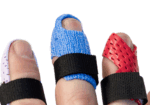
5+ Common Mallet Finger Splints
Finger orthoses can be tough, and the mallet finger orthosis is no exception. The protocol for 15 degrees of DIP extension with mallet fingers is tricky to manage while making a splint. Small splints on little fingers are also tricky to get sized just right and with strapping in the right places. Ask any experienced…
Scapholunate Wrist Injuries in Hand Therapy
Scapholunate Wrist Injuries in Hand Therapy In outpatient hand therapy, we get a variety of referrals ranging from post-operative patients to those looking to avoid or prolong surgery. These referrals come from a variety of sources ranging from primary care doctors to experienced hand surgeons. The therapy orders can be vague to very specific. …
Do you know the difference between an Electromyography (EMG) and a Nerve Conduction Velocity (NCV) Study?
Do you know the difference between EMG and NCV (an Electromyography and a Nerve Conduction Velocity Study? The term nerve test is usually a broad term that typically indicates both an Electromyography (EMG) and a Nerve Conduction Velocity (NCV) study (EMG vs NCV). An EMG looks at the electrical signals your muscle makes when at…
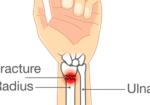
Is therapy needed after a distal radius fracture?
Coughlin T, Norrish AR, Scammell BE, Matthews PA, Nightingale J, Ollivere BJ. Comparison of rehabilitation interventions in nonoperatively treated distal radius fractures: a randomized controlled trial of effectiveness. Bone Joint J. 2021Jun;103-B(6):1033-1039. doi: 10.1302/0301-620X.103B.BJJ-2020-2026.R1.Epub 2021 Apr 30. PMID: 33926211. The Skinny: Individuals with distal radius fractures are very common in the hand therapy world. This…

Sign-up to Get Updates Straight to Your Inbox!
Sign up with us and we will send you regular blog posts on everything hand therapy, notices every time we upload new videos and tutorials, along with handout, protocols, and other useful information.