Rapid Review: Is Finger Splinting Necessary after Flexor Tendon Repair?
Classé sous Orthèses
Outcome of Tendon fléchisseur Repair Using Eight-Strand Core Stitch Without Postoperative Finger Attelle
Reference: El-Gammal, T. A., Kotb, M. M., Ragheb, Y. F., El-Gammal, Y. T., & Anwar, M. M. (2024). Outcome of Flexor Tendon Repair Using Eight-Strand Core Stitch Without Postoperative Finger Splinting. HAND. https://doi.org/10.1177/15589447231220686
Le maigre :
The purpose of this study was to evaluate the clinical outcomes of using an 8-strand double-cruciate core suture technique for tendon fléchisseur repair, followed by early active motion without finger attelle and with the wrist held in a neutral position.
Dans les mauvaises herbes :
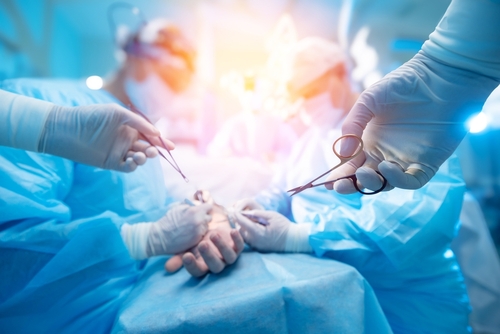
This prospective cohort study design involved 35 patients with 41 affected digits who sustained complete laceration of the flexor digitorum profundus (FDP) or flexor pollicis longus (FPL) tendon in zones II and III. All patients underwent a repair using an 8-strand double-cruciate core suture with four cross-grasping stitches under wide-awake local anesthesia without a tourniquet (WALANT). A running epitenon suture reinforced the repair, the FDS tendon was partially removed, and the A2 and A4 pulleys were vented as needed to improve tendon gliding. Postoperatively, on day one patients began passive motion and on day three began active motion without finger attelle. Only a neutral wrist was used for attelle. Light grasping was allowed at four weeks, and power grasping began at ten weeks. Outcomes were assessed for six months using the Strickland-Glocovac, Buck-Gramcko, and DASH measures.
Le ramener à la maison :
The average total active motion (TAM) was 151° ± 22° (86% ± 13%). Based on the Strickland-Glocovac criteria, a combined 86.2% of finger repairs achieved excellent or good outcomes, while the Buck-Gramcko scale sowed a combined of 83.4% excellent or good results for thumb repairs. Mean thumb IP motion was 68° ± 23°, with extension lags of 21° ± 11° for fingers and 12° ± 4° for thumbs. The mean DASH score was 4.75, indicating excellent functional recovery with minimal disability. Four thumbs underwent complications in the study including bowstringing, flexion contracture, and/or ruptures.
Notation:
4/5 – This study effectively explores the outcomes of an 8-strand tendon repair with début d'activité motion and no finger attelle in a well-designed manner. However, the small sample size, lack of control group, and potential bias from the surgeon-directed rehabilitation limits the strength of the study. This study highlights how the 8-strand tendon repair can allow for early active mobilization without the need for complex attelle or continuous therapist supervision.
Plus à lire
L'identification des applications mobiles pour la réadaptation des fractures du radius distal.
Par Taylor Landholm Chen, Y., Yu, Y., Lin, X., Han, Z., Feng, Z., Hua, X., Chen, D., Xu, X., Zhang, Y. et Wang , G. (2020). Outils intelligents d'aide à la réadaptation pour les fractures du radius distal : une revue systématique basée sur la littérature et les magasins d'applications mobiles. Méthodes informatiques et mathématiques en médecine, 2020, 7613569. https://doi-org.methodistlibrary.idm.oclc.org/10.1155/2020/7613569 The Skinny The…
Connaissez-vous l’ingrédient secret pour se remettre d’une blessure ?
Connaissez-vous l’ingrédient secret pour se remettre d’une blessure ? Je vais vous donner un indice : il contient 5 lettres et commence par la lettre S. SOMMEIL Vous êtes-vous déjà posé une question : le sommeil aide-t-il à guérir les blessures ? C'est à vous de partager avec vos patients mais aussi de servir de…

Utilisation des ultrasons pour réduire la douleur : est-ce efficace ?
Ilter, L., Dilek, B., Batmaz, I., Ulu, MA, Sariyildiz, MA, Nas, K. et Cevik, R. (2015). Efficacité des ultrasons thérapeutiques pulsés et continus dans le syndrome de douleur myofasciale : une étude contrôlée randomisée. Journal américain de médecine physique et de réadaptation, 94(7), 547-554. https://doi.org/10.1097/PHM.0000000000000210 Examen par : Megan Prather La thérapie des mains maigres par ultrasons – l'échographie a été déterminée…
Ce qu'il faut savoir en tant que thérapeute de la main lors du choix d'un matériau d'orthèse thermoplastique
Par : Kelsey Melton Les matériaux thermoplastiques peuvent avoir diverses propriétés. Chaque fournisseur propose une version différente de chaque combinaison de variables parmi laquelle le thérapeute peut choisir. Les marques les plus couramment utilisées pour la fabrication d'orthèses sont Orfit, NorthCoast Medical (NCM) et Raylan. Ces marques ont toutes leurs versions en matière thermoplastique qui varient en…

Inscrivez-vous pour recevoir des mises à jour directement dans votre boîte de réception !
Inscrivez-vous avec nous et nous vous enverrons régulièrement des articles de blog sur tout ce qui concerne la thérapie des mains, des notifications chaque fois que nous mettons en ligne de nouvelles vidéos et tutoriels, ainsi que des documents, des protocoles et d'autres informations utiles.