

Title: Management of the Stiff Finger: Evidence and Outcomes
Reference: Yang, G., McGlinn, E. P., & Chung, K. C. (2014). Management of the stiff finger: Evidence and outcomes. Clinics in Plastic Surgery, 41(3), 501–512. https://doi.org/10.1016/j.cps.2014.03.011
Article Review By: Tommi Hintnaus
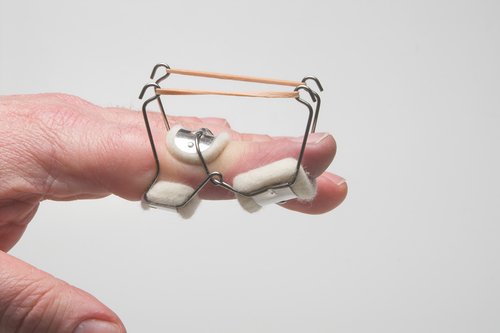
The Skinny: This study focuses on understanding and managing finger stiffness, a condition characterized by reduced range of motion often due to irreversible soft tissue fibrosis. This stiffness, commonly arising from finger injuries or diseases like rheumatoid arthritis, Dupuytren’s contracture, gout, and diabetes, presents a challenge for hand surgeons. The study categorizes stiff fingers into flexion and extension deformities and explores both non-operative and operative treatments. Non-operative strategies include exercise, joint mobilization, dynamic and static progressive splints, which aim to increase motion gradually by stretching affected joints. If these methods are ineffective, surgical interventions such as capsulotomy, collateral ligament release, and other soft tissue releases of MCP and PIP are considered. The authors emphasize the need for further research on treatment outcomes to enhance surgical recommendations and postoperative care protocols.
In the Weeds: The study examined both non-operative and operative methods for managing stiff fingers. For non-operative treatments, the authors investigated the use of dynamic splints and static progressive, focusing on their effectiveness in gradually stretching shortened ligaments and joint capsules to restore greater motion. They mentioned adjusting the force and duration of stretching on the specified joints to avoid inflammation and maximize therapeutic outcomes. Patients who did not respond to splinting and other conservative therapies, the authors investigated several surgical techniques for each unique case, which included capsulotomy, collateral ligament release, and volar plate release, to improve joint mobility in the metacarpophalangeal (MCP) and proximal interphalangeal (PIP) joints. Surgical interventions varied depending on the severity and type of deformity (flexion or extension contracture), with individualized approaches for each joint and deformity type. The study highlighted the importance of postoperative therapy in enhancing recovery and suggested that early mobilization is essential for better functional outcomes.
Bringing it Home: The study found that dynamic and static progressive splints are effective for managing finger stiffness in most cases, provided that the applied force and duration are carefully managed to prevent tissue inflammation. However, when non-operative treatments are insufficient, surgical options like capsulotomy and ligament release can significantly improve range, particularly in the MCP and PIP joints, when paired with post-operatively therapy and exercises. These procedures demonstrated improvements in mobility, particularly for patients with severe contractures who are unresponsive to non-operative techniques. The authors emphasize the importance of early postoperative therapy in preventing a stiff finger and promoting optimal recovery. The study concluded that further research is required to improve treatment protocols for patients with stiff fingers.
Rating: 3 / 5. The study is a narrative review rather than an experimental or randomized controlled trial. Instead of generating new data, it combines existing evidence on non-operative and operative treatment options. This study helps comprehend complex issues like finger stiffness and potential intervention options. The resources used in this study are relevant to the effectiveness of different treatment methods currently being used. The results and conclusion are consistent with the analysis that the authors provide. It could be strengthened by having more experimental evidence or a meta-analysis to support recommendations. However, the study is thorough and informative and guides practitioners on different treatment options for stuff fingers.
More To Read
3 Household Objects for 9 different Hand Therapy Activities
Do you struggle to develop new treatment ideas or even ideas for your virtual hand therapy visits? Thinking of unique ways to use objects your clients have in their homes can be half the battle. This blog post presents 3 different ways to use 3 everyday items. Item number 1: A tennis ball (hand therapy…
Therapeutic Interventions and Contraindications of Cupping
By Kaylen Kallander Cupping therapy is used to apply negative pressure to a localized area of muscular or neurological pain to relieve nerve pressure and increase blood flow to an affected area. This modality is commonly used for athletes, but is also a frequent treatment in physical therapy, occupational therapy, or hand therapy. While cupping…

Simple but Effective Ways Hand Therapists Address Psychosocial Impacts of Upper Extremity Injuries
Although psychosocial factors are often not formally assessed during an evaluation in those with upper extremity injuries, the therapist often informally assesses these during and after treatment sessions. Sustaining an upper extremity injury can be a physically and emotionally challenging experience. Beyond the physical pain and limitations, these injuries can profoundly impact an individual’s psychosocial…
Differential Diagnosis: Trigger Finger vs. Subluxing Sagittal Band Injury vs. Subluxing Lateral Band
Differential Diagnosis: Trigger Finger vs. Subluxing Sagittal Band Injury vs. Subluxing Lateral Band Hand therapists frequently encounter patients presenting with finger pain, clicking, and difficulty with tendon glide. Among the most commonly confused conditions are trigger finger, subluxing sagittal band injury, and subluxing lateral band. Each of these pathologies involves different anatomical structures and biomechanical…

Sign-up to Get Updates Straight to Your Inbox!
Sign up with us and we will send you regular blog posts on everything hand therapy, notices every time we upload new videos and tutorials, along with handout, protocols, and other useful information.