

Hand Contractures from Arthrogryposis Multiplex Congenita
Filed under Treatments
What is Arthrogryposis Multiplex Congenita?
Arthrogryposis Multiplex Congenita (AMC) is a rare congenital condition that is characterized by
an individual being born with multiple joint contractures, involving two or more areas of the body
(Khurana et al., 2024). AMC is a general term that describes over 400 different medical
conditions that involve joint contractures, instead of just describing one specific diagnosis
(National Organization for Rare Disorders, 2024). Although the exact cause of AMC is still
unknown, the condition has been linked to various genetic and environmental factors (Cleveland
Clinic, 2022). There are two types of AMC: Amyoplasia and Distal Arthrogryposis. Amyoplasia is
diagnosed when the contractures are in an individual’s limbs, and Distal arthrogryposis is
diagnosed when the contractures occur in an individual’s hands and feet instead of their limbs.
What are the Symptoms of AMC?
Symptoms of AMC and their severity vary from person to person, but there are some universal symptoms that are commonly seen in the majority of cases (Cleveland Clinic, 2022). Individuals born with AMC can have distinctive physical features like sloped shoulders, extended elbows, and curled wrists and fingers (Cleveland Clinic, 2022). Their joints seem frozen in place because they are fixed in curled or straightened positions.
Other universal symptoms of AMC include the following:
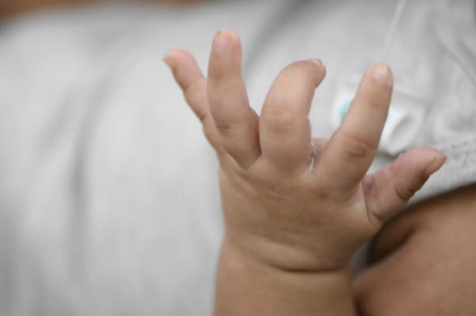
- Inability or limited ability to move small and large joints
- Hypoplastic, or underdeveloped, muscles
- Soft, tube-shaped limbs, and/or
- Soft tissue webbing over joints that keep them from moving
Along with those symptoms, individuals with AMC may have physical features like cleft palates
and/or undescended testes in males (National Organization for Rare Disorders, 2024). Also,
depending on other underlying conditions, an individual may also experience issues connected
to their central nervous system. It is important to note that the contractures will not spread to
previously unaffected joints in the body; however, they can change due to natural growth of the
individual or from therapeutic interventions.
What Does Treatment Look Like for Hand Contractures from AMC?
Hand therapy is recommended as a non-surgical treatment for AMC-related hand contractures
to improve joint range of motion (ROM) and reduce muscle atrophy (Cleveland Clinic, 2025;
National Organization for Rare Disorders, 2024). Non-surgical treatment for AMC should begin
in early infancy to maximize progress due to newborn tissue being more flexible and responsive
to gentle stretching and early splinting/bracing (John Hopkins Medicine, 2024; Paley Orthopedic
& Spine Institute, 2025). During the first few months of therapy, the focus is on stretching to
increase joint ROM and stimulating muscle activity in the patient (Paley Orthopedic & Spine
Institute, 2025). Since frequent and consistent stretching is essential, weekly therapy sessions
alone is not sufficient; therefore, parent and caregiver education is critical, so they can perform
gentle consistent stretching on their child with AMC at home. In therapy, therapists can also
provide splints for prolonged stretching, functional positioning, and stiffness prevention, and therapists can educate families on how to adapt and modify daily tasks to support independence
as the child grows up.
There are also surgical interventions like soft tissue releases, osteotomies and bony
procedures, muscle/tendon transfers, and/or limb lengthening or amputations that can be
beneficial to individuals with AMC (Paley Orthopedic & Spine Institute, 2025). If an individual
decides to have surgery, hand therapy can be beneficial to do in preparation for surgery and for
post-op rehab afterwards.
Hand therapy will continue throughout childhood for a child with AMC, so therapy might just be a
few sessions for the child and their parent or caregiver to get the tools they need to manage the
symptoms from home. Then when symptoms progress or change, they can come back to
therapy for a few sessions to gather new tools they need to manage the new symptoms from
home. Treatment for hand contractures related to AMC is not intended to completely correct
them. Instead, the goal for therapy is to maintain what the patient already has, and if possible,
achieve modest improvements that allow for better functional use.
Why Does this Matter to Occupational Therapists?
AMC occurs in 1 out of 3,000 live births, making it a very rare condition (Cleveland Clinic, 2022).
However, even though it is rare, there are still individuals in the world who are affected by it due
to their inability to function and effectively use their bodies to do tasks in their daily lives.
Specifically, joint contractures that occur in an individual’s hands can make it difficult for them to
independently participate in meaningful occupations like grooming/hygiene tasks, dressing,
eating with utensils, writing in school, playing outdoor activities with friends, etc. The inability to
complete these tasks due to this condition can decrease an individual’s quality of life. As
occupational therapists, this condition and how it is treated is important to know about, so
therapy can be successful and make positive changes in these individuals’ daily lives.
References
Cleveland Clinic. (2022, May 18). Arthrogryposis. Retrieved November 30, 2025, from
https://my.clevelandclinic.org/health/diseases/23190-arthrogryposis
Johns Hopkins Medicine. (2024, January). Arthrogryposis. Retrieved November 30, 2025, from
https://www.hopkinsmedicine.org/health/conditions-and-diseases/arthrogryposis
Khurana, A., Taksande, A., Meshram, R. J., Damam, S., Javvaji, C. K., Desai, K., Patel, A., &
Khandelwal, R. (2024). Early diagnosis and management of arthrogryposis multiplex
congenita in a neonate: A case study. Cureus, 16(5), e60729.
https://doi.org/10.7759/cureus.60729
National Organization for Rare Disorders. (2024). Arthrogryposis multiplex congenita. Retrieved
November 30, 2025, from https://rarediseases.org/rare-diseases/arthrogryposis-
multiplex-congenita/
Paley Orthopedic & Spine Institute. (2025, June 2). Arthrogryposis: Treatment options and goals
for improving mobility. Retrieved November 30, 2025, from
https://paleyinstitute.org/arthrogryposis-treatment-options-and-goals-for-improving-
mobility/
More To Read

How to Improve HEP Adherence for Optimal Rehabilitation Outcomes
By Sophia Grimm A lack of adherence to home exercise programs in rehabilitation is a significant problem, with nonadherence estimates as high as 30-65% for general musculoskeletal conditions. This could have potentially detrimental effects on patients’ clinical rehabilitation outcomes as the success of certain medical interventions depends largely on patient adherence to advice and prescribed rehabilitation…
Distal radius fracture types seen in the hand therapy clinic
Distal radius fractures are one of the most common injuries seen in hand therapy. Several different distal radius fracture classification systems have been developed, and this blog post will focus on the more common types of distal radius fractures and their classification. Extra-articular fractures are either nondisplaced or displaced fractures. These fractures occur outside…

Stretching Alone Can Change P1 Bone Shape in Patients with Camptodactyly
Woo Hong, S. Kim, J., Sang Kwon, O., Ho Lee, M., Sik Gong, H., Hyun Baek, G., (2019). Radiographic Remodeling of the Proximal Phalangeal Head Using a Stretching Exercise in Patients With Camptodactyly. J Hand Surg Am, 1.e1-1.e10 The Skinny – Camptodactyly is a congenital, nontraumatic flexion contracture of the PIP in fingers other than…
Increasing Shoulder Range of Motion by improving Scapulohumeral Rhythm
Scapulohumeral rhythm is often the key component when treating shoulder conditions and the reason for the lack of total shoulder range of motion. This may also be a critical component in order to prevent shoulder conditions during rehabilitation of other upper extremity conditions such as distal radius fractures, tendon injuries, and elbow injuries. Scapulohumeral rhythm…

Sign-up to Get Updates Straight to Your Inbox!
Sign up with us and we will send you regular blog posts on everything hand therapy, notices every time we upload new videos and tutorials, along with handout, protocols, and other useful information.