Why Online CEUs Beat Live CEUs for Occupational Therapy Professionals
Filed under Uncategorized
Understanding CEUs in Occupational Therapy
What Are CEUs?
Continuing Education Units (CEUs) are essential credits that occupational therapy professionals must earn regularly to maintain their licenses. One CEU typically equals 10 hours of participation in an approved education program.
Whether you’re an entry-level therapist or a seasoned practitioner, CEUs ensure that you stay updated with the latest clinical techniques, healthcare regulations, and patient care trends.
State Requirements for OT License Renewal
Each U.S. state has its own renewal period and CEU requirements. For example, California mandates 24 CEUs every two years, while New York requires 36. Regardless of the state, these units must be earned from state-approved or AOTA-accredited providers.
Live CEUs vs Online CEUs – What’s the Difference?
Format and Structure
- Live CEUs: In-person workshops, seminars, or conferences.
- Online CEUs: Web-based modules, video lessons, or live webinars that can be completed remotely.
Cost Comparison
| Mode | Typical Cost | Travel & Lodging | Meals | Total Estimate |
| Live CEUs | $200–$500 | $150+ | $50 | $400–$800 |
| Online CEUs | $50–$150 | $0 | $0 | $50–$150 |
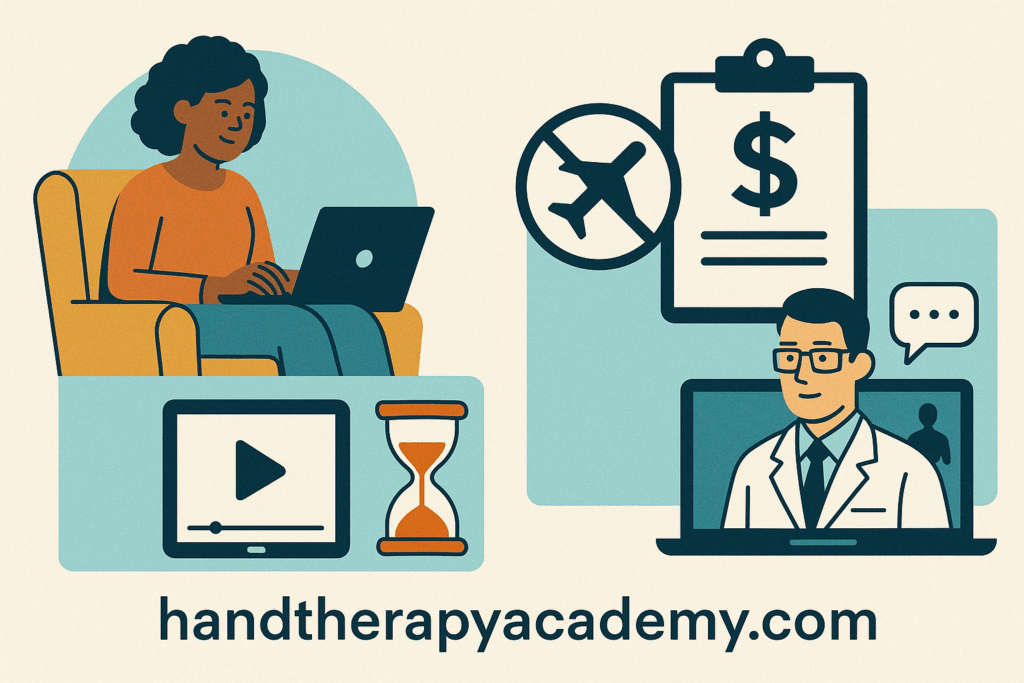
Online CEUs are 3–5 times cheaper than live sessions.
Learning Style Considerations
- Live sessions offer real-time interaction, but lack flexibility.
- Online CEUs offer replay options, self-paced learning, and accessibility from anywhere.
10 Reasons Why Online CEUs Are Better Than Live CEUs
1. Learn Anytime, Anywhere
Online CEUs let you learn from home, during breaks, or even while traveling. No need to block out entire weekends.
2. Lower Costs and Zero Travel
Forget airfare, hotels, and Uber rides. With online learning, every penny goes toward education—not logistics.
3. Self-Paced Flexibility
Pause. Rewind. Replay. Online CEUs adjust to your pace, not the other way around.
4. Wide Range of Topics
From pediatric sensory integration to geriatric rehab—online platforms offer hundreds of topics not always available in local live events.
5. Higher Retention via Replay
Studies show learners retain more information when allowed to review materials multiple times—something online CEUs provide effortlessly.
6. No Location Barriers
Even OTs in remote areas or small towns can access top-tier training without needing to travel.
7. Faster Completion Time
Knock out CEUs on your own schedule—finish 12 hours over two days instead of waiting for weekend workshops.
8. Accredited and State-Approved
Reputable platforms like Hand Therapy Academy provide fully accredited content that meets all licensure needs.
9. Mobile & Tablet Compatibility
Many courses are now mobile-optimized, letting you complete CEUs while waiting at the clinic, grocery store, or even on your commute.
10. Ideal for Busy Schedules
Parents, part-timers, and full-time therapists can all appreciate the convenience of 24/7 access.
Debunking Common Myths About Online CEUs
Myth: Online CEUs Are Less Credible
False. As long as the course is AOTA- or state-approved, it holds the same value as live instruction.
Myth: They Don’t Meet State Requirements
Most states accept both online and live CEUs—as long as the provider is authorized. Always check your state’s licensing board.
Myth: They’re Less Interactive
Many online CEUs include quizzes, discussion boards, case studies, and even live Q&A sessions.
Tips for Maximizing Online CEU Benefits
Create a Study Schedule
Block out small chunks daily instead of cramming it all into one weekend.
Take Notes
Jotting down insights improves retention and helps apply what you learn.
Combine With Practice
Apply concepts immediately in your clinical setting to reinforce learning.
The Future of Occupational Therapy Education
Virtual Reality & Simulation
Interactive 3D environments are being integrated into CEUs for lifelike scenarios.
AI-Powered Learning Paths
Soon, platforms will adapt CEU suggestions based on your specialty and past performance.
Frequently Asked Questions
Are online CEUs accepted in all states?
Yes, most states accept them if they’re from accredited providers. Always double-check your state board.
Can I complete CEUs on my phone?
Yes! Most platforms offer mobile-friendly interfaces.
How many CEUs do I need annually?
Varies by state. Typically, 12–36 CEUs every 1–2 years.
Are live CEUs better for networking?
Yes, but many online platforms now host forums and webinars to connect peers virtually.
Do employers prefer live over online?
No. Employers care about content quality, not delivery mode.
Can I switch from live to online CEUs anytime?
Absolutely! As long as the provider is accredited, you can mix and match formats.
Final Verdict: Online CEUs Win – Hands Down
Summary of Advantages
| Benefit | Live CEUs | Online CEUs |
| Flexibility | ❌ | ✅ |
| Cost-Effective | ❌ | ✅ |
| Accessible Anywhere | ❌ | ✅ |
| Wide Topic Coverage | ❌ | ✅ |
| Learning at Your Pace | ❌ | ✅ |
Final Thoughts & Recommendation
In 2025, the clear choice for occupational therapy CEUs is online learning. It’s more affordable, accessible, and effective. If you’re still stuck attending live seminars, it’s time to make the switch and reclaim your time, money, and sanity.
More To Read
Graded Motor Imagery in Hand Therapy
The 3 Stages of Graded Motor Imagery We’ve all heard of mirror box therapy, but do you know the details of how it works? There’s actually 3 stages involved that exercise the brain and take advantage of its plasticity. There is a great deal of evidence supporting these three stages and you can use them…

Mirror Therapy
Mirror therapy has many implications for therapy and can be used to treat many diagnoses that commonly involve the upper extremity. These include some of the Neuro Conditions we highlighted last week including, Stroke and Focal Hand Dystonia. Btw, you can download a mirror therapy exercises pdf here for free. How long should the patient…

Vagus Nerve Stimulation (VNS) for Various Etiologies
What is it: Vagus nerve stimulation (VNS) is a medical treatment that uses a device to deliver electrical impulses to the vagus nerve, which runs on both sides of the body from the lower brain through the neck to the chest and stomach. The left vagus nerve is typically used for this procedure, as simulating…
INTEROSSEOUS MUSCLE TIGHTNESS TESTING
May 2012 No. 19 INTEROSSEOUS MUSCLE TIGHTNESS TESTING Judy Colditz, OT/L, CHT, FAOTA INTEROSSEOUS MUSCLE TIGHTNESS TESTING – ARE YOU DOING IT CORRECTLY? The common term “Intrinsic Tightness Testing” is a misnomer as it describes a maneuver specifically designed to test tightness of the interosseous muscles. The interosseous muscles are small, short-fibered muscles contained within…

Sign-up to Get Updates Straight to Your Inbox!
Sign up with us and we will send you regular blog posts on everything hand therapy, notices every time we upload new videos and tutorials, along with handout, protocols, and other useful information.