

Carpal Tunnel Syndrome Treatment: Surgical vs. Hand Therapy Outcomes
归档依据 治疗方法
Carpal Tunnel Syndrome Treatment: Surgical vs. Non-Surgical Outcomes
Verdugo, R. J., Salinas, R. S., Castillo, J. L., & Cea, J. G. (2008). Surgical versus non-surgical treatment for 腕管 综合症。 Cochrane Database of Systematic Reviews, (4).
瘦子
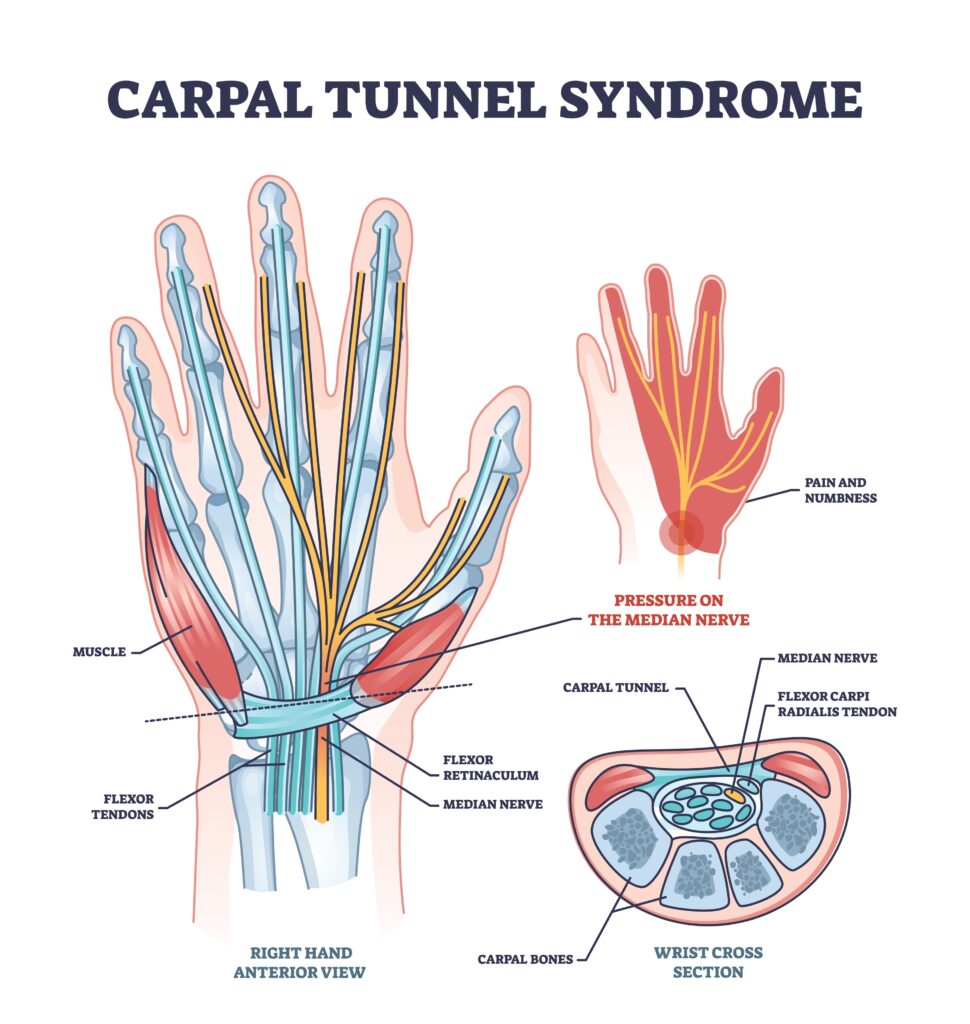
This article compares surgical treatment to non-surgical management such as 手部治疗 for individuals with 腕管 syndrome (CTS). Non-surgical interventions included wrist 夹板固定, corticosteroid injections, and therapy-based approaches. The findings suggest that surgery generally provides greater symptom relief and functional improvement over time, particularly in more advanced cases. However, conservative 治疗 remains effective for many patients, especially those with mild to moderate symptoms.
在杂草丛中
This study is a systematic review of randomized controlled trials comparing surgical and non-surgical treatments for CTS. Adult participants diagnosed with CTS were included, and outcomes such as pain, symptom severity, and functional hand use were evaluated.
Non-surgical interventions varied across studies but commonly included wrist splinting in a neutral position, corticosteroid injections, and therapy-based interventions. The included studies also had varying follow-up periods, allowing researchers to compare both short-term and long-term outcomes. One limitation noted was the variability in how conservative treatments were applied, making direct comparisons more difficult.
The results showed that surgical treatment generally led to greater improvement in symptoms and functional outcomes at long-term follow-up. Patients who underwent surgery experienced more consistent and sustained relief compared to those receiving conservative care.
At the same time, non-surgical interventions were still beneficial, particularly in the short term. Many patients with mild to moderate CTS demonstrated improvement with splinting and therapy-based approaches. The effectiveness of conservative treatment appeared to be more limited in patients with more severe symptoms.
把它带回家
The findings support a stepwise approach to managing 腕管 syndrome. Conservative treatment should typically be the first line of care, especially for patients with less severe symptoms. If symptoms persist or worsen, surgical intervention may provide greater long-term benefit.
From a clinical perspective, therapy plays an important role not only in early management but also following surgical intervention. Post-operative rehabilitation is often necessary to restore range of motion, manage scar tissue, and improve strength and functional use of the hand.
评分:4/5
This study supports the use of a stepwise treatment approach for 腕管 syndrome. Conservative management remains an appropriate first option for many patients because it can reduce symptoms without requiring surgery. However, surgery appears to provide better long-term improvement when symptoms persist or become more severe.
The article was helpful because it compared both treatment approaches while also recognizing the value of therapy throughout the rehabilitation process. One limitation is that the conservative treatments varied between studies, which made some comparisons less consistent.
更多阅读内容

腕肘管神经间水肿的机制
神经间水肿的机制 在过去的几周里,我一直在学习超声波成像和腕管综合症。在回顾腕管综合症时,我了解到神经内水肿是腕管、肘管等压迫性损伤的常见体征。腕管综合症的原因有很多,每种情况......

掌腱膜挛缩症的手术和手部治疗亮点
掌腱膜挛缩症影响手部筋膜(掌腱膜挛缩症筋膜切除术手)。遇到掌腱膜挛缩症患者是比较常见的,即使这不是您治疗该患者的主要原因。患者经常在手掌中出现结节,或者甚至可能出现增粗的脐带……

什么时候应该在手部治疗中使用静态渐进夹板?
弗劳尔斯,K.(2002)。提出的用于固定刚性关节的决策层次结构,重点是力的应用参数。手部治疗杂志,15,158-162。 Skinny - 本文提出了一个决策层次来确定何时应该应用静态渐进式或动态矫形器。决策层次结构使用修改后的周测试 (MWT)。这…
发现扳机指和掌腱膜掌腱膜之间的联系
发现扳机指和掌腱膜挛缩症之间的联系作者:Tayer Roost 参考文献:Yang, Gehring, M.、Bou Zein Eddine, S. 和 Hettinger, P. (2019)。手部狭窄性腱鞘炎与掌腱膜挛缩之间的关联。整形和重建手术。全球开放,7(1),e2088–e2088。 https://doi.org/10.1097/GOX.0000000000002088 The Skinny:这份回顾性图表回顾讨论了狭窄之间相关性的可能性……

注册即可直接将更新发送到您的收件箱!
注册我们,我们将定期向您发送有关手部治疗的所有内容的博客文章、每次上传新视频和教程时的通知,以及讲义、协议和其他有用信息。