

Carpal Tunnel Syndrome Treatment: Surgical vs. Hand Therapy Outcomes
abgelegt unter Behandlungen
Carpal Tunnel Syndrome Treatment: Surgical vs. Non-Surgical Outcomes
Verdugo, R. J., Salinas, R. S., Castillo, J. L., & Cea, J. G. (2008). Surgical versus non-surgical treatment for Karpaltunnel Syndrom. Cochrane Database of Systematic Reviews, (4).
Die Dünne
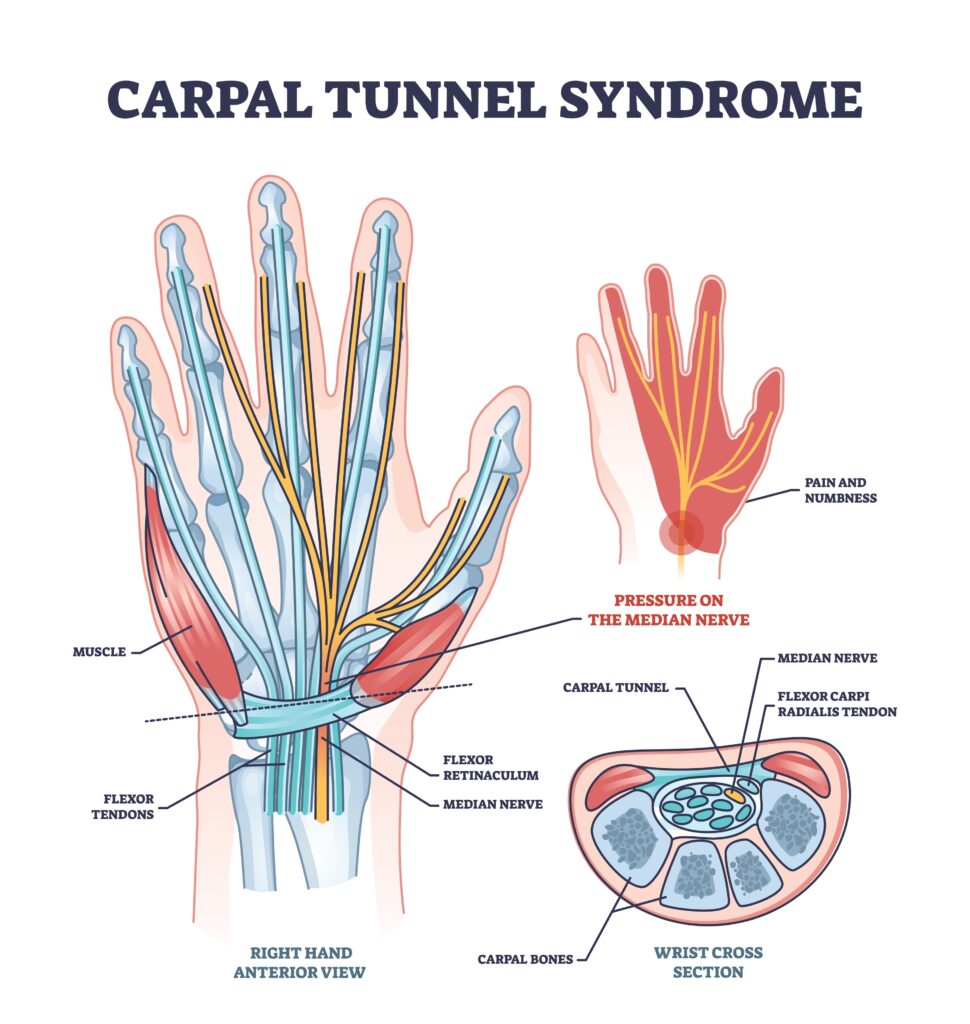
This article compares surgical treatment to non-surgical management such as Handtherapie for individuals with Karpaltunnel syndrome (CTS). Non-surgical interventions included wrist Schienung, corticosteroid injections, and therapy-based approaches. The findings suggest that surgery generally provides greater symptom relief and functional improvement over time, particularly in more advanced cases. However, conservative Behandlung remains effective for many patients, especially those with mild to moderate symptoms.
Im Unkraut
This study is a systematic review of randomized controlled trials comparing surgical and non-surgical treatments for CTS. Adult participants diagnosed with CTS were included, and outcomes such as pain, symptom severity, and functional hand use were evaluated.
Non-surgical interventions varied across studies but commonly included wrist splinting in a neutral position, corticosteroid injections, and therapy-based interventions. The included studies also had varying follow-up periods, allowing researchers to compare both short-term and long-term outcomes. One limitation noted was the variability in how conservative treatments were applied, making direct comparisons more difficult.
The results showed that surgical treatment generally led to greater improvement in symptoms and functional outcomes at long-term follow-up. Patients who underwent surgery experienced more consistent and sustained relief compared to those receiving conservative care.
At the same time, non-surgical interventions were still beneficial, particularly in the short term. Many patients with mild to moderate CTS demonstrated improvement with splinting and therapy-based approaches. The effectiveness of conservative treatment appeared to be more limited in patients with more severe symptoms.
Nach Hause bringen
The findings support a stepwise approach to managing Karpaltunnel syndrome. Conservative treatment should typically be the first line of care, especially for patients with less severe symptoms. If symptoms persist or worsen, surgical intervention may provide greater long-term benefit.
From a clinical perspective, therapy plays an important role not only in early management but also following surgical intervention. Post-operative rehabilitation is often necessary to restore range of motion, manage scar tissue, and improve strength and functional use of the hand.
Bewertung: 4/5
This study supports the use of a stepwise treatment approach for Karpaltunnel syndrome. Conservative management remains an appropriate first option for many patients because it can reduce symptoms without requiring surgery. However, surgery appears to provide better long-term improvement when symptoms persist or become more severe.
The article was helpful because it compared both treatment approaches while also recognizing the value of therapy throughout the rehabilitation process. One limitation is that the conservative treatments varied between studies, which made some comparisons less consistent.
Mehr zum Lesen

Die 4 Stufen der einfachen Wundversorgung in der Handtherapie
Wundversorgung ist chaotisch. Es kann einschüchternd und beängstigend sein. Bei so vielen Variationen von Wunden (z. B. weißer Haut um die Wunde) und so vielen Produkten auf dem Markt ist es schwierig zu wissen, was, wann und wie man es verwenden soll. Wenn Sie zu einer Wundversorgungskonferenz gehen, verbringen Sie den größten Teil …
Erhöhte Bewegungsfreiheit der Schulter durch Verbesserung des Scapulohumeral-Rhythmus
Der skapulohumerale Rhythmus ist häufig die Schlüsselkomponente bei der Behandlung von Schulterbeschwerden und der Grund für den Mangel an vollständiger Bewegungsfreiheit der Schulter. Dies kann auch eine entscheidende Komponente sein, um Schulterbeschwerden während der Rehabilitation anderer Erkrankungen der oberen Extremitäten wie Frakturen des distalen Radius, Sehnenverletzungen und Ellenbogenverletzungen vorzubeugen. Skapulohumeraler Rhythmus…

Sensorische Verarbeitung bei Menschen mit und ohne Tendinopathie
Emilee Sanders, OTS Sensorische Verarbeitung bei Menschen mit und ohne Tendinopathie: Eine systematische Überprüfung mit Metaanalyse lokaler, regionaler und entfernter Standorte mit Erkrankungen der oberen und unteren Extremitäten Rio, E, Sandler, J., Cheng, K., Moseley, GL, Cook, J., & Girdwood, M. (2021) Sensorische Verarbeitung bei Menschen mit und ohne Tendinopathie: Eine systematische Überprüfung mit Metaanalyse…
Die Empfindlichkeit und Spezifität von Ultraschall zur Diagnose des Karpaltunnelsyndroms: eine Metaanalyse
Fowler, JR, Gaughan JP und Ilyas, AM (2011). Die Sensitivität und Spezifität von Ultraschall zur Diagnose des Karpaltunnelsyndroms: Eine Metaanalyse. Klinische Orthopädie und verwandte Forschung, 469(4), 1089-1094. The Skinny – Die Autoren wollten die Sensitivität und Spezifität der Ultraschalltherapie für die Diagnose des Karpaltunnelsyndroms bestimmen, indem sie…

Melden Sie sich an, um Updates direkt in Ihren Posteingang zu erhalten!
Melden Sie sich bei uns an und wir senden Ihnen regelmäßig Blogbeiträge zum Thema Handtherapie, Benachrichtigungen jedes Mal, wenn wir neue Videos und Tutorials hochladen, zusammen mit Handzetteln, Protokollen und anderen nützlichen Informationen.