

Rapid Review: Is Finger Splinting Necessary after Flexor Tendon Repair?
归档依据 矫形器
Outcome of 屈肌腱 Repair Using Eight-Strand Core Stitch Without Postoperative Finger 夹板固定
Reference: El-Gammal, T. A., Kotb, M. M., Ragheb, Y. F., El-Gammal, Y. T., & Anwar, M. M. (2024). Outcome of Flexor Tendon Repair Using Eight-Strand Core Stitch Without Postoperative Finger Splinting. HAND. https://doi.org/10.1177/15589447231220686
瘦子:
The purpose of this study was to evaluate the clinical outcomes of using an 8-strand double-cruciate core suture technique for 屈肌腱 repair, followed by early active motion without finger 夹板固定 and with the wrist held in a neutral position.
在杂草丛中:
This prospective cohort study design involved 35 patients with 41 affected digits who sustained complete laceration of the flexor digitorum profundus (FDP) or flexor pollicis longus (FPL) tendon in zones II and III. All patients underwent a repair using an 8-strand double-cruciate core suture with four cross-grasping stitches under wide-awake local anesthesia without a tourniquet (WALANT). A running epitenon suture reinforced the repair, the FDS tendon was partially removed, and the A2 and A4 pulleys were vented as needed to improve tendon gliding. Postoperatively, on day one patients began passive motion and on day three began active motion without finger 夹板固定. Only a neutral wrist was used for 夹板固定. Light grasping was allowed at four weeks, and power grasping began at ten weeks. Outcomes were assessed for six months using the Strickland-Glocovac, Buck-Gramcko, and DASH measures.

把它带回家:
The average total active motion (TAM) was 151° ± 22° (86% ± 13%). Based on the Strickland-Glocovac criteria, a combined 86.2% of finger repairs achieved excellent or good outcomes, while the Buck-Gramcko scale sowed a combined of 83.4% excellent or good results for thumb repairs. Mean thumb IP motion was 68° ± 23°, with extension lags of 21° ± 11° for fingers and 12° ± 4° for thumbs. The mean DASH score was 4.75, indicating excellent functional recovery with minimal disability. Four thumbs underwent complications in the study including bowstringing, flexion contracture, and/or ruptures.
评分:
4/5 – This study effectively explores the outcomes of an 8-strand tendon repair with 早期活跃 motion and no finger 夹板固定 in a well-designed manner. However, the small sample size, lack of control group, and potential bias from the surgeon-directed rehabilitation limits the strength of the study. This study highlights how the 8-strand tendon repair can allow for early active mobilization without the need for complex 夹板固定 or continuous therapist supervision.
更多阅读内容
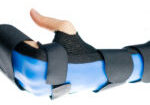
影响手部急性创伤性肌腱损伤患者矫形器依从性的因素
萨瓦什 (Savaş) 和艾多安 (Aydoğan) Ç. (2020)。急性创伤性手肌腱修复后影响矫形器依从性的因素:一项前瞻性队列研究。手部治疗杂志,S0894113020301848。 https://doi.org/10.1016/j.jht.2020.10.005 世界卫生组织。 (2003)。坚持长期治疗:行动的证据。世界卫生组织。紧身矫形器的佩戴对于保护肌腱创伤后愈合至关重要……
手部治疗:如何治疗新发桡骨远端骨折的患者
关于治疗桡骨远端骨折的基础知识的简短博客文章。
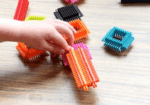
5 款儿童手部治疗玩具
手部治疗诊所的许多治疗师为成年患者提供了很多工具,但对于不太常见的儿科患者可能没有那么多工具。凭借近 20 年儿科经验,我们编制了一份儿科患者手部治疗首选 5 种工具清单。我们…

儿童和青少年肩部不稳定
Lin, KM、James, EW、Spitze, E. 和 Fabricant, PD (2018)。儿童和青少年肩部前不稳定:首次脱位的临床管理。儿科最新观点,30, 49-56。 DOI:10.1097/MOP.0000000000000566。瘦弱者:儿童和青少年患者的肩部不稳定相当常见,并且经常因高再脱位率而变得复杂。肩部不稳定通常发生在……之后

注册即可直接将更新发送到您的收件箱!
注册我们,我们将定期向您发送有关手部治疗的所有内容的博客文章、每次上传新视频和教程时的通知,以及讲义、协议和其他有用信息。