

Many therapists in hand therapy clinics have a lot of tools for their adult patients, but may not have as many tools for the less common pediatric patient. With nearly 20 years experience in pediatrics, we’ve compiled a list of our top 5 picks for tools to use with pediatric patients in hand therapy.
We are in no way affiliated with the manufacturers of these products and encourage anyone looking for these to find them in the easiest way for you, including thrift stores or online.
Here are some of the best hand therapy toys:
Pick #1 Star Stacker
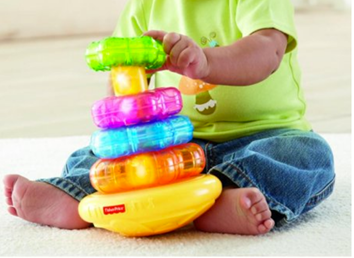
The Star Stacker is a fantastic tool for pediatric clients because it has so many therapeutic uses. This tool is perfect for use with two handed engagement, different sizes and weights, encouraging functional grasp and increasing the web space. Not only does it have excellent tactile engagement but it lights up and plays music too! This toy is highly motivational and keeps kids engaged while using both hands.
Pick #2 Mr. Potato Head
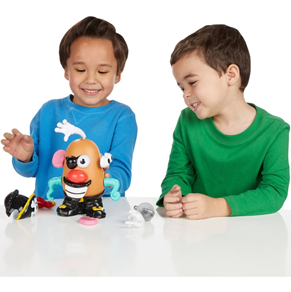
This classic addition has withstood the test of time, continuing to engage children. With its multiple sized pieces, opportunity for imagination and collaboration with the therapist, and its potential for humor, this is a must have for the pediatric tool box. It is great for building strength as the pieces are often a tight fit. It also requires 2-handed use as the large oval ‘head’ won’t ever sit still when trying to push in pieces. Mr. Potato head has plenty of variety to keep the child interested while providing opportunity to grasp odd shapes, push and pull and strengthening.
Pick #3 Bristle Blocks
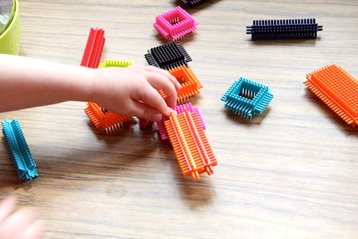
Bristle Blocks have provided great sources of tactile input, and grip strengthening. They can be used for opening the web space, providing resistance when pushed together, and multiple functional grasp patterns. Because they have such a tight fit they provided a fun way to work on bilateral hand strength. The different colors and sizes provide great engagement and plenty of choices for each child’s style of play.
Pick #4 Play Tunnel
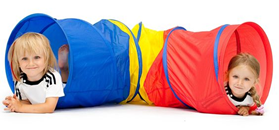
The play tunnel provides unique opportunities for therapeutic use, including weight bearing, hand expansion, and palmer arch development. It provides a sensory safe space and can be calming for a distressed patient. This can be a great way to get kids moving and get them outside their comfort zone. With its multiple uses, affordable cost, and easy storage, it’s no wonder this made our top 5 list.
Pick #5 Pop Toobs
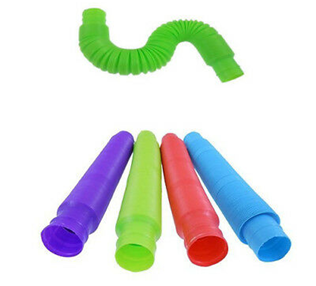
Pop Toobs are irresistibly engaging child therapy toys. You can’t help but squeeze them together and pull them apart to hear the pop sounds. They are great tools for helping pediatric clients use both hands in play, engage in larger movements of the arm, and expand the web space. For patients that try to avoid palmar contact, these are motivating enough to entice the client to pull and push with incidental palmar interaction with a novel texture. The different colors and fun texture provide selection and tactile input as well.
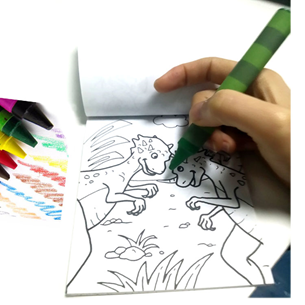
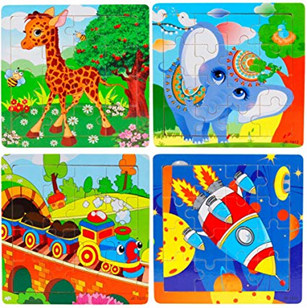
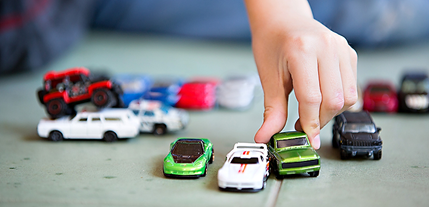
There are so many great tools out there to help pediatric patients meet their hand therapy goals that we couldn’t just pick 5! Here are some honorable mentions we think would be great at expanding your tool box. Let us know what tools for therapy with toys you’ve found that work great for your pediatric patients!
-Honorable Mentions-

1 Comment
Leave a Comment
More To Read
Distal radius fracture types seen in the hand therapy clinic
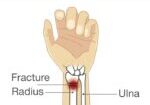
Distal radius fractures are one of the most common injuries seen in hand therapy. Several different distal radius fracture classification systems have been developed, and this blog post will focus on the more common types of distal radius fractures and their classification. Extra-articular fractures are either nondisplaced or displaced fractures. These fractures occur outside…

Intrinsic Hand Strengthening with Puttycise Tools
We are always looking for ways of the intrinsic hand strengthening. It is easy to overlook the importance of these small but mighty muscles. They are essential to performing functional grasps patterns. They can become weak in a short period of time due to their small size. So, How does intrinsic strengthening work?! The Basics…

Pain management techniques for Wrist Fractures
Pain management techniques for wrist fractures Distal radius fractures account for 17.5% of all fractures with a median age of 60.23(Candela et.al, 2022). Pain management is a significant part of post wrist fracturetreatment due to limitations that pain incurs. Chronic Regional Pain Syndrome (CRPS) canoccur along with a distal radius fracture but will not be…

How to Get Started in Hand Therapy
I started OT school knowing that I wanted to do pediatrics. I set up everything to build up my resume for my first therapy job to be in pediatrics. Along the way I had a 3 month clinical rotation in hand therapy at Mayo Clinic in Scottsdale. That experience peaked my interest in hands. 13…

Sign-up to Get Updates Straight to Your Inbox!
Sign up with us and we will send you regular blog posts on everything hand therapy, notices every time we upload new videos and tutorials, along with handout, protocols, and other useful information.
All the above are good toys for developing hands but depending on the age of child you might also like to try Duplo Leggoes or the Original Leggoes