

EDS 101: Understanding Hypermobility in the Hand Therapy Setting
Filed under Diagnoses
EDS in the Hand Therapy Setting

General Overview:
Ehlers Danlos Syndrome (EDS) is a group of heritable connective tissue disorders caused by
genetic changes that affect collagen production, the protein responsible for strength and elasticity
in skin, ligaments and tendons (The Ehlers Danlos Society, 2016).
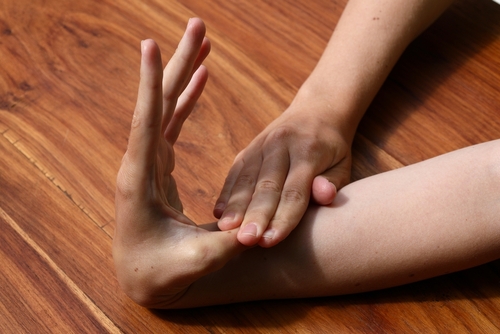
There are thirteen forms of EDS that each have their own set of features with distinct diagnostic
criteria. Of the thirteen the most common subtype of EDS is hypermobile Ehlers-Danlos
Syndrome (hEDS) which can include symptoms such as chronic muscle and joint pain,
subluxations/dislocations, joint pain, muscle pain, etc.
Many individuals also experience coexisting conditions that need to be considered during
evaluation and treatment planning, as these can significantly affect activity tolerance and
participation.
Common comorbidities include:
- Postural Orthostatic Tachycardia Syndrome (POTS) – A Condition that causes an
individual’s heart to beat faster than normal when transitioning from sitting or lying down
to standing up. POTS is a type of orthostatic intolerance that limits the body’s ability to
balance blood vessel constriction and heart rate response. (Clevland Clinic, 2022) - Fibromyalgia: A chronic health condition which causes pain and tenderness throughout
the body, often causing musculoskeletal pain and fatigue. (Clevland Clinic, 2022)
Treatment Goals and Focus:
The primary goals of therapy are to improve joint stability, strengthen and support function, not
to “fix” hypermobility, but to improve control and confidence in movement. - Therapeutic exercise: Brittian et al. (2024) reported that muscle strengthening and joint
position exercises to neutral and hyperextended ranges help to improve strength pain and
quality of life. - Splinting: Assists with stabilizing joints, reducing pain, and dislocation. Splints for EDS
can include plastic ring splints (oval 8 splints), silver ring splints, wrist supports and
stainless-steel ring splints. Jensen et al. (2020) found that finger orthoses may have a
positive effect on hand function for individuals with EDS. - Pain management strategies: Physical modalities, dry needling, and complementary
therapies may be incorporated to address chronic pain. - Patient education: Instruction on joint protection strategies, ergonomic modification and
energy conservation is essential. Brittian et al. (2024) explain there was an improved understanding of necessary lifestyle modification when there was a multimodal approach such as education on diagnosis and activity modification.
Why it Matters for Therapists:
Understanding EDS is crucial for clinicians because these clients often present with non-specific
pain and instability that may not fit the classic injury or overuse patterns that are taught. Early
recognition of hypermobility and connective tissue symptoms can help prevent unnecessary
interventions. Hakim (2018) emphasizes how occupational therapists can assist with assistive
devices, pain management tailored to symptoms, joint stability, and splints to improve alignment
and control.
Evidence shows that strengthening, joint protection, splinting, and patient education can
significantly improve function and quality of life for those with EDS. As a provider, it is
important that how we deliver care is just as important as what we deliver. By understanding the
patient’s unique presentation and tailoring interventions accordingly, therapists can help
individuals with EDS move and feel better.
References
Brittain, M., Flanagan, S., Foreman, L., & Teran-Yengle, P. (2023). Physical therapy
interventions in generalized hypermobility spectrum disorder and hypermobile Ehlers-
Danlos syndrome: a scoping review. Disability and Rehabilitation, 46(10), 1–18.
https://doi.org/10.1080/09638288.2023.2216028
Cleveland Clinic. (2022). Fibromyalgia. Cleveland Clinic.
https://my.clevelandclinic.org/health/diseases/4832-fibromyalgia
Cleveland Clinic. (2022). Postural orthostatic tachycardia syndrome (POTS). Cleveland Clinic.
https://my.clevelandclinic.org/health/diseases/16560-postural-orthostatic-tachycardia-
syndrome-pots
Colin M.E. Halverson, Cao, S., Perkins, S. M., & Francomano, C. A. (2023). Comorbidity,
misdiagnoses, and the diagnostic odyssey in patients with hypermobile Ehlers-Danlos
Syndrome. Genetics in Medicine Open, 1(1), 100812–100812.
https://doi.org/10.1016/j.gimo.2023.100812
Hakim, A. (2018). Hypermobile Ehlers-Danlos Syndrome. Nih.gov; University of Washington,
Seattle. https://www.ncbi.nlm.nih.gov/books/NBK1279/
Jensen, A.-M., Andersen, J. Q., Quisth, L., & Ramstrand, N. (2020). Finger orthoses for
management of joint hypermobility disorders: Relative effects on hand function and
cognitive load. Prosthetics and Orthotics International, 030936462095686.
https://doi.org/10.1177/0309364620956866
Mast cell activation disorder Archives – The Ehlers-Danlos Support UK. (2024). The Ehlers-
Danlos Support UK. https://www.ehlers-danlos.org/what-is-eds/information-on-eds/mast-
cell-activation-disorder/
The Ehlers Danlos Society. (2016). The Ehlers-Danlos Society. The Ehlers Danlos Society.
https://www.ehlers-danlos.com/
More To Read

Comparing IP and MCP joint splinting for Trigger Finger
Teo, S. H., Ng D. C., Wong, Y.K.(2018). Effectiveness of proximal interphalangeal joint blocking orthosis vs metacarpophalangeal joint blocking orthosis in trigger digit: A randomized clinical trial. Journal of Hand Therapy, 1-7. The Skinny- This study compared PIP joint immobilization via an Oval-8TM with a custom MCP blocking orthosis in the treatment of trigger finger. …
How Weather Changes Affect Joint Pain
By: Lucas Godwin How Weather Changes Affect Joint Pain Numerous potential factors can cause weather-related joint pain, including humidity, temperature, precipitation, and changes in barometric pressure. Scientists have performed many studies on joint pain and weather over the years, but so far, none can say for sure what the connection is. Timmermans et al., 2015…
New Distal Bicep Tendinopathy Provocative Test for Hand Therapist
Caekebeke, P., Schenkels, E., Bell, S. N., & van Riet, R. (2021). Distal biceps provocation test. The Journal of Hand Surgery. The Skinny: These surgeons were looking for a provocative test for distal bicep tendinopathy (distal biceps tendonitis test), specifically partial tears, that was more sensitive and specific. Complete tears are more easily tested in…
Therapeutic Interventions and Contraindications of Cupping
By Kaylen Kallander Cupping therapy is used to apply negative pressure to a localized area of muscular or neurological pain to relieve nerve pressure and increase blood flow to an affected area. This modality is commonly used for athletes, but is also a frequent treatment in physical therapy, occupational therapy, or hand therapy. While cupping…

Sign-up to Get Updates Straight to Your Inbox!
Sign up with us and we will send you regular blog posts on everything hand therapy, notices every time we upload new videos and tutorials, along with handout, protocols, and other useful information.