

Why Desensitization Matters After Hand Injury
archivado en Tratos, Sin categoría
After any type of mano injury or surgery, the mano can become sensitive to touch and different textures. Everyday tasks can become difficult or even painful due to hypersensitivity. Without intervention, this sensitivity can interfere with a patient’s ability to participate in meaningful daily activities and the recovery process.
Why does hypersensitivity occur?
Hypersensitivity can be common after any type of mano injury, including but not limited to surgery, trauma, nerve injury, burns, and amputation. Hypersensitivity can result from an increased number of pain-sensing nerve fibers migrating to the affected area, making it more sensitive (American Society for Surgery of the Hand, n.d.). Daily activities and tasks can become difficult for someone with hypersensitivity, as different textures, pressure, and temperature can be painful, touching objects can be uncomfortable, and individuals may avoid using their hands. Someone’s avoidance of using their mano can lead to longer recovery times and further functional loss of their affected hand (American Society for Surgery of the Hand n.d.). This can also lead to worsening conditions such a CRPS.
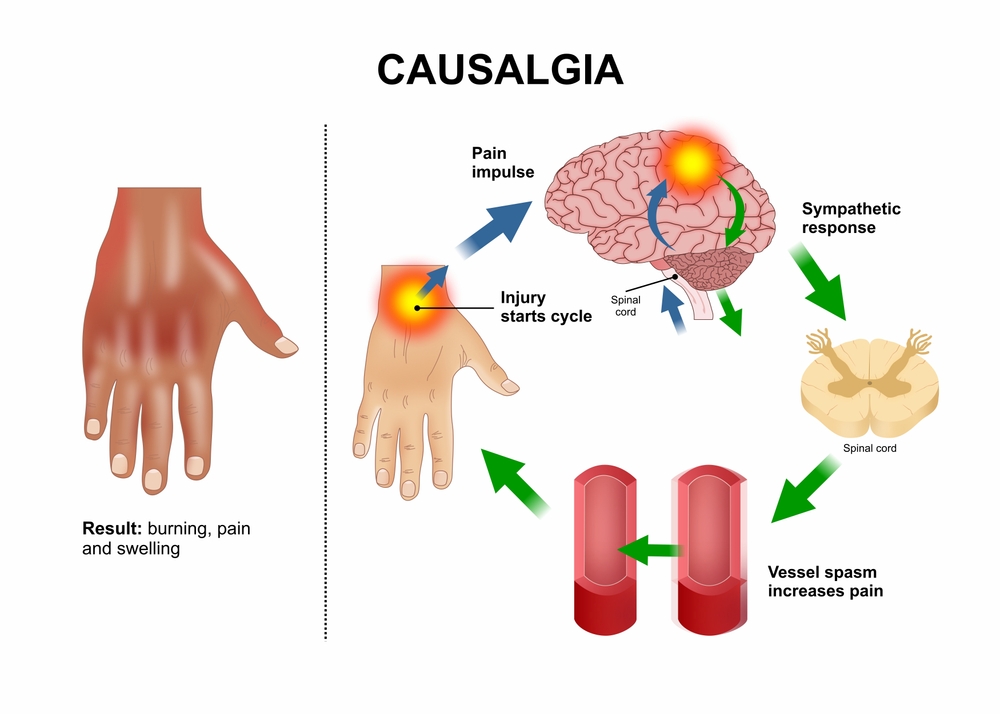
What is desensitization and why is it needed?
Desensibilización is a variety of techniques used to help retrain the nervous system to recognize everyday touch as safe and non-threatening. Using repeated, controlled desensitization techniques, the affected mano can be exposed to various stimuli to help normalize an individual’s sensory processing. When someone is experiencing adverse reactions and feelings to certain stimuli, they may avoid certain textures and stimuli, which can lead to avoidance of using the affected extremity altogether. When patients avoid using the extremity, it can lead to stiffness, weakness, and poor functional outcomes. It is the therapist’s job to encourage progressive exposure to different textures and stimuli in the affected areas, and to allow the patient to adapt to different sensations over time.
According to Quintal et al. (2021), there is varied literature on how often desensitization programs should be used, but treatment sessions ranged from 1 to 10 minutes and 1 to 12 times per day. Duration and intensity should be tailored to the individual, meaning that they should be individualized to the patient’s tolerance and progressed gradually, rather than starting with highly irritating stimuli.
As patients begin to tolerate a variety of stimuli, they can gradually return to meaningful daily activities with greater comfort and confidence, leading to improved use of their affected extremity.
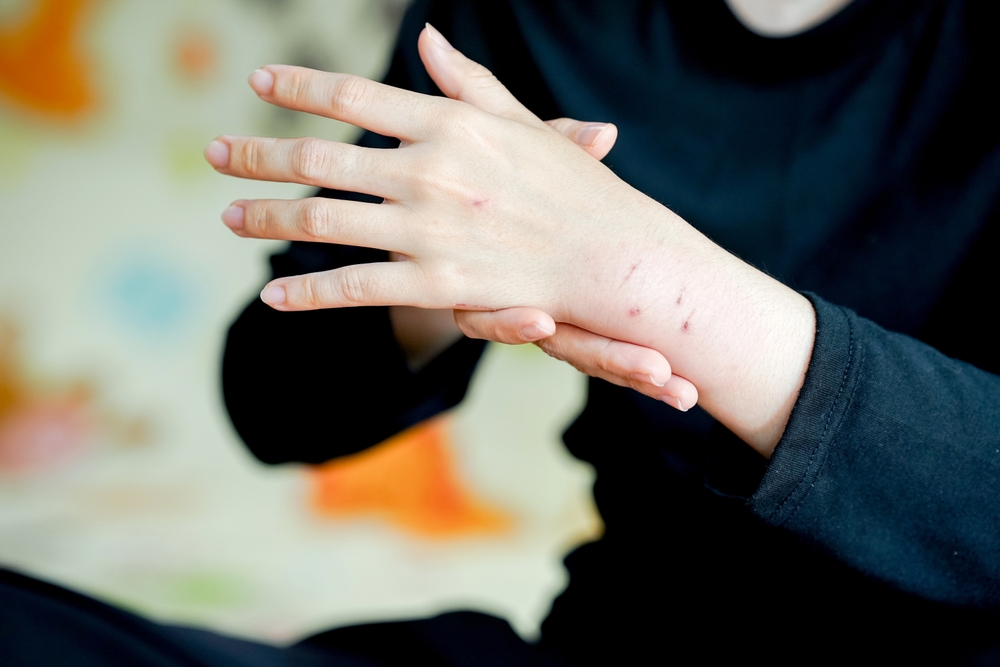
Common Desensitization Interventions
Several desensitization techniques can be used for patients after a hand injury, but it is important to tailor them to the patient you are working with; each patient will present differently. Interventions should be tolerable for the patient and not excessively painful. There should be a variety of textures, ranging from everyday items such as cotton to rougher ones such as Velcro hooks (Goransson & Cederlund, 2011). The purpose of desensitization is to help the patient return to meaningful occupations, not simply to touch a variety of textures. Other techniques that could be used in both at-home and clinical settings include massage, taping, vibration, immersion bins, and functional exposure, such as folding towels, getting dressed, handling coins, typing, etc. (Quintal et al., 2021). The most important aspect of using desensitization techniques is to have the patient use their affected hand in everyday activities and situations and to gradually expose them to a variety of textures to touch and feel.
Patient Education
The patient must continue working on desensitization techniques both in and out of the clinic. Education is an essential part of desensitization after a hand injury. Clinicians should educate their patients to use their affected hand during daily activities and introduce the hypersensitive areas to different textures found in their home. Additionally, patients need to understand that discomfort may occur during desensitization techniques, but it should not cause prolonged pain.
Conclusión
While there is no standardized desensitization program, existing evidence supports the use of desensitization techniques after a hand injury. A patient experiencing hypersensitivity can experience various negative impacts on their daily life. It is our job as hand therapists to assist them in returning to their meaningful daily occupations by improving comfort and confidence and promoting participation in daily activities. When desensitization techniques are incorporated both within the home and in the clinic, patients have a greater chance of reducing hypersensitivity and improving functional outcomes.
Göransson, I., & Cederlund, R. (2011). A study of the effect of desensitization on hyperaesthesia in the hand and upper extremity after injury or surgery. Terapia de manos, 16(1), 12–18. https://doi.org/10.1258/ht.2010.010023
Hand therapy for hypersensitivity. HandCare: The Upper Extremity Expert. (n.d.). https://www.assh.org/handcare/condition/hand-therapy-for-hypersensitivity
Quintal, I., Carrier, A., Packham, T., Bourbonnais, D., & Dyer, J.-O. (2021). Tactile stimulation programs in patients with hand dysesthesia after a peripheral nerve injury: A systematic review. Revista de terapia de manos, 34(1), 3–17. https://doi.org/10.1016/j.jht.2020.05.003
Más para leer
Cómo fortalecer los intrínsecos con las herramientas Puttycise:
Cómo fortalecer lo intrínseco con las herramientas de Puttycise
Lesiones por polea cerrada en escaladores de roca
Mecanismo de la lesión. Grados de lesión de polea. Opciones de tratamiento para rotura cerrada. Medidas de resultado. Retorno a la escalada. Consideraciones sobre el ejercicio. Recursos. Bollen SR (1990). Lesiones de miembros superiores en escaladores de élite. Revista del Real Colegio de Cirujanos de Edimburgo, 35(6 Supl.), S18-S20. Bosco, F., Giustra, F., Lusso, A., Faccenda, C., Artiaco, S. y Massè, A. (2022).…

6 de nuestros equipos adaptativos favoritos para la osteoartritis CMC
Las personas que luchan contra la osteoartritis de la primera articulación CMC suelen tener dificultades con las actividades diarias y pueden resultar muy frustrantes. Las tareas cotidianas, como cortar comida, abrir recipientes y ponerse una camisa abotonada, pueden volverse dolorosas y lentas. El mayor contribuyente al funcionamiento general de nuestra mano es el pulgar. Si el…
Síndrome compartimental crónico de esfuerzo de la mano
Por: Tommi Long ¿Qué es? El síndrome compartimental crónico por esfuerzo (SCCE) es una afección inducida por el ejercicio que afecta los músculos y los nervios, lo que provoca dolor, hinchazón y reducción de la función muscular debido al aumento de la presión y la restricción de la circulación. Si bien afecta con mayor frecuencia los brazos y las piernas, es poco frecuente que se produzca en las manos. El SCCE es más común…

¡Regístrese para recibir actualizaciones directamente en su bandeja de entrada!
Regístrese con nosotros y le enviaremos publicaciones periódicas en el blog sobre todo lo relacionado con la terapia de manos, avisos cada vez que subamos nuevos videos y tutoriales, junto con folletos, protocolos y otra información útil.