

Neurolutions IpsiHand to Aide in Stroke Rehabilitation in Patients with Hemiparesis
Filed under Treatments
Neurolutions IpsiHand to Aide in Stroke Rehabilitation in Patients with Hemiparesis
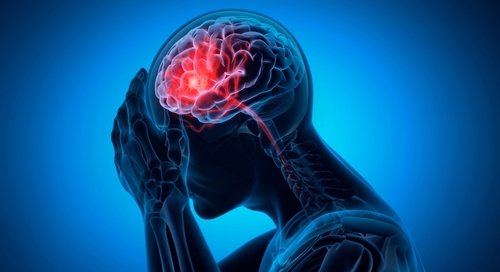
Hemiparesis occurs in approximately 77% of new stroke cases and often persists into the
chronic stage (Humphries et al., 2021). Recent innovation, such as brain-computer interfaces
(BCIs), offer new opportunities for motor recovery even years after stroke.
One such approach is the Neurolutions IpsiHand System, an FDA-cleared, at-home
rehabilitation device. The system uses electroencephalographic (EEG) signals from the
ipsilateral hemisphere to control a wearable exoskeleton handpiece on the impaired wrist and
hand. In practice, when an individual imagines opening their hand, the EEG headset detects this
activity, and the orthosis responds by physically opening the affected hand.
This system is designed to facilitate motor re-education and improve range of motion in
individuals over 18 years old with chronic stroke impairments. The IpsiHand System consists of
three components that work simultaneously to translate the cortical signals into movement of the
affected extremity: 1) a wireless motion-assist exoskeleton handpiece, 2) a non-invasive EEG
headset that detects the intention or thought to move the extremity, and 3) a tablet that delivers
guided sessions (with visual imaging) and visual feedback. Protocols in literature often involve
daily sessions 5 times per week for one hour, for 12 weeks total, during which are instructed to
mentally envision moving their affected hand and not physically move their hand themselves.
Rustamov et al., (2024) completed a study where the participants were guided to open
and close their orthosis in a 3-finger pinch grip. In response to changes in the power of the
control signal from the patient, the orthosis was able to open and close. Research found that the
use of IpsiHand System produced clinically significant improvements in both proximal and distal
upper extremity motor function in individuals with chronic stroke.
Recommending IpsiHand may be appropriate for clients who have reached a plateau with
traditional therapy but still demonstrate motivation and cognitive capacity for motor imagery
practice. It provides an at-home structured program that keeps individuals actively engaged
between therapy sessions and can help re-establish cortical connections that support upper
extremity usage. For occupational therapists, this technology may assist with traditional
intervention such as task-oriented training or constraint-induced movement therapy. Although
not yet widely available, understanding the mechanisms and therapeutic potential of IpsiHand
enables occupational therapists to advocate for its integration into holistic, client-centered stroke
rehabilitation.
References
Humphries, J. B., Mattos, D. J. S., Rutlin, J., Daniel, A. G. S., Rybczynski, K., Notestine, T.,
Shimony, J. S., Burton, H., Carter, A., & Leuthardt, E. C. (2022). Motor Network
Reorganization Induced in Chronic Stroke Patients with the Use of a Contralesionally-
Controlled Brain Computer Interface. Brain-Computer Interfaces, 9(3), 179–192.
https://doi.org/10.1080/2326263x.2022.2057757
Ipsihand. (n.d.). Neurolutions. https://www.neurolutions.com/ipsihand/
Rustamov, N., Souders, L., Sheehan, L., Carter, A., & Leuthardt, E. C. (2024). IpsiHand
Brain–Computer Interface Therapy Induces Broad Upper Extremity Motor Rehabilitation
in Chronic Stroke. Neurorehabilitation and Neural Repair.
https://doi.org/10.1177/15459683241287731
N.A. (2022). Newly Published Studies Show Motor Recovery in Chronic Stroke Patients –
Neurolutions. Neurolutions. https://www.neurolutions.com/news/newly-published-
studies-show-motor-recovery-in-chronic-stroke-patients
Neurolutions. (2021). Neurolutions Receives U.S. Food and Drug Administration De Novo
Market Authorization for IpsiHandTM Upper Extremity Rehabilitation System.
GlobeNewswire News Room; Neurolutions. https://www.globenewswire.com/news-
release/2021/04/26/2216682/0/en/Neurolutions-Receives-U-S-Food-and-Drug-
Administration-De-Novo-Market-Authorization-for-IpsiHand-Upper-Extremity-
Rehabilitation-System.html
More To Read

Hand Pain in Pregnancy and the New Parent
By: Rachel Reed The transition to parenting can be difficult on a mother or parent’s body, especially when considering the increase in repetitive hand use required to care for a baby. The most common upper extremity conditions that develop during pregnancy and postpartum are carpal tunnel syndrome and de Quervain’s tenosynovitis (Wagner, 2019). Frequently, new…
Top 5 DIP Flexion Exercises
By: Tori Rhodes Lately, we’ve had a handful of patients roll through our clinic with pretty significant limitations to DIP flexion. So, we’ve collected a selection of go-to exercises for these individuals. We’ve included a few of those here. From cat bites and fracture sites to mallet fingers and skin grafts, many individuals who are…

Intrinsic Hand Strengthening with Puttycise Tools
We are always looking for ways of the intrinsic hand strengthening. It is easy to overlook the importance of these small but mighty muscles. They are essential to performing functional grasps patterns. They can become weak in a short period of time due to their small size. So, How does intrinsic strengthening work?! The Basics…

Mirror Therapy
Mirror therapy has many implications for therapy and can be used to treat many diagnoses that commonly involve the upper extremity. These include some of the Neuro Conditions we highlighted last week including, Stroke and Focal Hand Dystonia. Btw, you can download a mirror therapy exercises pdf here for free. How long should the patient…

Sign-up to Get Updates Straight to Your Inbox!
Sign up with us and we will send you regular blog posts on everything hand therapy, notices every time we upload new videos and tutorials, along with handout, protocols, and other useful information.