Live CEU Occupational Therapy: Boost Your Skills with Accredited Courses
Filed under Uncategorized
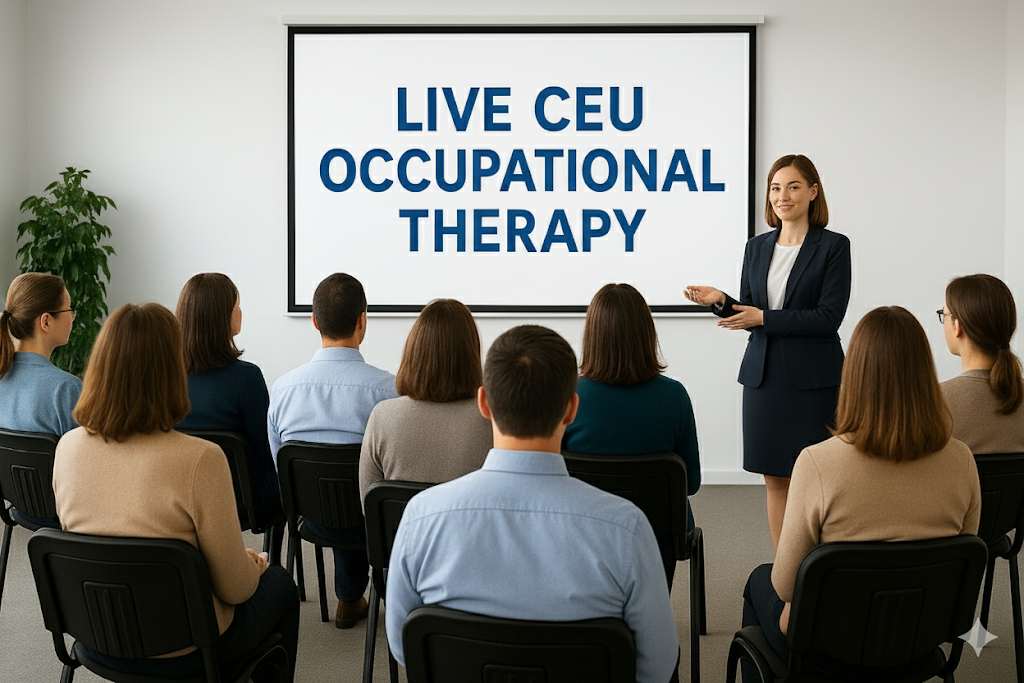
Continuing education is essential for occupational therapists who want to maintain their licenses, advance their careers, and stay updated with the latest practices. One of the most engaging and rewarding ways to do this is through live CEU occupational therapy courses. These courses not only help therapists meet their continuing education requirements but also allow them to grow professionally while interacting with experts and peers in real time.
Understanding Live CEUs in Occupational Therapy
What Are CEUs and Why They Matter for OTs
CEUs, or Continuing Education Units, are structured learning opportunities designed to help occupational therapists meet state licensing requirements. Most states require a certain number of CEUs every renewal cycle to ensure OTs remain competent in their practice. These credits also demonstrate a therapist’s commitment to lifelong learning.
Difference Between Live CEUs and Self-Paced CEUs
Self-paced CEUs provide flexibility but lack the dynamic interaction of live sessions. In contrast, live CEUs—whether in-person or virtual—offer real-time communication, immediate feedback, and collaborative learning. This interactivity makes live CEUs particularly valuable for therapists who thrive in group learning environments.
Benefits of Live CEU Occupational Therapy Courses
Real-Time Interaction and Networking
One of the biggest advantages of live CEUs is the ability to connect with fellow therapists. Sharing experiences, asking questions, and engaging in discussions enhance both learning and professional networking.
Hands-On Learning Opportunities
Many live CEU courses include practical demonstrations and interactive exercises. These hands-on experiences allow therapists to immediately apply new skills, making learning more effective.
Staying Current with Evidence-Based Practices
Occupational therapy is an ever-evolving field. Live CEUs ensure therapists stay updated with the latest research, treatment methods, and clinical guidelines. This helps them provide the highest quality of care to their patients.
How to Choose the Right Live CEU Course
Accreditation and State Requirements
Always confirm that the course provider is accredited and that the CEUs count toward your state’s licensure requirements.
Course Formats: In-Person vs. Virtual
Both in-person and online live CEUs have unique benefits. In-person courses often provide hands-on training, while virtual sessions offer convenience and accessibility.
Cost, Duration, and Scheduling Flexibility
When choosing a course, consider your budget, available time, and work-life balance. Many providers now offer weekend workshops or evening virtual classes.
Popular Topics Covered in Live CEU Occupational Therapy
Pediatric Therapy and Development
Courses focused on child development, sensory integration, and school-based OT are highly popular.
Neurological Rehabilitation
Topics such as stroke rehabilitation, traumatic brain injury, and neuroplasticity are frequently included in CEU programs.
Hand Therapy and Orthopedic Interventions
Specialized courses on splinting, hand rehabilitation, and orthopedic conditions are valuable for OTs working in rehab or clinical settings.
Mental Health and Wellness Approaches
With growing recognition of mental health in occupational therapy, many CEUs now emphasize holistic treatment approaches.
Where to Find Accredited Live CEU Occupational Therapy Courses
Universities and Professional Associations
Many universities and organizations like AOTA (American Occupational Therapy Association) regularly host live CEU workshops.
Online Platforms Offering Virtual CEUs
Websites such as HandTherapyAcademy.com provide accredited live webinars and interactive sessions.
National Conferences and Workshops
Annual OT conferences are excellent opportunities to gain CEUs while networking with professionals across the country.
Tips for Making the Most of Your CEU Experience
Active Participation and Engagement
Engage in discussions, ask questions, and make the most of live interaction to deepen your learning experience.
Applying New Skills in Practice
Take notes and practice the techniques you’ve learned immediately in your clinical setting.
Tracking and Documenting CEU Credits
Keep an organized record of your CEUs, certificates, and attendance logs to ensure compliance with state requirements.
FAQs About Live CEU Occupational Therapy
Q1: Are live CEUs better than self-paced CEUs?
Live CEUs provide real-time interaction and networking opportunities, which many therapists find more engaging and effective.
Q2: Do online live CEUs count for state licensure?
Yes, as long as the provider is accredited and approved by your state board.
Q3: How many CEUs do occupational therapists need each year?
Requirements vary by state, but most require between 12–24 CEUs per renewal cycle.
Q4: Can I attend live CEUs virtually?
Absolutely! Many providers now offer live webinars and virtual workshops that count as live CEUs.
Q5: What’s the average cost of a live CEU course?
Costs range from $50 for a short webinar to $500+ for multi-day conferences.
Q6: Do employers reimburse CEU expenses?
Many employers offer professional development benefits, so it’s worth asking your HR department.
Conclusion: Investing in Your Professional Growth
Pursuing live CEU occupational therapy courses is more than just meeting licensure requirements—it’s about professional growth, skill enhancement, and providing the best care for your patients. Whether you choose in-person workshops or virtual sessions, live CEUs offer valuable opportunities to learn, connect, and advance in your career.
More To Read

Comparing Edema and Lymphedema: Understanding the Differences and Treatment Approaches in Hand Therapy
Comparing Edema and Lymphedema: Understanding the Differences and Treatment Approaches in Hand Therapy As hand therapists we often encounter patients presenting with swollen arms, hands, and/ or fingers, often attributing these symptoms to various conditions. Two commonly confused terms in this area are “edema” and “lymphedema.” While both involve swelling, they have distinct causes, presentations,…

How to Improve HEP Adherence for Optimal Rehabilitation Outcomes
By Sophia Grimm A lack of adherence to home exercise programs in rehabilitation is a significant problem, with nonadherence estimates as high as 30-65% for general musculoskeletal conditions. This could have potentially detrimental effects on patients’ clinical rehabilitation outcomes as the success of certain medical interventions depends largely on patient adherence to advice and prescribed rehabilitation…

Putting Occupation in Hand Therapy
It was early in my career, maybe a year out of school. I was working with a veteran physical therapist that had been practicing for thirty plus years. She was somewhat intimidating and one of those old school physical therapists that thrived on being aggressive. We were chatting about what areas of occupational hand therapy…
K-tape and Cerebral Palsy
Allah-Rastii, Z., Shamsoddini, A., Dalvand, H. and Labaf, S. (2017). The effect of kinesio taping on handgrip and active range of motion of hand in children with cerebral palsy. Iranian Journal of Child Neurology, 11(4), 43-51. The Skinny: Cerebral palsy is a non-progressive motor impairment caused by injury to the developing brain that can…

Sign-up to Get Updates Straight to Your Inbox!
Sign up with us and we will send you regular blog posts on everything hand therapy, notices every time we upload new videos and tutorials, along with handout, protocols, and other useful information.