Top-Rated Continuing Education Courses: Physical and Occupational Therapy
Filed under Uncategorized
Introduction to Continuing Education in Physical and Occupational Therapy
In the ever-evolving world of healthcare, physical therapists (PTs) and occupational therapists (OTs) must continuously adapt. Whether it’s a new manual therapy technique or tech-assisted rehab tool, staying updated is not optional—it’s essential.
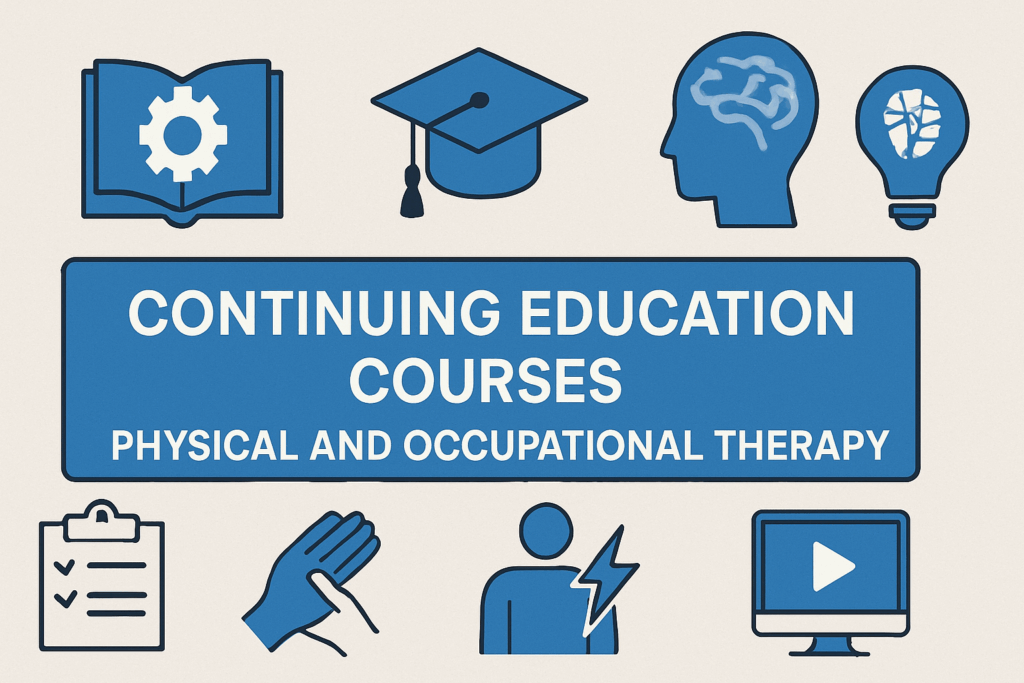
Continuing education courses in physical and occupational therapy provide licensed professionals with structured opportunities to maintain licensure, improve clinical expertise, and stay competitive in their careers. These courses, often referred to as CEUs (Continuing Education Units), help therapists remain compliant with state regulations while opening doors to new specializations and advanced roles.
Let’s explore why these courses matter, what to look for, and how to choose the best options that align with your practice and passion.
Why Continuing Education is Crucial for Therapists
Legal and Licensing Requirements
Each U.S. state mandates a specific number of CEUs that must be completed within a licensure renewal period. For example, California requires PTs to complete 30 hours of CE every two years. Without compliance, professionals risk losing their ability to practice.
Advancing Clinical Knowledge
The science behind therapy is not static. New evidence-based protocols, treatment methodologies, and diagnostic tools emerge regularly. Continuing education helps therapists remain current and effective in delivering patient care.
Expanding Practice Scope and Specializations
Want to transition from orthopedics to neurorehabilitation? Or become a specialist in pediatric therapy? CEUs allow you to explore niche areas that match your career goals.
Key Topics Covered in CEU Courses for Therapists
Continuing education for PTs and OTs spans a wide range of subjects. Here are some of the most popular and impactful topics:
Hand Therapy and Modalities
Courses dive deep into joint mobilization, myofascial release, dry needling, and more—offering practical skills therapists can apply immediately.
Neurorehabilitation Techniques
Learn the latest interventions for stroke, traumatic brain injury, Parkinson’s disease, and other neurologic conditions.
Pediatric and Geriatric Therapy Innovations
Specialized training for working with children and seniors addresses developmental milestones, fall prevention, and age-related musculoskeletal issues.
Pain Management and Orthopedic Rehabilitation
Gain insight into pain neuroscience education (PNE), post-op protocols, and sports injury recovery.
How to Choose the Right Continuing Education Course
Accreditation and State Board Approval
Always check if the course is approved by your state’s licensing board. Not all CEUs are created equal, and some may not count toward renewal.
Course Format: Live, Hybrid, or On-Demand
Pick a format that suits your learning style and schedule. On-demand is ideal for night owls, while live webinars offer real-time interaction.
User Reviews and Learning Platform Features
Look for courses with high ratings and interactive features like downloadable resources, real-world case studies, and progress tracking.
Cost and Duration of CE Courses
Average Price Ranges
Prices vary widely. Subscription models like Basic Plan cost around $22.99/month with limited access, while individual courses can range from $55–$200.
Time Commitment and Credit Hours
Most courses provide 1–3 credit hours. A full day workshop might offer 6-8 CEUs. Always compare the time-to-credit ratio to ensure value.
Benefits of Online CEU Courses for Busy Therapists
Flexibility and Self-Paced Learning
No need to commute or take time off work. Online courses fit into your schedule—whether that’s during lunch or late at night.
Access to Diverse Topics and Expert Instructors
With online platforms, you’re not limited by geography. Learn from top specialists across the country.
Specialty Certifications Through Continuing Education
Certain certifications not only deepen your expertise but also boost your marketability.
Certified Hand Therapist (CHT)
Specializing in hand and upper extremity rehab, this certification is highly respected in orthopedic circles.
Neurologic Clinical Specialist (NCS)
Offered by the APTA, this certification demonstrates advanced competency in treating neurologic conditions.
Certified Lymphedema Therapist (CLT)
Focuses on the management of lymphatic disorders through manual drainage and compression therapy.
State-by-State CEU Requirements for PTs and OTs
Each state has unique requirements regarding CE hours, course approval, and deadlines. Check with your state board here for the most updated info.
Emerging Trends in Therapist Education
AI and Tech-Integrated Rehab Courses
Some CEUs now explore the use of wearable tech, virtual reality, and AI-driven assessments in rehabilitation.
Holistic and Integrative Treatment Modules
Courses are incorporating yoga therapy, mindfulness, and nutrition education into traditional PT/OT practices.
Case Study: Career Growth Through CEU Credits
After completing CEUs in hand therapy, Rachel—a practicing OT in Texas—saw her caseload double within six months. She now specializes in CMC Arthritis, earning higher rates and referrals.
FAQs: Continuing Education Courses Physical and Occupational Therapy
Q1: Are CEUs mandatory for all PTs and OTs?
Yes, every state requires licensed therapists to complete CEUs during each renewal cycle.
Q2: Can I take online CEU courses for my license renewal?
Absolutely. Just make sure they’re approved by your state licensing board.
Q3: How do I find out how many CEUs I need?
Check your state’s licensing board website for updated requirements.
Q4: What happens if I miss the CEU deadline?
You may face license suspension, late renewal penalties, or re-examination requirements.
Q5: Are CEUs transferable between states?
Not always. Some states have reciprocity, but many require locally approved courses.
Q6: Can CEUs help me get promoted or earn more?
Yes! Specialized CEUs can open doors to new roles and higher pay.
Conclusion: Investing in Your Professional Growth
In a field driven by knowledge, innovation, and patient outcomes, continuing education courses physical and occupational therapy professionals rely on are more than a formality—they’re a gateway to excellence.
Whether you’re a seasoned therapist or just starting, exploring the right CEU courses can empower you to elevate your skills, grow your practice, and future-proof your career.
More To Read
Does Obesity or Smoking change the outcomes for Distal Radius Fractures
Hall, Matthew J., Ostergaard, P., Dowlatshahi, A., Harper, C., Earp, B. Rozental, T. (2019). The Impact of Obesity and Smoking on Outcomes After Volar Plate Fixation of Distal Radius Fractures. The Journal of Hand Surgery. In Press, Corrected Proof, Available online 31 October 2019. Doi: https://doi.org/10.1016/j.jhsa.2019.08.017 The Skinny- Distal radius fractures are one of the…
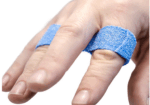
A randomized clinical trial comparing early active motion programs: Earlier hand function, TAM, and orthotic satisfaction with a relative motion extension program for zones V and VI extensor tendon repairs
By Brittany Day Collocott SJ, Kelly E, Foster M, Myhr H, Wang A, Ellis RF. A randomized clinical trial comparing early active motion programs: Earlier hand function, TAM, and orthotic satisfaction with a relative motion extension program for zones V and VI extensor tendon repairs. Journal of Hand Therapy. 2019. doi:10.1016/j.jht.2018.10.003 The Skinny- This is…

Wrist Proprioception Ideas for Hand Therapy
Wrist Proprioception Intervention Ideas: By Ammie Ingwaldson Lack of wrist proprioception exercises can affect clients in the hand therapy setting with neurological and musculoskeletal conditions. Proprioception limitations are found in common conditions such as carpal tunnel syndrome, distal radius fracture, and CRPS (Valdes, Naughton & Algar, 2014). Proprioception is necessary during daily tasks to provide…
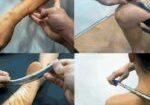
What is the Effectiveness of IASTM?
Citation Kim, J., Sung, D. J., Lee, J. (2017). Therapeutic effectiveness of instrument-assisted soft tissue mobilization for soft tissue injury: Mechanisms and practical application. Journal of Exercise Rehabilitation, 13(1). doi: https://doi.org/10.12965/jer.1732824.412 The skinny IASTM is a relatively simple technique that uses the surface of an instrument to minimize the amount of pressure or force needed…

Sign-up to Get Updates Straight to Your Inbox!
Sign up with us and we will send you regular blog posts on everything hand therapy, notices every time we upload new videos and tutorials, along with handout, protocols, and other useful information.