

Rapid Review: Is Finger Splinting Necessary after Flexor Tendon Repair?
abgelegt unter Orthesen
Outcome of Beugesehne Repair Using Eight-Strand Core Stitch Without Postoperative Finger Schienung
Reference: El-Gammal, T. A., Kotb, M. M., Ragheb, Y. F., El-Gammal, Y. T., & Anwar, M. M. (2024). Outcome of Flexor Tendon Repair Using Eight-Strand Core Stitch Without Postoperative Finger Splinting. HAND. https://doi.org/10.1177/15589447231220686
Die Dünne:
The purpose of this study was to evaluate the clinical outcomes of using an 8-strand double-cruciate core suture technique for Beugesehne repair, followed by early active motion without finger Schienung and with the wrist held in a neutral position.
Im Unkraut:
This prospective cohort study design involved 35 patients with 41 affected digits who sustained complete laceration of the flexor digitorum profundus (FDP) or flexor pollicis longus (FPL) tendon in zones II and III. All patients underwent a repair using an 8-strand double-cruciate core suture with four cross-grasping stitches under wide-awake local anesthesia without a tourniquet (WALANT). A running epitenon suture reinforced the repair, the FDS tendon was partially removed, and the A2 and A4 pulleys were vented as needed to improve tendon gliding. Postoperatively, on day one patients began passive motion and on day three began active motion without finger Schienung. Only a neutral wrist was used for Schienung. Light grasping was allowed at four weeks, and power grasping began at ten weeks. Outcomes were assessed for six months using the Strickland-Glocovac, Buck-Gramcko, and DASH measures.

Nach Hause bringen:
The average total active motion (TAM) was 151° ± 22° (86% ± 13%). Based on the Strickland-Glocovac criteria, a combined 86.2% of finger repairs achieved excellent or good outcomes, while the Buck-Gramcko scale sowed a combined of 83.4% excellent or good results for thumb repairs. Mean thumb IP motion was 68° ± 23°, with extension lags of 21° ± 11° for fingers and 12° ± 4° for thumbs. The mean DASH score was 4.75, indicating excellent functional recovery with minimal disability. Four thumbs underwent complications in the study including bowstringing, flexion contracture, and/or ruptures.
Bewertung:
4/5 – This study effectively explores the outcomes of an 8-strand tendon repair with früh aktiv motion and no finger Schienung in a well-designed manner. However, the small sample size, lack of control group, and potential bias from the surgeon-directed rehabilitation limits the strength of the study. This study highlights how the 8-strand tendon repair can allow for early active mobilization without the need for complex Schienung or continuous therapist supervision.
Mehr zum Lesen
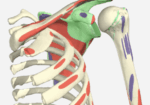
Die Funktion der Glenohumeralgelenksbänder
Bänder des Glenohumeralgelenks Das Glenohumeralgelenk (GH) besteht aus dem Oberarmkopf und der Glenoidgrube. Die Fossa ist im Vergleich zum Oberarmkopf relativ klein, wodurch das Gelenk sehr beweglich ist, was auch zu einem erhöhten Risiko einer Instabilität führt. Das Labrum glenoidale ist ein faserknorpeliger Rand, der um das Gelenk herum befestigt ist.
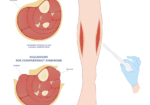
Belastungsbedingtes (chronisches) Kompartmentsyndrom der Hand
Von: Tommi Long Was ist das? Das chronische Belastungskompartmentsyndrom (CECS) ist eine durch körperliche Betätigung hervorgerufene Erkrankung, die die Muskeln und Nerven beeinträchtigt und aufgrund von erhöhtem Druck und eingeschränkter Durchblutung zu Schmerzen, Schwellungen und verminderter Muskelfunktion führt. Am häufigsten sind Arme und Beine betroffen, seltener kommt es in den Händen vor. CECS ist am häufigsten…
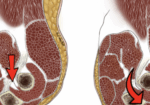
Neuer Provokationstest für distale Bizeps-Tendinopathie für Handtherapeuten
Caekebeke, P., Schenkels, E., Bell, SN, & van Riet, R. (2021). Distaler Bizeps-Provokationstest. Das Journal of Hand Surgery. The Skinny: Diese Chirurgen waren auf der Suche nach einem provokativen Test für distale Bizepssehnenentzündungen (Test auf distale Bizepssehnenentzündung), insbesondere bei partiellen Rissen, der empfindlicher und spezifischer war. Vollständige Risse lassen sich leichter testen in…
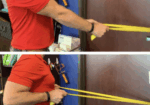
Erhöhen Sie die Schulterreichweite, indem Sie den Scapulohumeral-Rhythmus verbessern
Der skapulohumerale Rhythmus ist oft die Schlüsselkomponente bei der Behandlung von Schulterbeschwerden und dem Mangel an vollständiger Beweglichkeit der Schulter. Dies kann auch eine entscheidende Komponente zur Vorbeugung von Schultererkrankungen während der Rehabilitation anderer Erkrankungen der oberen Extremitäten wie Frakturen des distalen Radius, Sehnenverletzungen und Ellenbogenverletzungen sein. Der skapulohumerale Rhythmus ist der Rhythmus in…

Melden Sie sich an, um Updates direkt in Ihren Posteingang zu erhalten!
Melden Sie sich bei uns an und wir senden Ihnen regelmäßig Blogbeiträge zum Thema Handtherapie, Benachrichtigungen jedes Mal, wenn wir neue Videos und Tutorials hochladen, zusammen mit Handzetteln, Protokollen und anderen nützlichen Informationen.