

EDS 101: Understanding Hypermobility in the Hand Therapy Setting
archivado en Diagnósticos
EDS in the Hand Therapy Setting

General Overview:
Ehlers Danlos Syndrome (EDS) is a group of heritable connective tissue disorders caused by
genetic changes that affect collagen production, the protein responsible for strength and elasticity
in skin, ligaments and tendons (The Ehlers Danlos Society, 2016).
There are thirteen forms of EDS that each have their own set of features with distinct diagnostic
criteria. Of the thirteen the most common subtype of EDS is hypermobile Ehlers-Danlos
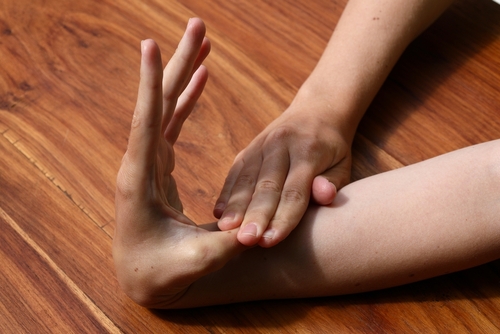
Syndrome (hEDS) which can include symptoms such as chronic muscle and dolor en las articulaciones,
subluxations/dislocations, joint pain, muscle pain, etc.
Many individuals also experience coexisting conditions that need to be considered during
evaluation and treatment planning, as these can significantly affect activity tolerance and
participation.
Common comorbidities include:
- Postural Orthostatic Tachycardia Syndrome (POTS) – A Condition that causes an
individual’s heart to beat faster than normal when transitioning from sitting or lying down
to standing up. POTS is a type of orthostatic intolerance that limits the body’s ability to
balance blood vessel constriction and heart rate response. (Clevland Clinic, 2022) - Fibromyalgia: A chronic health condition which causes pain and tenderness throughout
the body, often causing musculoskeletal pain and fatigue. (Clevland Clinic, 2022)
Treatment Goals and Focus:
The primary goals of therapy are to improve joint stability, strengthen and support function, not
to “fix” hypermobility, but to improve control and confidence in movement. - ejercicio terapéutico: Brittian et al. (2024) reported that muscle strengthening and joint
position exercises to neutral and hyperextended ranges help to improve strength pain and
quality of life. - entablillado: Assists with stabilizing joints, reducing pain, and dislocation. Splints for EDS
can include plastic ring splints (oval 8 splints), silver ring splints, wrist supports and
stainless-steel ring splints. Jensen et al. (2020) found that finger orthoses may have a
positive effect on hand function for individuals with EDS. - Pain management strategies: Physical modalities, dry needling, and complementary
therapies may be incorporated to address chronic pain. - Patient education: Instruction on joint protection strategies, ergonomic modification and
energy conservation is essential. Brittian et al. (2024) explain there was an improved understanding of necessary lifestyle modification when there was a multimodal approach such as education on diagnosis and activity modification.
Why it Matters for Therapists:
Understanding EDS is crucial for clinicians because these clients often present with non-specific
pain and instability that may not fit the classic injury or overuse patterns that are taught. Early
recognition of hypermobility and connective tissue symptoms can help prevent unnecessary
interventions. Hakim (2018) emphasizes how occupational therapists can assist with assistive
devices, pain management tailored to symptoms, joint stability, and splints to improve alignment
and control.
Evidence shows that strengthening, joint protection, splinting, and patient education can
significantly improve function and quality of life for those with EDS. As a provider, it is
important that how we deliver care is just as important as what we deliver. By understanding the
patient’s unique presentation and tailoring interventions accordingly, therapists can help
individuals with EDS move and feel better.
Referencias
Brittain, M., Flanagan, S., Foreman, L., & Teran-Yengle, P. (2023). Physical therapy
interventions in generalized hypermobility spectrum disorder and hypermobile Ehlers-
Danlos syndrome: a scoping review. Disability and Rehabilitation, 46(10), 1–18.
https://doi.org/10.1080/09638288.2023.2216028
Cleveland Clinic. (2022). Fibromyalgia. Cleveland Clinic.
https://my.clevelandclinic.org/health/diseases/4832-fibromyalgia
Cleveland Clinic. (2022). Postural orthostatic tachycardia syndrome (POTS). Cleveland Clinic.
https://my.clevelandclinic.org/health/diseases/16560-postural-orthostatic-tachycardia-
syndrome-pots
Colin M.E. Halverson, Cao, S., Perkins, S. M., & Francomano, C. A. (2023). Comorbidity,
misdiagnoses, and the diagnostic odyssey in patients with hypermobile Ehlers-Danlos
Syndrome. Genetics in Medicine Open, 1(1), 100812–100812.
https://doi.org/10.1016/j.gimo.2023.100812
Hakim, A. (2018). Hypermobile Ehlers-Danlos Syndrome. Nih.gov; University of Washington,
Seattle. https://www.ncbi.nlm.nih.gov/books/NBK1279/
Jensen, A.-M., Andersen, J. Q., Quisth, L., & Ramstrand, N. (2020). Finger orthoses for
management of joint hypermobility disorders: Relative effects on hand function and
cognitive load. Prosthetics and Orthotics International, 030936462095686.
https://doi.org/10.1177/0309364620956866
Mast cell activation disorder Archives – The Ehlers-Danlos Support UK. (2024). The Ehlers-
Danlos Support UK. https://www.ehlers-danlos.org/what-is-eds/information-on-eds/mast-
cell-activation-disorder/
The Ehlers Danlos Society. (2016). The Ehlers-Danlos Society. The Ehlers Danlos Society.
https://www.ehlers-danlos.com/
Más para leer
Los 6 mejores tratamientos para las fracturas del meñique
Los clientes que han sufrido una fractura de dedo o de mano a menudo tienen dificultades para participar en ocupaciones significativas. Las tareas cotidianas, como agarrar objetos, cortar alimentos, quitar tapas de recipientes, girar llaves y muchas otras, pueden ser muy dolorosas. La fractura del meñique es particularmente desafiante y dolorosa. Esto es típico porque el mayor contribuyente a...
Nuestras férulas favoritas para dedos en mazo
Por: Josh MacDonald Fabricar una férula personalizada para una lesión en el dedo en martillo es un desafío. Los dedos son pequeños y tienen poca tolerancia a errores y ajustes con férulas personalizadas. Hacer una férula para una lesión en el dedo en martillo es probablemente el tipo de férula más difícil de hacer para un terapeuta. Las recomendaciones de tratamiento varían, con algunas…
El papel de la reeducación sensorial después de una lesión nerviosa
Priya, Licenciatura en Letras (2012). Eficacia de la reeducación sensorial tras la reparación del nervio (nervio mediano o cubital) a nivel de la muñeca. Revista india de fisioterapia y terapia ocupacional, 6(3), 62–68. The Skinny El sistema nervioso humano es increíblemente complejo y, una vez dañado, requiere mucho tiempo para repararse. Un estudio previo (Bentzel, K 2002) identifica que con periféricos…

Cómo mejorar la adherencia al HEP para obtener resultados óptimos en la rehabilitación
Por Sophia Grimm La falta de cumplimiento de los programas de ejercicios en el hogar en rehabilitación es un problema importante, con estimaciones de incumplimiento de hasta 30-65% para afecciones musculoesqueléticas generales. Esto podría tener efectos potencialmente perjudiciales en los resultados de la rehabilitación clínica de los pacientes, ya que el éxito de ciertas intervenciones médicas depende en gran medida del cumplimiento por parte del paciente de los consejos y la rehabilitación prescrita...

¡Regístrese para recibir actualizaciones directamente en su bandeja de entrada!
Regístrese con nosotros y le enviaremos publicaciones periódicas en el blog sobre todo lo relacionado con la terapia de manos, avisos cada vez que subamos nuevos videos y tutoriales, junto con folletos, protocolos y otra información útil.