
After hand surgery or an upper extremity injury, most people expect some pain, swelling, and stiffness. What patients do not always expect is how much a scar can affect movement and comfort. Even when an incision looks healed on the outside, the tissue underneath may still feel tight, sensitive, or restricted.
This is where scar massage can help.
Scar massage is a common part of hand therapy once the incision is fully closed and the patient has been cleared by their therapist or surgeon. While many people think cicatriz care is only about appearance, scar massage is also used to improve comfort, skin mobility, and functional hand use.
What Happens as a Scar Heals?
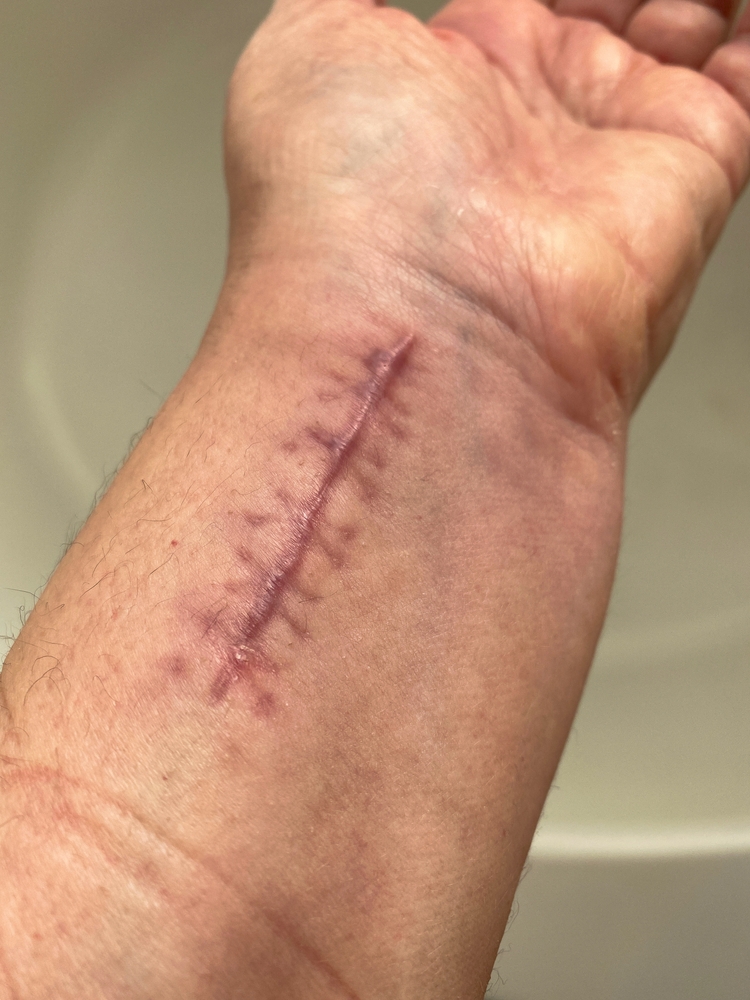
When the body heals after surgery or injury, it creates new tissue to close and protect the area. This is a normal part of healing. Early on, a scar may look red, raised, firm, or sensitive. Over time, scar tissue usually becomes softer, flatter, and more flexible.
Sometimes, however, scar tissue can become tight or stick to the tissues underneath it. In the hand and wrist, this can make a big difference. Tendons, joints, and soft tissue need to move smoothly for normal hand function. If the scar is stiff or restricted, patients may feel pulling, tenderness, or difficulty bending and straightening the fingers, thumb, or wrist.
How Scar Massage Helps
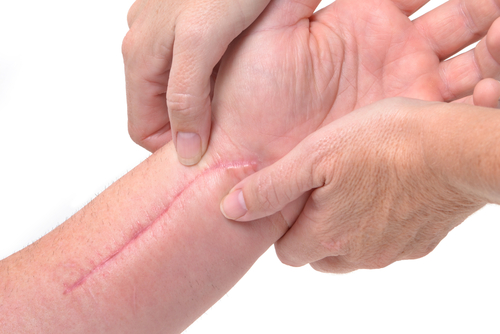
Scar massage helps encourage movement between the skin and the tissue underneath. Gentle pressure and movement over the scar can help the area become more flexible and less sensitive over time.
In hand therapy, scar massage may help:
- Improve scar mobility
- Decrease tenderness or hypersensitivity
- Help firm scar tissue soften
- Reduce pulling or tightness around the scar
- Improve comfort during daily hand use
- Support better motion when scar tightness is limiting movement
For example, after a tendon injury or surgery, scar tissue can sometimes limit how well the tendon moves underneath the skin. In therapy, scar massage may be combined with specific exercises to encourage tendon pull-through and improve motion.
When Should Scar Massage Start?
Scar massage should only begin once the incision is fully closed. This means there should be no open areas, drainage, scabbing, or signs of infection. Starting too early can irritate the incision and interfere with healing.
A hand therapist will check the incision and help determine when scar massage is safe. The timing can vary depending on the type of surgery, how the wound is healing, and any surgeon precautions.
What Does Scar Massage Look Like?
Scar massage usually starts gently. A therapist may begin with light pressure around the scar and then progress to direct massage over the scar once the tissue is ready.
Common scar massage techniques may include:
- Small circles over the scar
- Side-to-side movement
- Up-and-down movement
- Gentle lifting or rolling of the skin when appropriate
- Massage with lotion once the incision is fully healed
The goal is not to aggressively “break up” the scar. More pressure is not always better. Scar massage should be controlled and should not cause increased redness, drainage, or lasting pain.
What About Silicone or Scar Pads?
In some cases, silicone gel sheets, silicone sleeves, or elastomer scar pads may be used along with scar massage. These can help with scar softening, comfort, and pressure management.
A therapist may recommend one of these options if a scar is raised, firm, sensitive, or limiting motion. The type of scar product and wear schedule should be based on the patient’s skin, scar location, and tolerance.
Why Scar Care Matters for Function
Hands are used constantly throughout the day. Even a small area of tight or sensitive scar tissue can affect activities like gripping, pinching, typing, buttoning, writing, cooking, or returning to work tasks.
Scar massage is only one part of a larger hand therapy plan. It is often combined with range of motion exercises, edema management, strengthening, desensitization, and functional activities. The goal is not just for the scar to look better, but for the hand to move and function better.
When to Contact Your Therapist
Patients should let their therapist know if they notice:
- Increased redness or warmth
- Drainage from the incision
- Opening of the incision
- Increased pain after massage
- New numbness or tingling
- A scar that becomes more raised, tight, or painful
Scar healing takes time, and some scars continue changing for several months. With the right guidance, scar massage can be a simple but important part of improving comfort, motion, and daily hand use after surgery.
Takeaway
Scar massage is not just cosmetic. In hand therapy, it can help the scar move better, feel less sensitive, and interfere less with function. Once the incision is fully healed and cleared, consistent scar management can help patients get back to using their hand with more comfort and confidence.
Comentarios sobre 2
Deja un comentario
Más para leer
Dolor del miembro fantasma, dolor del miembro residual y sensación del miembro fantasma: ¿cuál es cuál?
Escrito por Melissa Miller Introducción Después de la amputación, la mayoría de las personas experimentarán dolor de miembro fantasma (PLP), dolor de miembro residual (RLP) y/o sensación de miembro fantasma (PLS). Experimentar estos dolores o sensaciones puede alterar en gran medida la calidad de vida de un individuo. Es importante saber cuáles son cada uno de estos, ya que cada uno puede impactar al cliente...
¿Se necesita terapia después de una fractura de radio distal?
Coughlin T, Norrish AR, Scammell BE, Matthews PA, Nightingale J, Ollivere BJ. Comparación de intervenciones de rehabilitación en fracturas de radio distal tratadas de forma no quirúrgica: un ensayo controlado aleatorio de eficacia. Bone Joint J. 2021Jun;103-B(6):1033-1039. doi: 10.1302/0301-620X.103B.BJJ-2020-2026.R1.Epub 30 de abril de 2021. PMID: 33926211. The Skinny: Las personas con fracturas del radio distal son muy comunes en el mundo de la terapia de la mano. Este…

¿Conoce el ingrediente secreto para recuperarse de una lesión?
¿Conoce el ingrediente secreto para recuperarse de una lesión? Te daré una pista: tiene 5 letras y comienza con la letra S. DORMIR ¿Alguna vez te has hecho una pregunta: ¿dormir ayuda a curar las lesiones? Esto es para que lo comparta con sus pacientes pero también sirva como...
Actividades de intervención de terapia manual para la neuropatía periférica inducida por quimioterapia (CIPN)
Publicación de blog escrita por: Rita Steffes Los pacientes con CIPN pueden presentar síntomas que incluyen entumecimiento, hormigueo, hipersensibilidad al frío, pérdida de la sensibilidad táctil o de vibración, disminución del equilibrio y dolor ardiente y punzante en las manos. Estos síntomas dificultan que los pacientes de oncología participar en todas las actividades de la vida diaria como vestirse, preparar comidas,…

¡Regístrese para recibir actualizaciones directamente en su bandeja de entrada!
Regístrese con nosotros y le enviaremos publicaciones periódicas en el blog sobre todo lo relacionado con la terapia de manos, avisos cada vez que subamos nuevos videos y tutoriales, junto con folletos, protocolos y otra información útil.
Thank you for this summary.
How about the evidence? Does it support scar massage? I often wonder if 3-5 mins of scar massage isn’t better spent on AROM of the surrounding joints and tissues?
The two interventions likely target different aspects of recovery: scar massage primarily addresses scar pliability, thickness, pruritus, and pain, while AROM addresses joint mobility, tendon gliding, and functional recovery. In a time-limited session, the clinical priority should be guided by the patient’s primary limitation. When scar adherence and tightness are the dominant barrier to motion, massage may be a prerequisite to effective AROM. When the scar is supple but joint stiffness or tendon adhesion is the issue, AROM is likely the higher-yield intervention. There is no evidence that 3–5 minutes of scar massage is superior to the same time spent on AROM for functional outcomes.