

After hand surgery or an upper extremity injury, most people expect some pain, swelling, and stiffness. What patients do not always expect is how much a scar can affect movement and comfort. Even when an incision looks healed on the outside, the tissue underneath may still feel tight, sensitive, or restricted.
This is where scar massage can help.
Scar massage is a common part of hand therapy once the incision is fully closed and the patient has been cleared by their therapist or surgeon. While many people think Narbe care is only about appearance, scar massage is also used to improve comfort, skin mobility, and functional hand use.
What Happens as a Scar Heals?
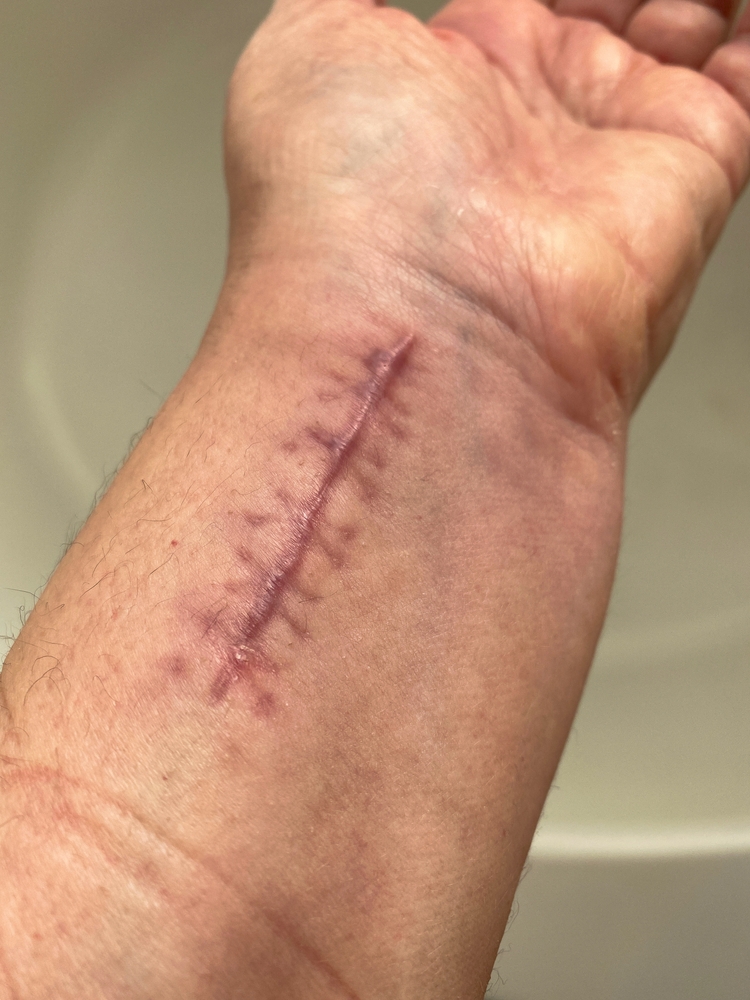
When the body heals after surgery or injury, it creates new tissue to close and protect the area. This is a normal part of healing. Early on, a scar may look red, raised, firm, or sensitive. Over time, scar tissue usually becomes softer, flatter, and more flexible.
Sometimes, however, scar tissue can become tight or stick to the tissues underneath it. In the hand and wrist, this can make a big difference. Tendons, joints, and soft tissue need to move smoothly for normal hand function. If the scar is stiff or restricted, patients may feel pulling, tenderness, or difficulty bending and straightening the fingers, thumb, or wrist.
How Scar Massage Helps
Scar massage helps encourage movement between the skin and the tissue underneath. Gentle pressure and movement over the scar can help the area become more flexible and less sensitive over time.
In hand therapy, scar massage may help:
- Improve scar mobility
- Decrease tenderness or hypersensitivity
- Help firm scar tissue soften
- Reduce pulling or tightness around the scar
- Improve comfort during daily hand use
- Support better motion when scar tightness is limiting movement
For example, after a tendon injury or surgery, scar tissue can sometimes limit how well the tendon moves underneath the skin. In therapy, scar massage may be combined with specific exercises to encourage tendon pull-through and improve motion.
When Should Scar Massage Start?
Scar massage should only begin once the incision is fully closed. This means there should be no open areas, drainage, scabbing, or signs of infection. Starting too early can irritate the incision and interfere with healing.
A hand therapist will check the incision and help determine when scar massage is safe. The timing can vary depending on the type of surgery, how the wound is healing, and any surgeon precautions.
What Does Scar Massage Look Like?
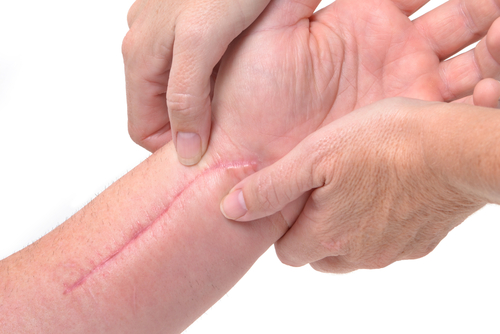
Scar massage usually starts gently. A therapist may begin with light pressure around the scar and then progress to direct massage over the scar once the tissue is ready.
Common scar massage techniques may include:
- Small circles over the scar
- Side-to-side movement
- Up-and-down movement
- Gentle lifting or rolling of the skin when appropriate
- Massage with lotion once the incision is fully healed
The goal is not to aggressively “break up” the scar. More pressure is not always better. Scar massage should be controlled and should not cause increased redness, drainage, or lasting pain.
What About Silicone or Scar Pads?
In some cases, silicone gel sheets, silicone sleeves, or elastomer scar pads may be used along with scar massage. These can help with scar softening, comfort, and pressure management.
A therapist may recommend one of these options if a scar is raised, firm, sensitive, or limiting motion. The type of scar product and wear schedule should be based on the patient’s skin, scar location, and tolerance.
Why Scar Care Matters for Function
Hands are used constantly throughout the day. Even a small area of tight or sensitive scar tissue can affect activities like gripping, pinching, typing, buttoning, writing, cooking, or returning to work tasks.
Scar massage is only one part of a larger hand therapy plan. It is often combined with range of motion exercises, edema management, strengthening, desensitization, and functional activities. The goal is not just for the scar to look better, but for the hand to move and function better.
When to Contact Your Therapist
Patients should let their therapist know if they notice:
- Increased redness or warmth
- Drainage from the incision
- Opening of the incision
- Increased pain after massage
- New numbness or tingling
- A scar that becomes more raised, tight, or painful
Scar healing takes time, and some scars continue changing for several months. With the right guidance, scar massage can be a simple but important part of improving comfort, motion, and daily hand use after surgery.
Takeaway
Scar massage is not just cosmetic. In hand therapy, it can help the scar move better, feel less sensitive, and interfere less with function. Once the incision is fully healed and cleared, consistent scar management can help patients get back to using their hand with more comfort and confidence.
2 Kommentare
Hinterlassen Sie einen Kommentar
Mehr zum Lesen
Hand Contractures from Arthrogryposis Multiplex Congenita
What is Arthrogryposis Multiplex Congenita?Arthrogryposis Multiplex Congenita (AMC) is a rare congenital condition that is characterized byan individual being born with multiple joint contractures, involving two or more areas of the body(Khurana et al., 2024). AMC is a general term that describes over 400 different medicalconditions that involve joint contractures, instead of just describing one…
Vor- und Nachteile von Cortison-Injektionen
Von: Shruti Jani Patienten fragen den Therapeuten oft nach ihrer Meinung zu Kortisoninjektionen. Kortison-Injektionen können sehr hilfreich sein und Entzündungen erheblich reduzieren. Einige Therapeuten sind jedoch der Meinung, dass dadurch die Schmerzen überdeckt werden können und nicht die eigentliche Ursache des Problems behandelt wird. Dies wird unter Therapeuten oft diskutiert. Eine kurze Zusammenfassung der Vorteile…

Funktionelle Heimübungen für Patienten mit Handgelenkinstabilität
Funktionelle Heimübungen für Patienten mit Handgelenksinstabilität Haben Sie sich schon einmal gefragt, was Zähneputzen, Anziehen, Wenden und Sport gemeinsam haben? Sie alle sind auf ein stabiles Handgelenk angewiesen. Die Stabilität des Handgelenks ist für alltägliche Aktivitäten von entscheidender Bedeutung und unterstützt die Propriozeption, Koordination, motorische Kontrolle, Stabilität und Mobilität des Handgelenks (Wietlisbach, 2019). Für Patienten, die sich von einer Handgelenksinstabilität erholen…
Handschmerzen in der Schwangerschaft und beim frischgebackenen Elternteil
Von: Rachel Reed Der Übergang zur Elternschaft kann für den Körper einer Mutter oder eines Elternteils schwierig sein, insbesondere wenn man bedenkt, dass bei der Pflege eines Babys immer häufiger Hände in Anspruch genommen werden müssen. Die häufigsten Erkrankungen der oberen Extremitäten, die sich während der Schwangerschaft und nach der Geburt entwickeln, sind das Karpaltunnelsyndrom und die Tenosynovitis de Quervain (Wagner, 2019). Oftmals neu…

Melden Sie sich an, um Updates direkt in Ihren Posteingang zu erhalten!
Melden Sie sich bei uns an und wir senden Ihnen regelmäßig Blogbeiträge zum Thema Handtherapie, Benachrichtigungen jedes Mal, wenn wir neue Videos und Tutorials hochladen, zusammen mit Handzetteln, Protokollen und anderen nützlichen Informationen.
Thank you for this summary.
How about the evidence? Does it support scar massage? I often wonder if 3-5 mins of scar massage isn’t better spent on AROM of the surrounding joints and tissues?
The two interventions likely target different aspects of recovery: scar massage primarily addresses scar pliability, thickness, pruritus, and pain, while AROM addresses joint mobility, tendon gliding, and functional recovery. In a time-limited session, the clinical priority should be guided by the patient’s primary limitation. When scar adherence and tightness are the dominant barrier to motion, massage may be a prerequisite to effective AROM. When the scar is supple but joint stiffness or tendon adhesion is the issue, AROM is likely the higher-yield intervention. There is no evidence that 3–5 minutes of scar massage is superior to the same time spent on AROM for functional outcomes.