Carpal Tunnel Syndrome Treatment: Surgical vs. Hand Therapy Outcomes
archivado en Tratos
Carpal Tunnel Syndrome Treatment: Surgical vs. Non-Surgical Outcomes
Verdugo, R. J., Salinas, R. S., Castillo, J. L., & Cea, J. G. (2008). Surgical versus non-surgical treatment for tunel carpal síndrome. Cochrane Database of Systematic Reviews, (4).
El delgado
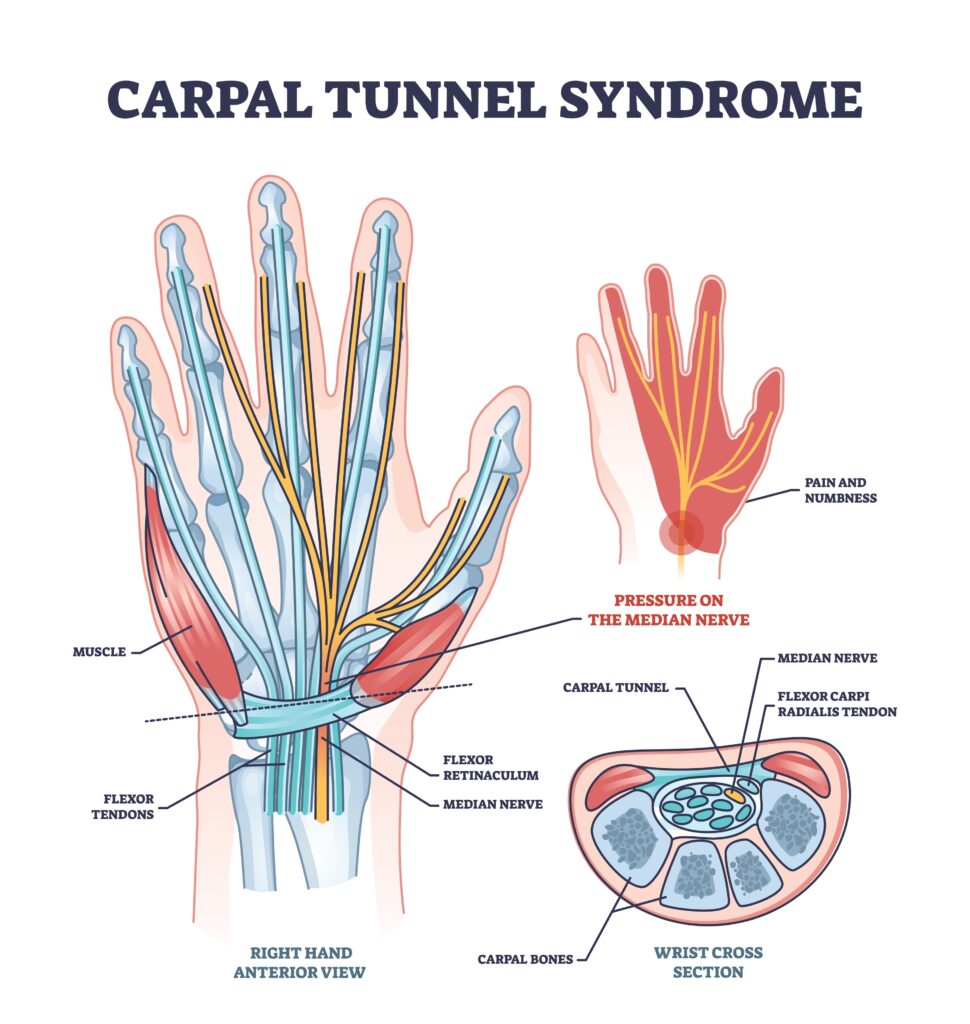
This article compares surgical treatment to non-surgical management such as terapia de manos for individuals with tunel carpal syndrome (CTS). Non-surgical interventions included wrist entablillado, corticosteroid injections, and therapy-based approaches. The findings suggest that surgery generally provides greater symptom relief and functional improvement over time, particularly in more advanced cases. However, conservative tratamiento remains effective for many patients, especially those with mild to moderate symptoms.
En la maleza
This study is a systematic review of randomized controlled trials comparing surgical and non-surgical treatments for CTS. Adult participants diagnosed with CTS were included, and outcomes such as pain, symptom severity, and functional hand use were evaluated.
Non-surgical interventions varied across studies but commonly included wrist splinting in a neutral position, corticosteroid injections, and therapy-based interventions. The included studies also had varying follow-up periods, allowing researchers to compare both short-term and long-term outcomes. One limitation noted was the variability in how conservative treatments were applied, making direct comparisons more difficult.
The results showed that surgical treatment generally led to greater improvement in symptoms and functional outcomes at long-term follow-up. Patients who underwent surgery experienced more consistent and sustained relief compared to those receiving conservative care.
At the same time, non-surgical interventions were still beneficial, particularly in the short term. Many patients with mild to moderate CTS demonstrated improvement with splinting and therapy-based approaches. The effectiveness of conservative treatment appeared to be more limited in patients with more severe symptoms.
Llevándolo a casa
The findings support a stepwise approach to managing tunel carpal syndrome. Conservative treatment should typically be the first line of care, especially for patients with less severe symptoms. If symptoms persist or worsen, surgical intervention may provide greater long-term benefit.
From a clinical perspective, therapy plays an important role not only in early management but also following surgical intervention. Post-operative rehabilitation is often necessary to restore range of motion, manage scar tissue, and improve strength and functional use of the hand.
Calificación: 4/5
This study supports the use of a stepwise treatment approach for tunel carpal syndrome. Conservative management remains an appropriate first option for many patients because it can reduce symptoms without requiring surgery. However, surgery appears to provide better long-term improvement when symptoms persist or become more severe.
The article was helpful because it compared both treatment approaches while also recognizing the value of therapy throughout the rehabilitation process. One limitation is that the conservative treatments varied between studies, which made some comparisons less consistent.
Más para leer
Resultados de las placas puente dorsales
Resultados de las placas puente dorsales Fares, AB, Childs, BR, Polmear, MM, Clark, DM, Nesti, LJ y Dunn, JC (2021). Placa de puente dorsal para fracturas del radio distal: una revisión sistemática. La revista de cirugía de la mano. https://doi-org.methodistlibrary.idm.oclc.org/10.1016/j.jhsa.2020.11.026 Las fracturas delgadas del radio distal (DRF) son una lesión común que vemos en…

Terapia de espejo después de una reparación de un nervio periférico en la terapia de la mano
Revisión rápida Paula, MH, Barbosa, RI, Marcolino, AM, Elui, VM, Rosén, B., & Fonseca, MC (2016). Reeducación sensorial temprana de la mano después de una reparación de un nervio periférico basada en la terapia del espejo: un ensayo controlado aleatorio. Revista brasileña de fisioterapia, 20(1), 58–65. https://doi.org/10.1590/bjpt-rbf.2014.0130 The Skinny: La terapia a menudo se brinda después de un…

6 de nuestros equipos adaptativos favoritos para la osteoartritis CMC
Las personas que luchan contra la osteoartritis de la primera articulación CMC suelen tener dificultades con las actividades diarias y pueden resultar muy frustrantes. Las tareas cotidianas, como cortar comida, abrir recipientes y ponerse una camisa abotonada, pueden volverse dolorosas y lentas. El mayor contribuyente al funcionamiento general de nuestra mano es el pulgar. Si el…

Terapia de manos como nuevo graduado o estudiante
Consejos para prepararse para la terapia de la mano como recién graduado o como trabajo de campo de nivel II. Todo lo que necesita saber sobre la terapia de la mano comienza con la anatomía de la extremidad superior. Aquí hay una lista de verificación rápida para revisar y, con suerte, ayudarlo a comenzar en su nuevo entorno de terapia de manos. Por: Tristany Hightower Sugiero, como…

¡Regístrese para recibir actualizaciones directamente en su bandeja de entrada!
Regístrese con nosotros y le enviaremos publicaciones periódicas en el blog sobre todo lo relacionado con la terapia de manos, avisos cada vez que subamos nuevos videos y tutoriales, junto con folletos, protocolos y otra información útil.