
By: Josh MacDonald
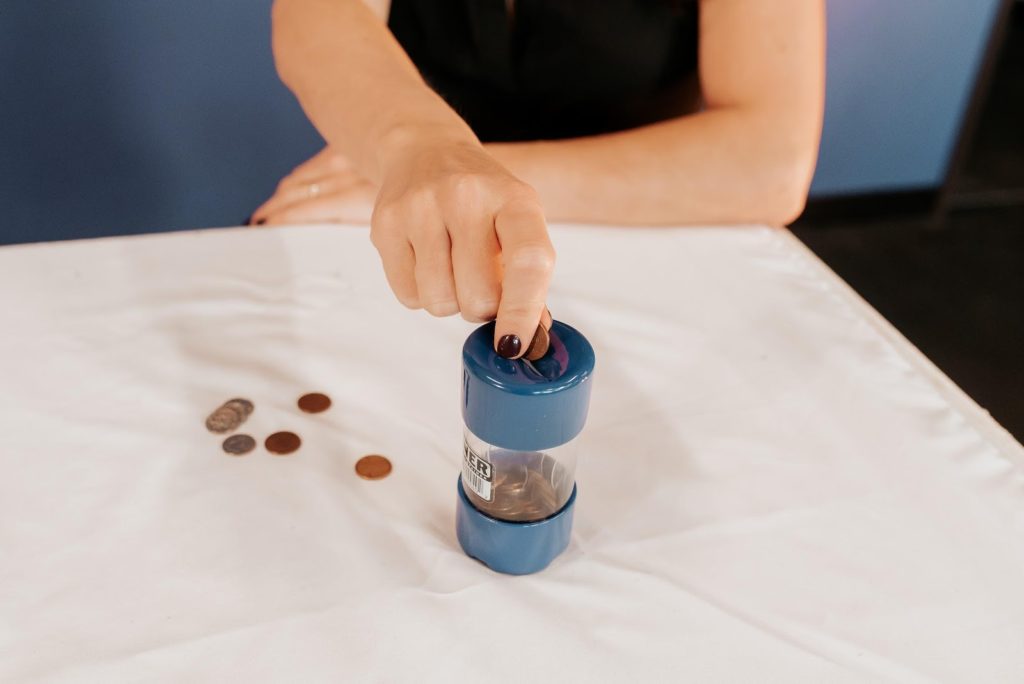
The Basics – I lay a pile of small objects on the table and an open container for the client to put them into. What object I use depends on the client’s level. We’ll get to that later. Then, they use a 2-point pincer grasp to pick up one and shift it finger-to-palm. They do this 3-4 more times. Each time, shifting it fully to the palm. Then the objects are taken, one at a time, from palm to pincer grasp and dropped into the container.
“Using translation gives me a task to work on fine motor skills and dexterity that is gradable and functional.”
Special Rules – To keep the client from cheating and to meet the purpose of the task we have a few special rules.
- No using momentum to ‘throw’ the object from palm to finger. They need to use finger and thumb motion to advance the object.
- No using gravity to let the object fall from palm to fingers. AKA: no cheating
- Take it all of the way to the tips of index and thumb. It’s harder but it matters.
Make it fit – This task is highly scalable to meet the client’s needs and the ‘just right challenge’. Here is the sequence I use as the client improves:
- Slow foam squares cut into ¾” squares
- Squares mixed with marbles (pick up 2 of each) and sorting them for sensation work.
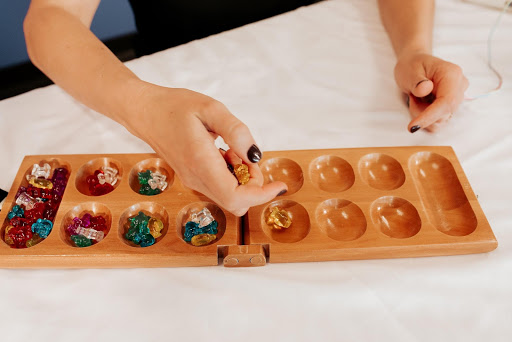
- Mancala pieces or just plain marbles
- Coins – Pick them up off a towel if flat on a table is too much
Bonus!! – Aside from the obvious benefits there are a few other added extras that pop up. Sometimes I even use these as the primary reason for picking this task.
Supination/pronation – The forearm is pretty darn active during this whole process
Tactile work – Stereognosis and discrimination skills can be refined with this task
Thumb work – When done right, the thumb is getting a solid workout (e.g. Joint stiffness work)
Whatever you want…
This task can be converted into whatever you want it to be. Use dice to play a game. Use grapes or other food for a self-feeding goal. Use small beads and work on ‘storing’ the extras in the ulnar side of the palm while stringing the bead. The options are ENDLESS! This is one of my favorite tasks and I can’t wait for you to try it and tell us what you think.
1 Comment
Leave a Comment
More To Read
3 Common Reasons for Ulnar-Sided Wrist Pain and Non-Surgical Hand Therapy Treatment Options
3 Common Reasons for Ulnar Sided Wrist Pain

Vagus Nerve Stimulation (VNS) for Various Etiologies
What is it: Vagus nerve stimulation (VNS) is a medical treatment that uses a device to deliver electrical impulses to the vagus nerve, which runs on both sides of the body from the lower brain through the neck to the chest and stomach. The left vagus nerve is typically used for this procedure, as simulating…

Do you know the secret ingredient to recovering from an injury?
Do you know the secret ingredient to recovering from an injury? I will give you a hint it is 5 letters and begins with the letter S. SLEEP Have you ever asked yourself a question – does sleep help injuries heal? This is for you to share with your patients but also serve as a…

Volkmann’s Contracture
Written by Melissa Miller Introduction Volkmann’s contracture is a rare condition that occurs after injury to the elbow and upper arm, typically from a crush injury. This condition can occur when acute compartment syndrome is left untreated. If unrecognized, Volkmann’s contracture can lead to a permanent deformity in the hand and forearm. Hand therapists are…

Sign-up to Get Updates Straight to Your Inbox!
Sign up with us and we will send you regular blog posts on everything hand therapy, notices every time we upload new videos and tutorials, along with handout, protocols, and other useful information.
When I worked in pediatrics in the school system, I cut aslit in a tennis ball, drew a face on it, called it Mr. Hungry. I had students translate pennies and fed Mr. Hungry. This was one of their favorite activities!