

Comparison of Custom-made Versus Prefabricated Thumb Splinting for Carpometacarpal Arthrosis: A Systematic Review and Meta-analysis
Filed under Reviews, Uncategorized
Baradaran, A., Baradaran, A., Ebrahimzadeh, M. H., Kachooei, A. R., Rivlin, M., & Beredjiklian, P. (2018). Comparison of Custom-made Versus Prefabricated Splint for Carpometacarpal Arthrosis: A Systematic Review and Meta-analysis. The archives of bone and joint surgery, 6(6), 478–485.
Article Review By: Dalton Busch
The Skinny – A systematic review and meta-analysis were composed to compare the effectiveness of prefabricated orthoses versus a custom-made thermoplastic splint. The splints were created to manage carpometacarpal (CMC) osteoarthritis (OA). A total of five randomized clinical trials with a total of 230 patients were analyzed following the Preferred Reporting Items for Systematic Reviews and Meta-Analyses (PRISMA) guidelines.
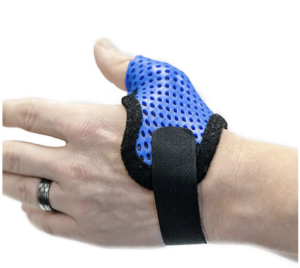
In the weeds – Within the five randomized controlled trials, the researchers analyzed patients’ disability scores, pain scores, grip, and pinch strength, and integrated the data properly. All of the trials assessed were comparing results of the CMC OA orthoses as a non-surgical alternative. The primary outcome measure included was the Disabilities of the Arm Shoulder and Hand (DASH). Secondary measures that were extracted by the researchers included pain ratings, grip strength, and pinch strength. Further, the researchers looked into overall demographics, sample size, study design, and the type of splint utilized on the affected thumb.
Bringing it home – Overall findings from the systematic review pointed towards a statistical difference in the overall disability scores of patients who wore the prefabricated versus the custom, showing preference to the prefabricated. The secondary data relating to pain and grip/pinch strength both showed overall improvement wearing either the prefabricated or custom-made orthotic.
Rating (0-5) – 4: This systematic review and meta-analysis were done across five clinical trials with a large sample size of 230 patients. The review shows the effectiveness of both custom and prefabricated orthoses but shows lessened disability scores for prefabricated. The mean follow-up testing was 8.1 weeks which is a short-term retest as CMC OA orthoses could become a lifelong solution for patients who fall within this category. Improved research may look into long-term follow-up for more accurate data.
1 Comment
Leave a Comment
More To Read

Wrist Fractures and Marijuana Use: What are the complications?
Title: Marijuana use and complications with healing after distal radius wrist fracture Article: Livesey, M. G., Bains, S. S., Stern, J. M., Chen, Z., Dubin, J. A., Monárrez, R., … & Ingari, J. V. (2025). Cannabis use in patients with distal radius fractures: a moment of unity?. Hand, 20(2), 263-268. The skinny The impact of tobacco use…

When should you use a Static Progressive Splint in Hand Therapy?
Flowers, K. (2002). A proposed decision hierarchy for splinting the stiff joint, with an emphasis on force application parameters. Journal of Hand Therapy, 15, 158–162. The Skinny- The article proposes a decision hierarchy to determine when you should apply a static progressive or dynamic orthosis. The decision hierarchy uses a modified Weeks test (MWT). The…
Effectiveness of Conservative Therapy and Splinting for 1st CMC OA
Tsehaie, J., Sprekraijse, K., Wouters, R., Slijper, H., Feitz, R., Hovious, S., & Selles, R. (2018). Outcome of a Hand Orthosis and Hand Therapy for Carpometacarpal Osteoarthritis in Daily Practice: A Prospective Cohort Study. American Society for Surgery of the Hand, 1-11. The skinny: Non-surgical approaches (hand therapy & orthotics) are typically the go-to for…

Surgery & Hand Therapy Highlights for Dupuytren’s Disease
Dupuytren’s disease affects the fascia of the hand (Dupuytren’s fasciectomy hand). It is relatively common to encounter patients with Dupuytren’s condition, even if that is not the primary reason you are treating the patient. Patients often present with a nodule(s) in the palm of the hand, or they may even have a thickened cord running…

Sign-up to Get Updates Straight to Your Inbox!
Sign up with us and we will send you regular blog posts on everything hand therapy, notices every time we upload new videos and tutorials, along with handout, protocols, and other useful information.
This doesn’t surprise me as I think there is a high variability between therapist custom splint designs which may outweigh the potential benefit of having the splint custom fabricated.