

Clients who have experienced a fracture of the finger or hand often find it difficult to participate in meaningful occupations. Everyday tasks from grasping items, cutting food, taking lids off containers, turning keys, and many others can be very painful. Pinky fracture is particularly challenging and painful. This is typical because the largest contributor to our “power grasp” comes from our hand’s ulnar side, which includes the small finger. Many clients’ goal with this type of injury is to regain their hand function for grasping items and the use of the “power grasp.”
There are many ways to treat small finger fractures as we help clients regain function and use of the injured digit. Some of the most common treatments include short arc pain-free range of motion and low load prolonged stretching. Additionally, we have a few other ways to target the mobility and strength of the small finger directly:
Some of our Favorites
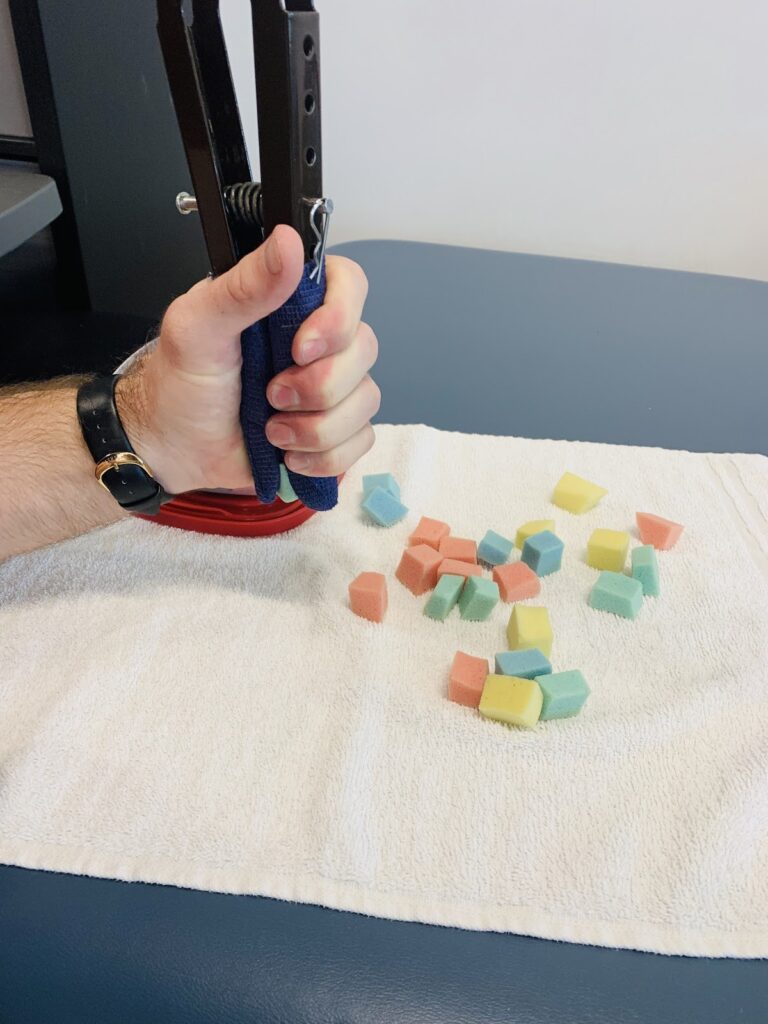
Caliper and sponge cube grasp can help address whole hand grasp and promote power grasp from the hand’s ulnar side. This strength-based activity can be graded up or down based on where the spring is placed between the calipers.
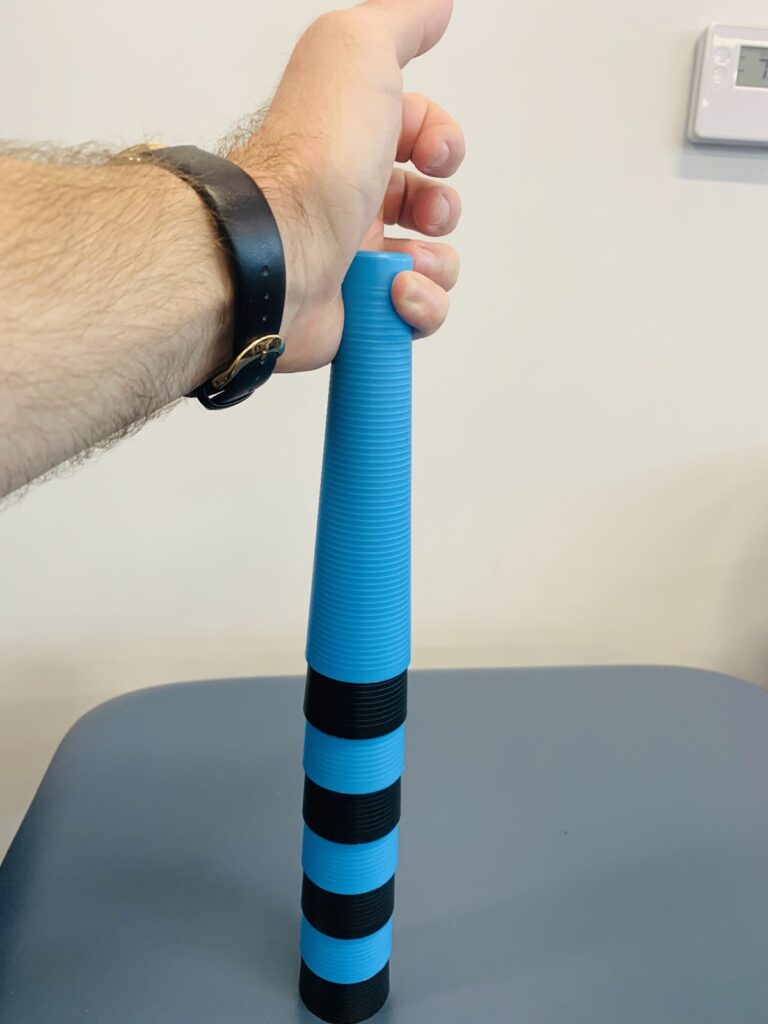
Small finger cone stacking can be used for small finger range of motion specifically. This activity can be graded up or down by how far up or down the client is able to grasp the cone with their small finger.
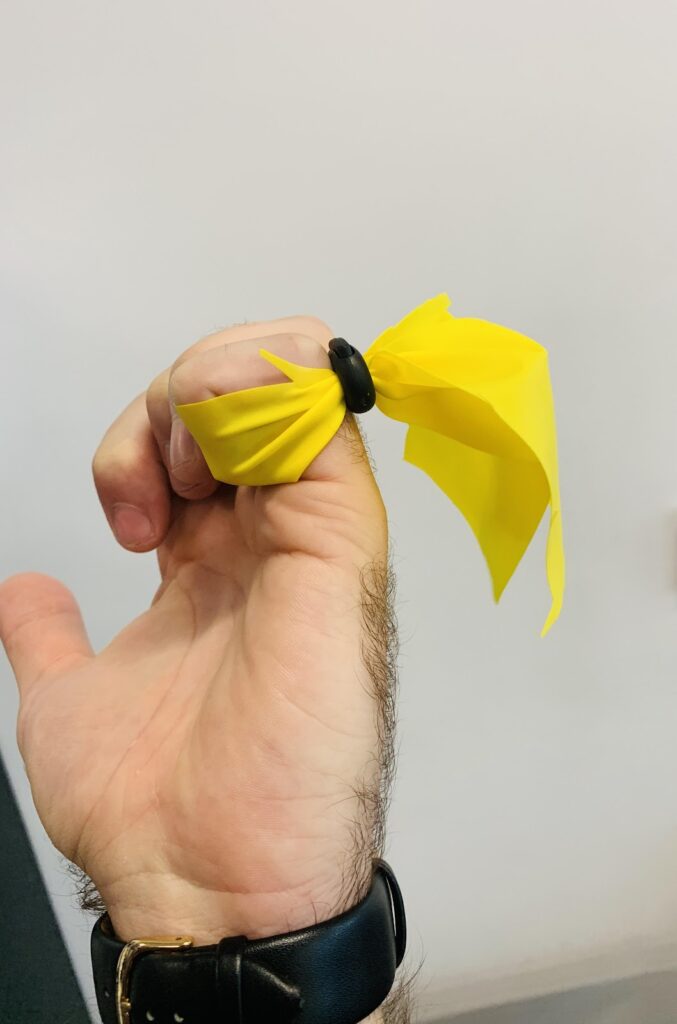
A dynamic device can be made from a piece of theraband, which Is then run through the loops of Toggle Spring Stop and can be pulled as tight or loose as needed to meet the client’s needs. This is an excellent adjunct for a client’s home exercise program to simulate a low load version of stretching.
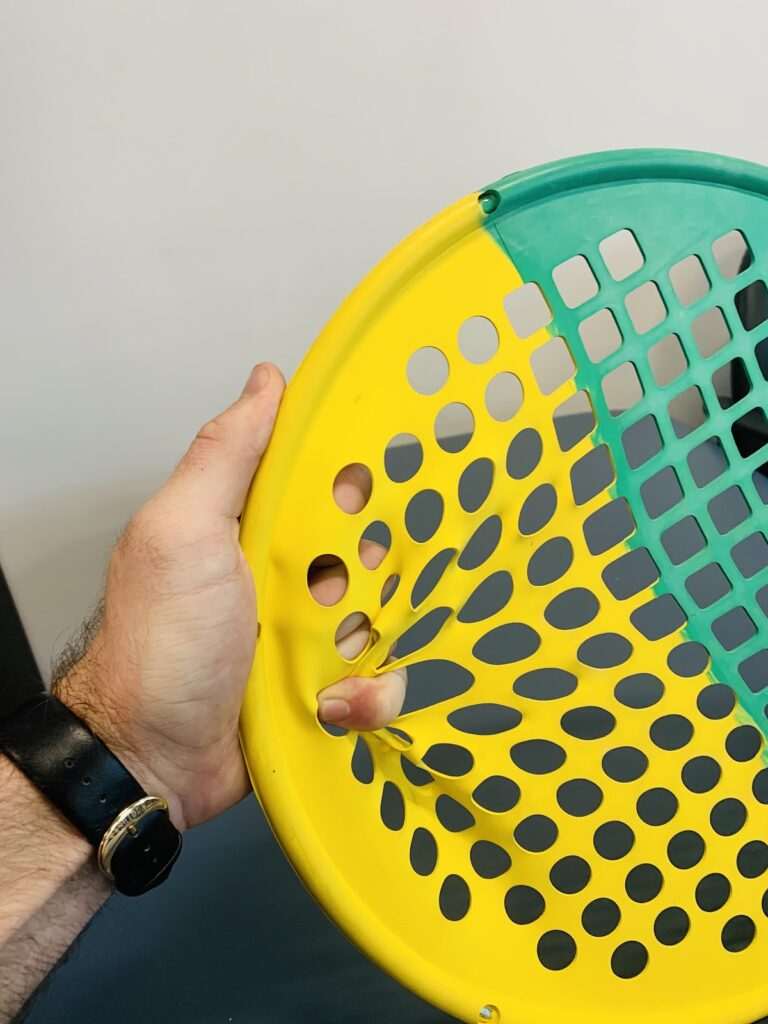
A power web can be used to strengthen the small finger. Place the small finger through the power web hole to pull and hold to create tension on the small finger’s flexors by pulling downward and isometrically firing the finger flexors. This is as much a strength-based activity as it is a pain-free range of motion. Patients are encouraged to stop just short of pain and hold their fingers flexed against the resistance for 10 seconds.
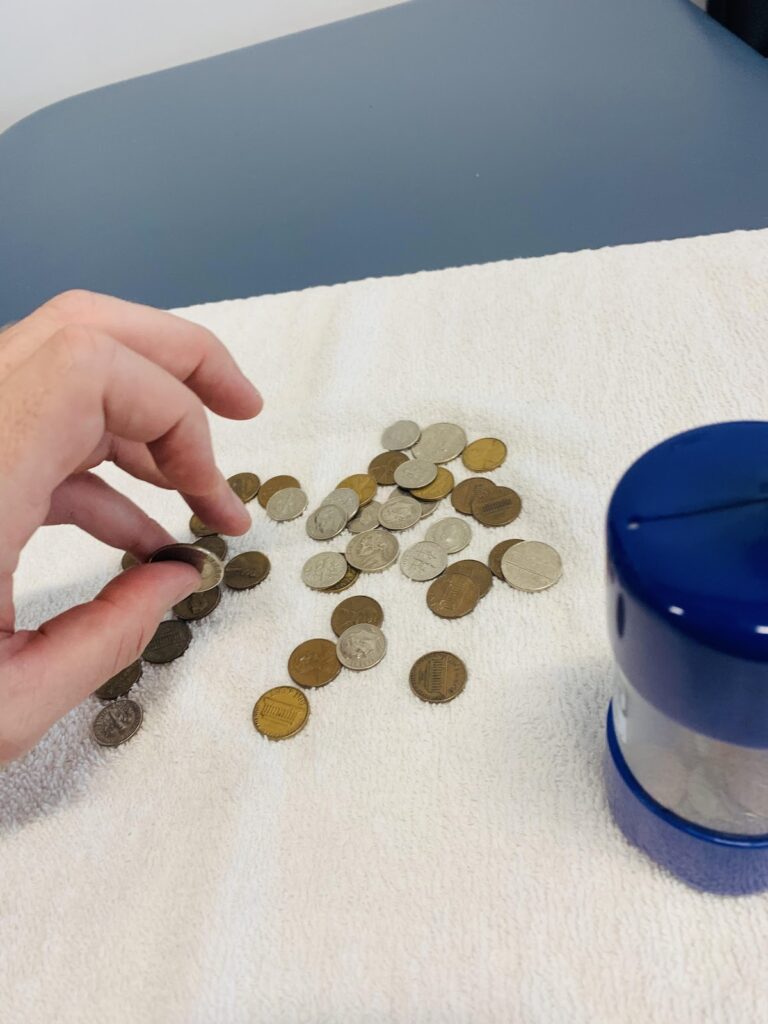
Small finger opposition coin grasp can be useful for the thumb and small finger dexterity and pain-free range of motion.
It can be tricky to find functional and purposeful ways to work on small finger mobility and therapy functions. These are some of our favorites. What are some of yours?
2 Comments
Leave a Comment
More To Read
Dorsal Wrist Pain?
Incorporating Emerging Evidence into Clinical Practice for Patients Experiencing Dorsal Wrist Pain During Weight-Bearing Activities By: Brittany Day Supporting Evidence A randomized control study recently published in the Journal of Hand Therapy found rigid carpal stabilizing taping (CST) to significantly increase passive range of motion, active range of motion, and decrease pain in patients experiencing…

Stretching Alone Can Change P1 Bone Shape in Patients with Camptodactyly
Woo Hong, S. Kim, J., Sang Kwon, O., Ho Lee, M., Sik Gong, H., Hyun Baek, G., (2019). Radiographic Remodeling of the Proximal Phalangeal Head Using a Stretching Exercise in Patients With Camptodactyly. J Hand Surg Am, 1.e1-1.e10 The Skinny – Camptodactyly is a congenital, nontraumatic flexion contracture of the PIP in fingers other than…
Increase Shoulder Range by Improving Scapulohumeral Rhythm
Scapulohumeral rhythm is often the key component when treating shoulder conditions and the lack of total shoulder range of motion. This may also be a critical component to prevent shoulder conditions during the rehabilitation of other upper extremity conditions such as distal radius fractures, tendon injuries, and elbow injuries. Scapulohumeral rhythm is the rhythm in…
7 Tips to Help your Patients Manage Hand Osteoarthritis
Introduction Osteoarthritis in the hands can be frustrating and debilitating. As a form of degenerative joint disease, it causes stiffness, pain, swelling, and reduced grip strength—making daily tasks like writing, opening jars, and typing feel exhausting. Fortunately, there’s a proven holistic approach centered on hand therapy for arthritic hands. This includes tailored exercises, targeted splinting,…

Sign-up to Get Updates Straight to Your Inbox!
Sign up with us and we will send you regular blog posts on everything hand therapy, notices every time we upload new videos and tutorials, along with handout, protocols, and other useful information.
How about pajama elastic and a safety pin from the IP flexion stretching and using 9-hole peg and removing pegs by grasping with SF in hook position once they progress pass the larger diameter of the cones.
That sounds like a great exercise to try. I shall try that one since I’m looking for ways to help fix my previously fractured pinky finger. It’s difficult to bend whatsoever. 💔 I haven’t been able to get it to move well. Even at physical therapy appts. Looking for ways to practice exercises away from actual p.t appts. as well. Tyvm!