

The Role of Sensory Re-education After Nerve Injury
Filed under Reviews, Treatments
Priya, B. A. (2012). Effectiveness of Sensory Re-education after Nerve Repair (Median or Ulnar Nerve) at the Wrist Level. Indian Journal of Physiotherapy & Occupational Therapy, 6(3), 62–68.
The Skinny
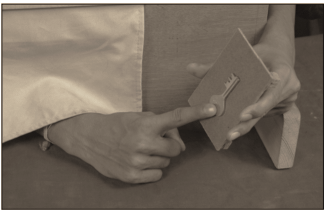
The human nervous system is incredibly complex and, once damaged, requires significant time to repair. A previous study (Bentzel, K 2002) identifies that with peripheral nerve repair, the sensation of the hand improves with use, training, and time. This study sought to pinpoint what type of training is more effective. The authors are looking to identify the effectiveness of a sensory reeducation HEP (Control Group) vs. the HEP in conjunction with specific sensory reeducation occupational therapy (Experimental Group). The sensory reeducation HEP consists of compensatory techniques for decreased sensation, identifying different textures using sandpapers, manipulation in hands everyday objects, encouraging the use of the affected hand, and vision occluded object manipulation, and education on injury outcomes. The specific sensory re-education after peripheral nerve injury therapy is listed below
In the Weeds
There were 22 participants included in the study, with 11 in the experimental group and 11 in the control group. Of the 22 participants, 11 patients had a median nerve injury, and 11 patients had an ulnar nerve injury, all with lacerations at the wrist level. All participants were immobilized for the first three weeks after nerve repair and started interventions on the fourth week. Assessments for sensation include the monofilaments, calibrated aesthesiometer, object recognition tests, Parasthesia level scale, two-point discrimination, and touch-pressure.
The experimental group received a 15-min therapy session, 6 days a week for 3 months, and was provided with a detailed home program. The intervention protocol includes:
- Reeducation of perception of moving touch and constant touch, using the end of a pencil to a specific area, and moving touch to in a transverse or longitudinal plane to the zone of impaired nerves.
- Differentiation of roughness of sandpapers, the patient was asked to differentiate between two textures on a sandpaper dowel while the patient’s eyes were closed. The patient then needed to state if the textures were the same or different. Incorrect answers were followed by stimulation given with the eyes open, then again with the eyes closed. As discrimination of the patient improved, the sandpaper was graded to become more similar.
- Identification of shapes of wooden blocks, patients were given various shapes of six wooden blocks and were trained to identify the shape.
- Identification of objects, patients were given 12 objects to attach to wooden plates.
The home program included:
- Compensatory methods for decreased sensation.
- Sandpaper exposure to different textures.
- Manipulating everyday objects in hands and then identifying them.
- Implementing the use of the affected hand in activities to receive tactile stimulus.
- Relating details of objects with tactile identification with eyes open and occluded.
- Education on risk factors with loss of sensation, functional outcomes, and consequences of the injury.
Bringing it Home
The study identified that the experimental group demonstrated statistically significant improvement in static and dynamic two-point discrimination as compared to the control group. The experimental group had an 18% change in two-point discrimination, improving their sensation from “protective” to “fair”. The control group did not have a change in their sensation grades for two-point discrimination. Both groups demonstrate a statistically significant change in the object recognition test. However, the experimental group demonstrates more change than the control. The level of paresthesia in the experimental group changed from severe to moderate in 67% of the participants and from severe to mild in 36% of the subjects. The level of paresthesia in the control group found that 27% of participants changed from severe to moderate levels. The touch pressure threshold pre-and post-therapy results were found to be statistically significant in the experimental group. There was no change in touch pressure threshold in the control group scores.
The intervention protocol PLUS the home program is the most effective method of sensory reeducation and reestablishes the implication for sensory re-education within therapy sessions for peripheral nerve lacerations.
The Rating (4)
Overall, the study provides an adequate guide for appropriate interventions for nerve repairs. Potential limitations of the study include control for gender, age, and potential researcher bias due to lack of blinding and randomization of participants into each group. Further information should also be gathered regarding the level of compliance of participants in the control group to HEP to identify potential confounds. Future research should be gathered to identify the effects of gender, age, and level of laceration for the stated interventions effectiveness.
Priya, B. A. (2012). Effectiveness of Sensory Re-education after Nerve Repair (Median or Ulnar Nerve) at the Wrist Level. Indian Journal of Physiotherapy & Occupational Therapy, 6(3), 62–68.
Reference
Bentzel, K. (2002). Assessing abilities and capacities: Sensation. In Trombly C.A., Occupational Therapy for Physical Dysfunction (5th ed.) (pp. 159-175). Philadelphia: Lippincott Williams & Wilkins. 5. Rosen, B., Lundborg, G. (2004). Sensory reeducation after nerve repair – Aspect of timing. Hand Chir. Mikrochir Plastic.Chir, 36(1), 8-12.
1 Comment
Leave a Comment
More To Read

Stretching After Stroke for Spasticity
Rapid Review By: Mikayla Murphy Kerr, L., Jewell, V. D., & Jensen, L. (2020). Stretching and splinting interventions for post stroke spasticity, hand function, and functional tasks: A systematic review. American Journal of Occupational Therapy, 74, 7405205050. https://doi.org/10.5014/ajot.2020.029454 The Skinny This study focused on the benefits of stretching the upper extremity to decrease spasticity, increase…

All about kinesiology taping for upper extremity injuries and conditions!
All about kinesiology taping! Elastic is also known as k-tape, Kinesio-tape, and kinesiology taping. Elastic tape is all over the marketplace and is often seen on professional athletes. It can be found in most therapy clinics and is used to treat both orthopedic and neurological conditions. There are limited studies supporting the use of…
Neurolutions IpsiHand to Aide in Stroke Rehabilitation in Patients with Hemiparesis
Neurolutions IpsiHand to Aide in Stroke Rehabilitation in Patients with Hemiparesis Hemiparesis occurs in approximately 77% of new stroke cases and often persists into thechronic stage (Humphries et al., 2021). Recent innovation, such as brain-computer interfaces(BCIs), offer new opportunities for motor recovery even years after stroke. One such approach is the Neurolutions IpsiHand System, an…
How to Strengthen the Intrinsics with Puttycise Tools:
How to strengthen the intrinsic with Puttycise tools

Sign-up to Get Updates Straight to Your Inbox!
Sign up with us and we will send you regular blog posts on everything hand therapy, notices every time we upload new videos and tutorials, along with handout, protocols, and other useful information.
Thank You