3 Household Objects for 9 different Hand Therapy Activities
Filed under Treatments
Do you struggle to develop new treatment ideas or even ideas for your virtual hand therapy visits? Thinking of unique ways to use objects your clients have in their homes can be half the battle. This blog post presents 3 different ways to use 3 everyday items.
Item number 1: A tennis ball (hand therapy ball).
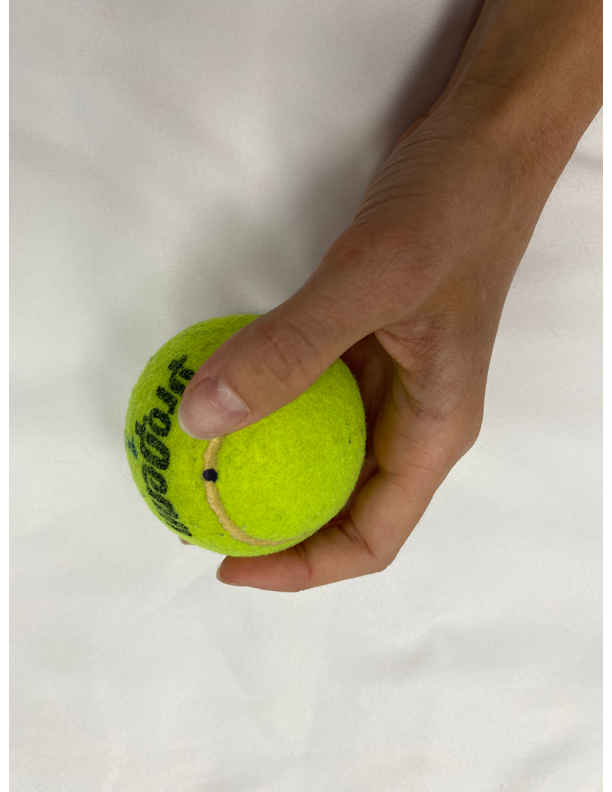
Tracing the white lines
Shift the tennis ball (or any other therapy ball for hand) with the fingertips while tracing the line of the ball with the tip of the thumb. Then repeat in reverse. This is a great option for our CMC osteoarthritis and a good fit for anyone needing to work on that thumb mobility.
Balancing on a racket
Balancing a tennis ball on a racket addresses wrist stability and mobility, and upper extremity strengthening and coordination. If your client doesn’t have a racket handy, they could even use a small frying pan. Have your client ‘write their name’ with the pattern of the therapy hand ball or even try spelling out the ABCs.
Grip strengthening
This is typically used for pediatrics but can be fun for adults too. Cut a slit into one of the tennis balls and give it to your client. Otherwise, see if a loved one can help them cut a slit. Have your client squeeze the ball with their affected hand to open the mouth (slit) of the tennis ball. Using their other hand, have them place pom-poms, coins, or beads into the therapy ball for hands.
Item number 2: A bag of coins
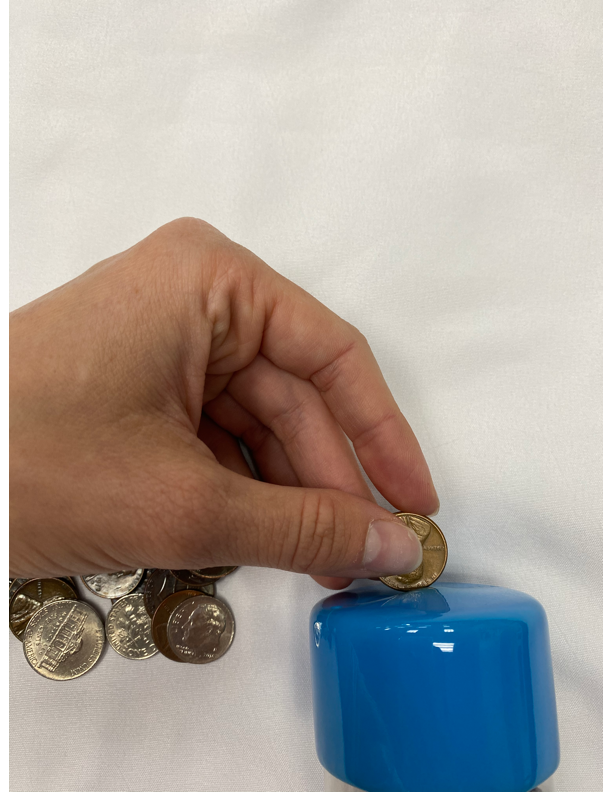
Translate coins into a piggy bank
This activity emphasizes prehension, functional grasp patterns, isometric IP flexion, in-hand manipulation, opposition, palm to finger translation, and more! No piggy bank = no problem. Cut a hole in the top of an old peanut butter jar or even cut slits into a piece of paper for DIY alternatives.
Hide coins in rice.
Hide coins in a Tupperware container of rice, place a towel on top of the container, and challenge your client to place the affected hand in and search for the coins. This activity will challenge tactile discrimination skills, desensitize digits, hand strength and mobility, and functional grasp.
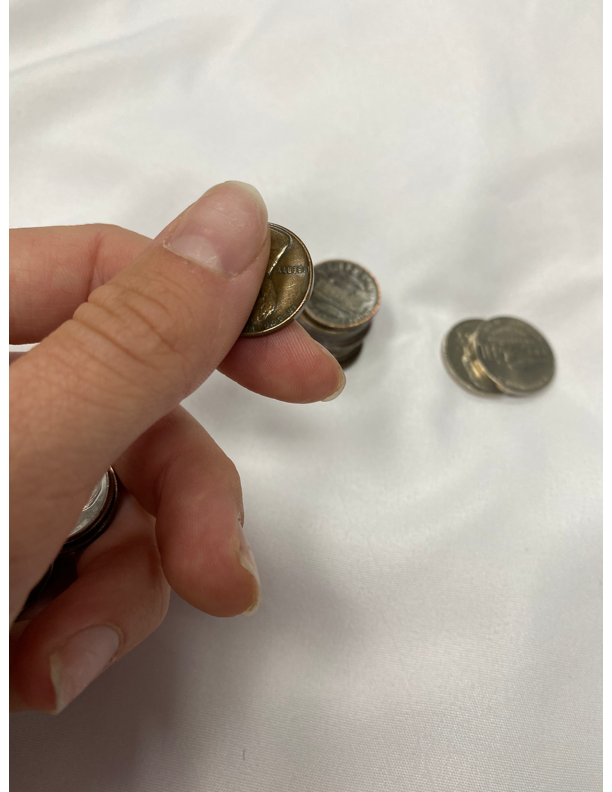
Stacking
Stacking coins is an easy activity that targets an individual’s dexterity, as it requires prehension, opposition, and mobility. To grade this activity, prompt your client to hold multiple coins in the palm of their hand and then stack a single coin, one at a time; this additional challenge will address in-hand manipulation and palm-to-finger translation skills!
Item number 3: Scraps of Paper
Paper ‘Crumpling’
Using appropriately sized pieces of paper, have your client ‘crumple’ 5 pieces with their involved hand, making them into paper balls. This is for improving in-hand manipulation skill and to improve digital range of motion.
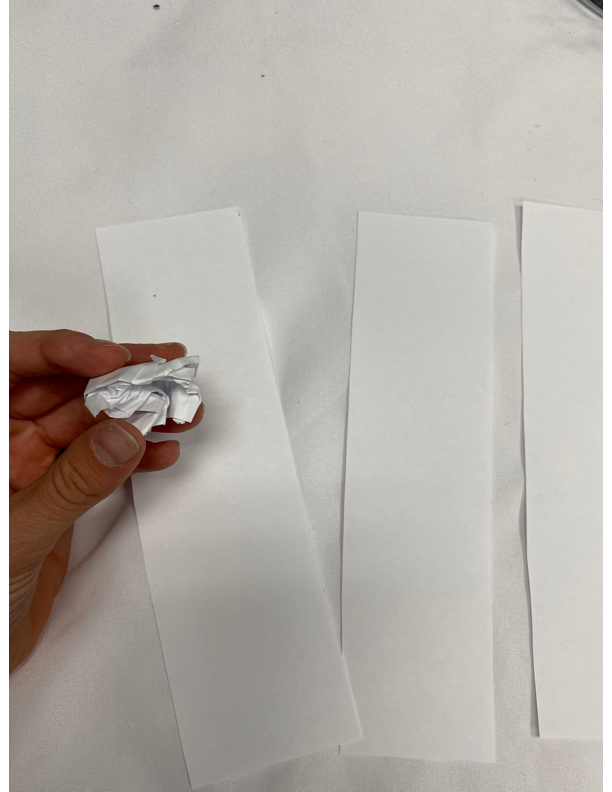
‘Flicking’
Practice ‘flicking’ the paper balls (see above); this will encourage isolated digit flexion and extension.
Throwing small paper balls
Practice throwing small balls into a small container. This will encourage range of motion in dart throwers plane and encourage grasp and release in a tenodesis fashion—also many other great benefits for eye-hand coordination and proprioception.
2 Comments
Leave a Comment
More To Read
How to Improve HEP Adherence for Optimal Rehabilitation Outcomes
By Sophia Grimm A lack of adherence to home exercise programs in rehabilitation is a significant problem, with nonadherence estimates as high as 30-65% for general musculoskeletal conditions. This could have potentially detrimental effects on patients’ clinical rehabilitation outcomes as the success of certain medical interventions depends largely on patient adherence to advice and prescribed rehabilitation…

Simple but Effective Ways Hand Therapists Address Psychosocial Impacts of Upper Extremity Injuries
Although psychosocial factors are often not formally assessed during an evaluation in those with upper extremity injuries, the therapist often informally assesses these during and after treatment sessions. Sustaining an upper extremity injury can be a physically and emotionally challenging experience. Beyond the physical pain and limitations, these injuries can profoundly impact an individual’s psychosocial…

Wound Healing in Hand Therapy
By: Maddie Mott Wound healing (healing hand therapy) involves a complex series of interactions between different cell types, cytokine mediators, and the extracellular matrix with its four basic stages including hemostasis, inflammation, proliferation, and remodeling (Mackay & Miller, 2003). Because successful wound healing requires adequate blood and nutrients to be supplied to the site of…

Volkmann’s Contracture
Written by Melissa Miller Introduction Volkmann’s contracture is a rare condition that occurs after injury to the elbow and upper arm, typically from a crush injury. This condition can occur when acute compartment syndrome is left untreated. If unrecognized, Volkmann’s contracture can lead to a permanent deformity in the hand and forearm. Hand therapists are…

Sign-up to Get Updates Straight to Your Inbox!
Sign up with us and we will send you regular blog posts on everything hand therapy, notices every time we upload new videos and tutorials, along with handout, protocols, and other useful information.
simple exercises that go far.
Awesome, thank you for sharing