

Nguyen, T. N. A., Nguyen, N. H., Vu, D. K., & Cu, L. T. N. (2025). Short-term effects of
Kinesiotaping combined with a rehabilitation program for rotator cuff-related shoulder pain: A
randomized, assessor-blinded clinical trial. Journal of Manual & Manipulative Therapy, 33(2),
112–121. https://doi.org/10.1080/10669817.2024.2387913
The Skinny:
The term rotator cuff related shoulder pain (RCRSP) encompasses a range of disorders
associated with rotator cuff pathology, including rotator cuff tendinopathy, subacromial pain
syndrome, and atraumatic partial rotator cuff tear. RCRSP is present in approximately half of
patients with shoulder issues and is characterized by pain and limited arm range of motion
(ROM). RCRSP is typically treated with a combination of patient education, manual therapy,
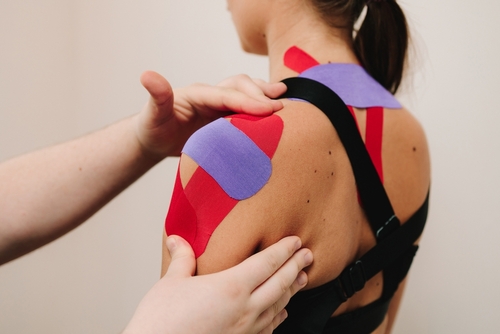
exercise, electrotherapy, and, in some cases, surgery. K taping (KT) is an elastic and
adhesive tape thought to provide pain relief, improve lymphatic and vascular function, and
support injured muscles and joints. This study examined the clinical efficacy of K taping in
conjunction with a rehabilitation program for RCRSP.
In the Weeds:
The single-blinded randomized controlled trial included two groups, a control group and a k taping
group, each with 40 participants. Both groups completed a 2-week shoulder rehabilitation
program comprising 10 sessions, each lasting 45 to 60 minutes. Both groups underwent infrared
therapy, ultrasound, and progressive shoulder strengthening. The only difference between groups
was that the k tape group received three strips of K-tape to the affected shoulder and was
instructed to leave the tape on for 72 hours or until the next session.
Bringing it Home:
Both groups benefited from the shoulder rehabilitation program, demonstrating decreased
shoulder pain and increased function; however, greater benefits were observed in the KT group.
At 14 days postintervention, the KT group showed significantly reduced pain compared with the
control group. Additionally, the KT group gained more shoulder flexion and external rotation
ROM. By day 14, the KT group gained an average of 11.8 degrees of shoulder flexion ROM and
6.98 degrees of shoulder external rotation, both greater than those of the control group. No
significant differences were observed between groups for shoulder abduction and internal
rotation. The KT group experienced significantly improved pain immediately after KT application compared with the control group. It is presumed that KT may improve short-term
pain reduction when using the Visual Analog Scale. The study results indicate that KT may
accelerate ROM improvements in patients with RCRSP.
Rating: 4/5
This study included a rigorous methodology section and accurately used statistical analyses to
interpret results. Of note, 73% of participants were male, which may limit generalizability.
Additionally, the follow-up period was short, limiting the ability to examine the differences in
long-term outcomes. In the context of hand therapy practice, KT may be valuable to trial for
patients with RCRSP for pain reduction as well as increased function and ROM.
2 Comments
Leave a Comment
More To Read
Article Review: Trapeziectomy and LRTI: What can patients with CMC osteoarthritis expect 12 months after the procedure?
Janakiramanan, N., Miles, O., Collon, S., Crammond, B., McCombe, D., & Tham, S. K. (2021). Functional Recovery Following Trapeziectomy and Ligament Reconstruction and Tendon Interposition (Trapeziectomy and LRTI): A Prospective Longitudinal Study. The Journal of hand surgery, S0363-5023(21)00304-X. Advance online publication. https://doi.org/10.1016/j.jhsa.2021.04.036 The skinny: Patients with trapeziometacarpal (TMC) osteoarthritis who are candidates for a trapeziectomy and…
Splinting and Stretch Protocol for Pediatric Trigger Thumb
Tan, A. C., Lam, K. S., & Lee, E. H. (2002). The Treatment Outcome of Trigger Thumb in Children. Journal of Pediatric Orthopaedics B, 11(3), 256-259. The Skinny:Pediatric trigger thumb is a “relatively uncommon” condition of unknown origins. Studies have indicated that spontaneous recovery of trigger thumb is around 25-40%, and chances increase with age.…

Trigger Finger… Quick and Dirty!
This is for you… Hand Therapists! Stenosing tenosynovitis, otherwise known as trigger finger, is a common condition affecting children and adults of all ages. Fast Facts Trigger finger usually occurs at the A1 pulley It occurs with inflammation of the tendons and sheaths of fds and fdp The digit can lock in both flexion and…
Multiple Avenues of Pin Site Care in Hand Therapy
By: Megan Prather The prevalence of external fixation with pins in the upper extremity setting and the high rates of pin site infection make identifying a protocol for pin site care important for therapists. Across literature, there are many different pin site care protocols varying in frequency, solutions, materials, and manual cleaning. Despite many studies…

Sign-up to Get Updates Straight to Your Inbox!
Sign up with us and we will send you regular blog posts on everything hand therapy, notices every time we upload new videos and tutorials, along with handout, protocols, and other useful information.
Great review, just the information I was looking for!
Thank you! We are glad it was helpful