

Nguyen, T. N. A., Nguyen, N. H., Vu, D. K., & Cu, L. T. N. (2025). Short-term effects of
Kinesiotaping combined with a rehabilitation program for rotator cuff-related shoulder pain: A
randomized, assessor-blinded clinical trial. Journal of Manual & Manipulative Therapy, 33(2),
112–121. https://doi.org/10.1080/10669817.2024.2387913
The Skinny:
The term rotator cuff related shoulder pain (RCRSP) encompasses a range of disorders
associated with rotator cuff pathology, including rotator cuff tendinopathy, subacromial pain
syndrome, and atraumatic partial rotator cuff tear. RCRSP is present in approximately half of
patients with shoulder issues and is characterized by pain and limited arm range of motion
(ROM). RCRSP is typically treated with a combination of patient education, manual therapy,
exercise, electrotherapy, and, in some cases, surgery. K taping (KT) is an elastic and
adhesive tape thought to provide pain relief, improve lymphatic and vascular function, and
support injured muscles and joints. This study examined the clinical efficacy of K taping in
conjunction with a rehabilitation program for RCRSP.
In the Weeds:
The single-blinded randomized controlled trial included two groups, a control group and a k taping
group, each with 40 participants. Both groups completed a 2-week shoulder rehabilitation
program comprising 10 sessions, each lasting 45 to 60 minutes. Both groups underwent infrared
therapy, ultrasound, and progressive shoulder strengthening. The only difference between groups
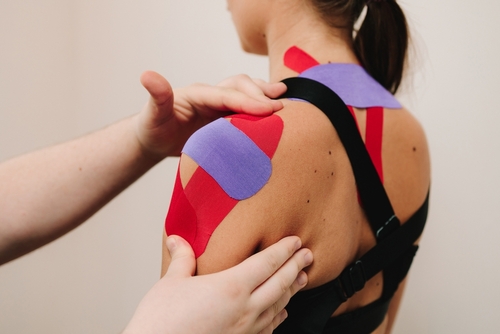
was that the k tape group received three strips of K-tape to the affected shoulder and was
instructed to leave the tape on for 72 hours or until the next session.
Bringing it Home:
Both groups benefited from the shoulder rehabilitation program, demonstrating decreased
shoulder pain and increased function; however, greater benefits were observed in the KT group.
At 14 days postintervention, the KT group showed significantly reduced pain compared with the
control group. Additionally, the KT group gained more shoulder flexion and external rotation
ROM. By day 14, the KT group gained an average of 11.8 degrees of shoulder flexion ROM and
6.98 degrees of shoulder external rotation, both greater than those of the control group. No
significant differences were observed between groups for shoulder abduction and internal
rotation. The KT group experienced significantly improved pain immediately after KT application compared with the control group. It is presumed that KT may improve short-term
pain reduction when using the Visual Analog Scale. The study results indicate that KT may
accelerate ROM improvements in patients with RCRSP.
Rating: 4/5
This study included a rigorous methodology section and accurately used statistical analyses to
interpret results. Of note, 73% of participants were male, which may limit generalizability.
Additionally, the follow-up period was short, limiting the ability to examine the differences in
long-term outcomes. In the context of hand therapy practice, KT may be valuable to trial for
patients with RCRSP for pain reduction as well as increased function and ROM.
2 Comments
Leave a Comment
More To Read
Does Obesity or Smoking change the outcomes for Distal Radius Fractures
Hall, Matthew J., Ostergaard, P., Dowlatshahi, A., Harper, C., Earp, B. Rozental, T. (2019). The Impact of Obesity and Smoking on Outcomes After Volar Plate Fixation of Distal Radius Fractures. The Journal of Hand Surgery. In Press, Corrected Proof, Available online 31 October 2019. Doi: https://doi.org/10.1016/j.jhsa.2019.08.017 The Skinny- Distal radius fractures are one of the…

Ways to Improve HEP Compliance in Hand Therapy
Ways to Improve HEP Compliance in Hand Therapy By: Dalton Busch One of the most important ways we see our patient’s progress is by assuring they are compliant with their prescribed home exercise program (HEP). Our patients are always encouraged to adhere to their prescribed program but compliance is easier said than done. Reminding patients…

Dart-throwing Angle in Hand Therapy for Scapholunate (SL) Ligament Injuries.
Does Object Height Affect the Dart Throwing Motion Angle During Seated Activities of Daily Living? Cohen, Y., Portnoy, S., Levanon, Y., Friedman, J. (2020). Does object height affect the dart throwers motion angle during seated activities of daily living. Journal of Motor Behavior, (52) 4. Article Review By: Rita Steffes The Skinny: Dart Throwers Motion…

What? I just received an order for suture removal…
How many of us have practiced suture removal in occupational or physical therapy school?? NOT I!! Often, hand surgeons will ask the therapist to remove sutures and sometimes the order will even say “remove sutures when ready” SO NOW WHAT? How to remove continuous sutures? First, we can cover the basics of sutures! There are…

Sign-up to Get Updates Straight to Your Inbox!
Sign up with us and we will send you regular blog posts on everything hand therapy, notices every time we upload new videos and tutorials, along with handout, protocols, and other useful information.
Great review, just the information I was looking for!
Thank you! We are glad it was helpful