

Conservative Therapy for OA in the Fingers: A Literature Review
Filed under Treatments
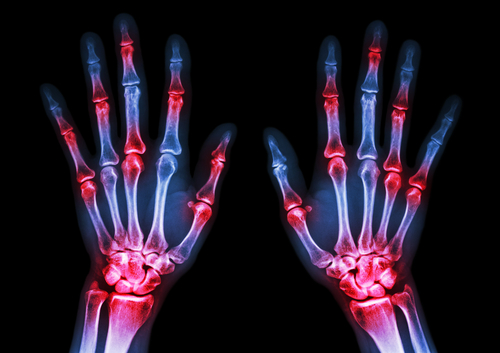
Beasley, J., Ward, L., Knipper-Fisher, K., Hughes, K., Lunsford, D., & Leiras, C. (2018). Conservative therapeutic interventions for osteoarthritic finger joints: A systematic review. Journal of Hand Therapy, 32. 153-164.
The Skinny – The article reviews the evidence on the effectiveness of conservative treatment for those who experience osteoarthritis in fingers and in their finger joints (osteoarthritis treatment hands).
In the Weeds– Eighteen studies met the inclusion criteria. Interventions reported in the literature review included active range of motion, gentle resistive exercises, joint protection strategies, electromagnetic therapy, paraffin wax, balneotherapy, as well as DIP orthoses.
The results from the review yielded that there is high quality evidence supporting the use of electromagnetic therapy combined with hand exercises to decrease pain and increase overall function. There is moderate to high evidence for the use and wear of a DIP orthosis to decrease pain in the finger joint. Finally, it was reported that there was moderate evidence to support resistive exercises to improve overall grip strength and decrease pain for individual experiencing osteoarthritis in their hands.
Bringing it home – The authors concluded there are a variety of conservative treatments that may be utilized for those experiencing pain and stiffness from hand osteoarthritis (oa hand). Interventions supported are electromagnetic therapy with thera-ex, use of a dip orthosis for painful joints and gentle resistive hand exercises. All should be performed within a pain free range.
Overall, the article is well written and easy to follow. It was difficult to analyze studies due to lack of homogeneity among the studies. The article provides evidence as to what conservative intervention are supported in the literature as well as insight into additional options for therapists.
More To Read

Simple but Effective Ways Hand Therapists Address Psychosocial Impacts of Upper Extremity Injuries
Although psychosocial factors are often not formally assessed during an evaluation in those with upper extremity injuries, the therapist often informally assesses these during and after treatment sessions. Sustaining an upper extremity injury can be a physically and emotionally challenging experience. Beyond the physical pain and limitations, these injuries can profoundly impact an individual’s psychosocial…

Prevention and Management of Upper Extremity injuries in Modern Mass Production
Injuries and Upper Extremty Pitts, G., Custer, M., Foister, R. D., & Uhl, T. (2021). The hand therapist’s role in the preventionand management of upper extremity injuries in the modern mass production industrial setting.Journal of Hand Therapy, 34(2), 237–249. https://doi.org/10.1016/j.jht.2021.04.019 By: Kaylen Kallander The Skinny: This study included four case studies to determine the impact…
Scapholunate Wrist Injuries in Hand Therapy
Scapholunate Wrist Injuries in Hand Therapy In outpatient hand therapy, we get a variety of referrals ranging from post-operative patients to those looking to avoid or prolong surgery. These referrals come from a variety of sources ranging from primary care doctors to experienced hand surgeons. The therapy orders can be vague to very specific. …
A Better De Quervain’s Tenosynovitis Test
J. F. Goubau, L. Goubau, A. Van Tongel, P. Van Hoonacker, D. Kerckhove, B. Berghs (2013).The wrist hyperflexion and abduction of the thumb (WHAT) test: a more specific and sensitive test to diagnose de Quervain tenosynovitis than the Eichhoff’s Test. J Hand Surg Eur Vol. 2014 Mar; 39(3): 286–292. Published online 2013 Jan 22. doi:…

Sign-up to Get Updates Straight to Your Inbox!
Sign up with us and we will send you regular blog posts on everything hand therapy, notices every time we upload new videos and tutorials, along with handout, protocols, and other useful information.