

Piacenza A, Vittonetto D, Rossello MI, Testa M. Arthrodesis Versus Arthroplasty in Thumb Carpometacarpal Osteoarthritis: Impact on Maximal Voluntary Force, Endurance, and Accuracy of Pinch. J Hand Surg Am. 2021 May 24:S0363-5023(21)00199-4. doi: 10.1016/j.jhsa.2021.03.023. Epub ahead of print. PMID: 34045112.
The Skinny:
This was a retrospective study based on a convenience sample of individuals who had thumb surgery for 1stcarpal metacarpal (CMC) osteoarthritis (OA – thumb CMC arthroplasty) between 2011 and 2018.
These researchers set out to compare post-treatment strength recovery of individuals who had either had arthrodesis or suspension arthroplasty surgeries to address their OA.
Thumb Arthrodesis and suspension arthroplasty are the two most common surgical approaches for this diagnosis, but it is undetermined whether one is more beneficial than the other for long-term outcomes.
The Arthrodesis: Articular surfaces were removed using a saw, and the joint is fused into a functional position with a memory staple.
The Thumb Suspension Arthroplasty: A trapeziectomy (removal of trapezium) was performed through a dorsal incision in the thumb, and then APL was sutured to FCR
In the Weeds:
A total of 37-subjects between the ages of 40 and 70-years of age (and their CMC arthroplasty reviews) were included in this study. Data was collected after one year preceding thumb surgery of either arthrodesis or suspension arthroplasty. The same surgeon made surgical decisions and procedures for all individuals.
Exclusion criteria: Individuals were excluded if they had concurrent wrist/hand pathologies such as carpal tunnel, de Quervain’s, gout, rheumatoid arthritis, scleroderma, and/or CRPS. Individuals were also excluded if they’d had an ‘acute inflammatory state’ in the CMC joint the week before the assessment.
Of the initial 227 individuals considered for this study, only 37 ended up participating.
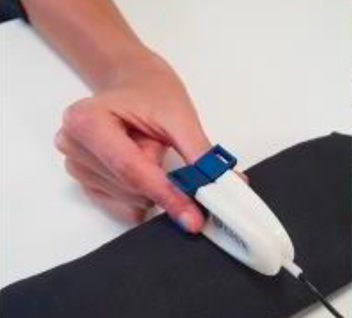
All measurements were taken using a haptic device that provided visual feedback based on force.
Maximal voluntary contraction (MVC) was measured by having individuals pinch the device as hard as they could, using a pulp-to-pulp pinch, two times.
The dynamic force was measured with 10-repetitions of ‘pinching’ with a target of 70% accuracy. Individuals were tasked with administering different amounts of force to ‘hit’ the targets provided using the digital device.
Endurance was measured as a sustained 10-second pinch with a consistent target of 30% strength.
Precision was also measured using the mean distance and offset error from each target. And standard deviations were used to determine strength steadiness.
It should be noted that the arthrodesis group included: a lower percentage of dominant hands (40% vs. 50%), a longer time interval since their surgeries, and more males than the suspension arthroplasty groups (36.4% vs. 20%).
Among the arthrodesis group, the MVC was significantly higher. However, there were no significant differences in endurance or precision between groups.
With that being said, the standard deviations were more consistent for the arthrodesis group, and the arthroplasty group had a more significant fatigue trend based on the dynamic force measurement.
Previous studies haven’t found significant differences between pulp-to-pulp pinch strength preceding arthroplasty vs. arthrodesis. However, this study was unique in that it used a visual feedback device rather than a dynamometer, and only tip-to-tip pinch results were measured.
Bring it Home:
This study concludes that arthrodesis surgery may lead to an increased MVC in terms of strength recovery. However, in this study, the arthrodesis group also included 10% more males, which may have slightly skewed those results. These researchers also stake the claim that based on standard deviations alone, the arthroplasty group may have more post-op ‘strength steadiness.’ Also, the arthroplasty group had a higher fatigue trend.
Also: Less than 20% of the initial eligible participants were included in this study, which is not a great statistic. It is understood that researchers would exclude other diagnoses of the hand/wrist. But was it best to exclude those who had swelling or pain in their thumbs the week prior? It seems as though those results may have been beneficial for the research.
Also, there are no norms set for tip-to-tip pinch, which meant that measures couldn’t be compared to the non-affected population. Furthermore, since OA is typically bilateral in nature, it was not feasible to compare the ‘affected’ and ‘non-affected’ hands of each participant.
Rating: 3/5 This study shows good implications for arthrodesis over arthroplasty. But with such a small sample size and no consistent differences for most measures, this study does not necessarily answer the question that it set out to address. More research is necessary to determine the most effective surgical technique for 1st CMC joint arthritis.
More To Read
Orthotic Options for Hand Burns
By: Sophia Grimm Hand burns can be very challenging to treat, and successful rehabilitation begins early after acute injury. Following a burn injury, scar contractures are the primary reason for the deformity of the hand. Therefore, proper orthotic intervention is key to preventing joint and ligament contractures (Kelly, Berenz & Williams, 2019). Splinting goals following…
What is a Slap Tear? Superior Labrum Anterior to Posterior Tear
What is a SLAP injury?A Superior Labral, Anterior and Posterior (SLAP) lesion is an injury effecting the superiorportion of the glenoid labrum where the long head of the biceps tendon is anchored (Levasseur etal., 2021). The tearing commonly occurs posteriorly and extends anteriorly at the mid-glenoidnotch which can be examined through shoulder arthroscopy (Kim et…
Effectiveness of Conservative Therapy and Splinting for 1st CMC OA
Tsehaie, J., Sprekraijse, K., Wouters, R., Slijper, H., Feitz, R., Hovious, S., & Selles, R. (2018). Outcome of a Hand Orthosis and Hand Therapy for Carpometacarpal Osteoarthritis in Daily Practice: A Prospective Cohort Study. American Society for Surgery of the Hand, 1-11. The skinny: Non-surgical approaches (hand therapy & orthotics) are typically the go-to for…
How to Use Translation for Improving Fine Motor Skills after a Hand Injury:
I’m always looking for new therapy ideas. I want to keep my patients interested and engaged in therapy. I also want to keep things functional and task oriented. So much of what we do with our hands is about fine motor coordination and dexterity, and that is so hard to duplicate in a clinic setting.…

Sign-up to Get Updates Straight to Your Inbox!
Sign up with us and we will send you regular blog posts on everything hand therapy, notices every time we upload new videos and tutorials, along with handout, protocols, and other useful information.