

Title: Understanding De Quervain’s Pathology: A Comprehensive Exploration of Special Tests
Filed under Evaluation
Understanding De Quervain’s Pathology: A Comprehensive Exploration of Special Tests
By: Miranda Materi
De Quervain’s and Special Tests
De Quervain’s tenosynovitis is a condition characterized by inflammation of the tendons on the thumb side of the wrist, causing pain and discomfort. These tendons include Abductor Pollicis Longus (APL) and Extensor Pollicis Brevis as they pass through the first dorsal compartment. The various special tests play a crucial role in identifying and confirming this pathology. In this blog post, we will cover three specific tests: Finkelstein’s, Eichhoff’s, and the Wrist Hyperflexion and Abduction Test (WHAT). We will also explore their significance in diagnosing De Quervain’s tenosynovitis.

Finkelstein’s Test: Unraveling the Classic Maneuver
Finkelstein’s test is a well-known and widely used diagnostic maneuver for assessing De Quervain’s tenosynovitis. During this test, the patient’s wrist is placed on the edge of a table, and they are asked to actively ulnarly deviate the wrist before the examiner grasps the patient’s thumb, passively flexing it into the palm. A positive finding includes pain along the radial side of the wrist, particularly over the first dorsal compartment, indicating of inflammation in the abductor pollicis longus and extensor pollicis brevis tendons. (Wu, Rajpura, & Sandher, 2018).
Eichhoff’s Test: Clarifying the Confusion
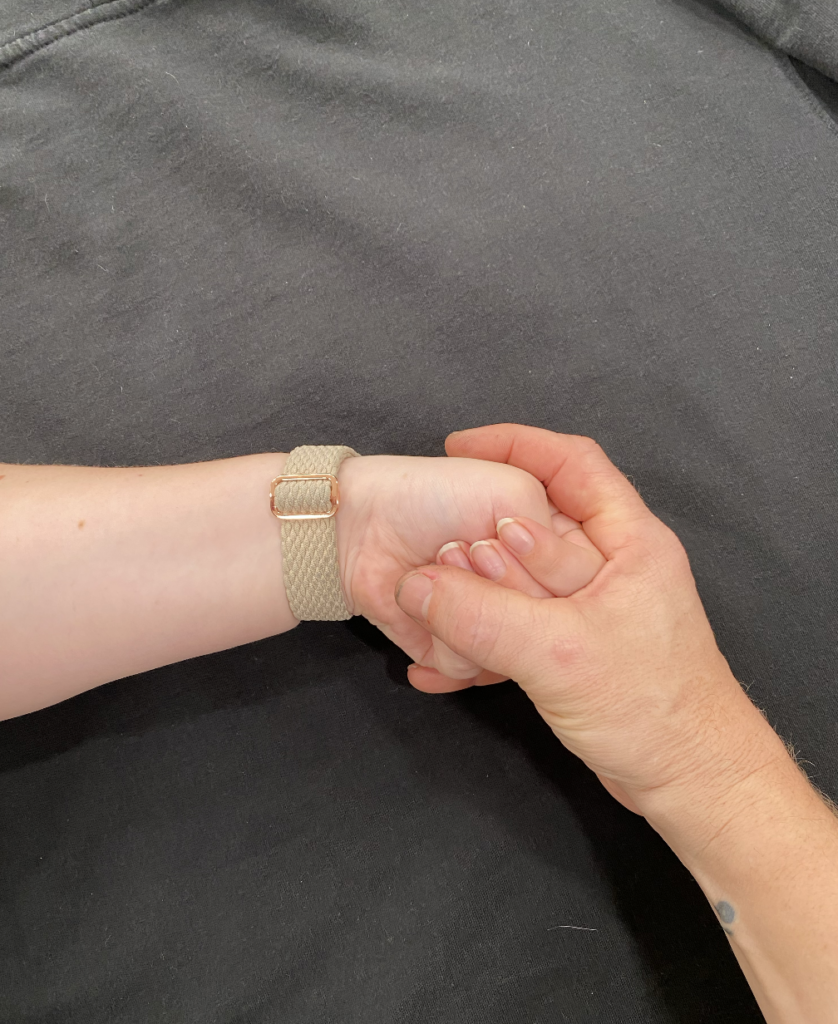
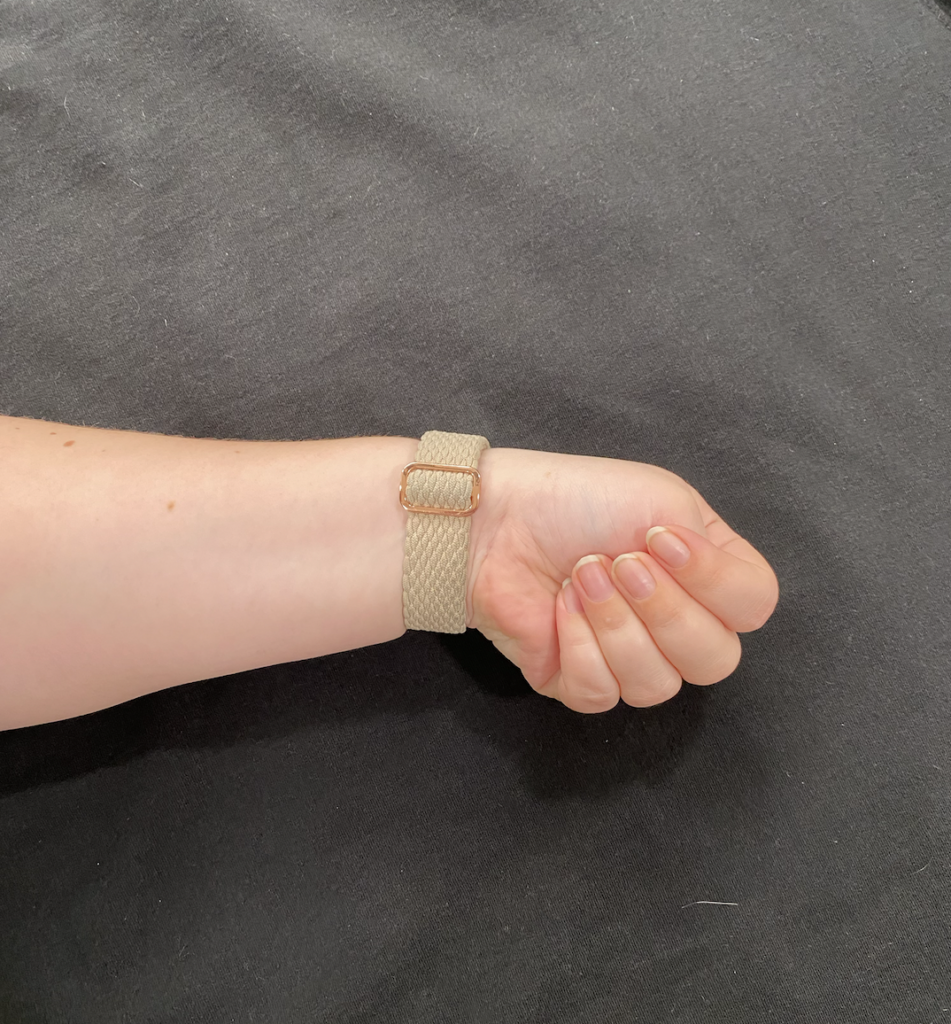
Eichhoff’s test, often confused with Finkelstein’s, involves a different maneuver. In this test, the participant is instructed to place the thumb within the hand and clench tightly with the other fingers. The examiner can palpate the abductor pollicis longus and extensor pollicis brevis tendons over the lateral radius, feeling for moving nodularity, tendon rub, or popping directly over the tendon. (Wu, Rajpura, & Sandher, 2018).
Over the years, a misinterpretation has occurred between these two tests, with Eichhoff’s being confused with Finkelstein’s. Hand therapists need to differentiate between these maneuvers for accurate diagnosis and appropriate treatment.
The WHAT Test: A Novel Approach
To compare Eichhoff’s test with a new diagnostic tool, a prospective study was conducted over three years involving a cohort of 100 patients (88 women, 12 men) experiencing spontaneous pain over the radial side of the styloid of the radius (de Quervain’s tendinopathy). The Wrist Hyperflexion and Abduction of the Thumb (WHAT) test was introduced.
The Wrist Hyperflexion and Abduction of the Thumb (WHAT) test presents several advantages over traditional tests like Eichhoff’s and Finkelstein’s in the diagnosis of De Quervain’s tenosynovitis. The WHAT test combines hyperflexion and abduction of the wrist. This unique combination aims to reproduce symptoms more effectively by stressing the tendons involved in De Quervain’s pathology, providing a broader and potentially more accurate assessment. (Goubau et al., 2014).

Additionally, the WHAT test may offer improved sensitivity and specificity, allowing for a more reliable diagnosis. By incorporating both hyperflexion and abduction, it comprehensively evaluates the involvement of the abductor pollicis longus and extensor pollicis brevis tendons, enhancing the clinician’s ability to identify subtle abnormalities. As hand therapy and hand surgery literature evolves, the WHAT test represents a progressive step in refining diagnostic approaches for De Quervain’s tenosynovitis, offering a test that may contribute to enhanced diagnostic accuracy and patient care.
In conclusion, understanding the nuances of Finkelstein’s, Eichhoff’s, and the WHAT is essential for accurate diagnosis and effective management of De Quervain’s tenosynovitis.
References:
Goubau, J. F., Goubau, L., Van Tongel, A., Van Hoonacker, P., Kerckhove, D., & Berghs, B. (2014). The wrist hyperflexion and abduction of the thumb (WHAT) test: a more specific and sensitive test to diagnose de Quervain tenosynovitis than the Eichhoff’s Test. The Journal of hand surgery, European volume, 39(3), 286–292. https://doi.org/10.1177/1753193412475043
Wu, F., Rajpura, A., & Sandher, D. (2018). Finkelstein’s Test Is Superior to Eichhoff’s Test in the Investigation of de Quervain’s Disease. Journal of hand and microsurgery, 10(2), 116–118. https://doi.org/10.1055/s-0038-1626690
2 Comments
Leave a Comment
More To Read
Sensory Kit for Hypersensitivity
Written by Melissa Miller Introduction After injury or surgery, nerves in the skin and surrounding the injured area can become overly sensitive. This can cause pain or an unpleasant sensation by stimuli that would not typically cause discomfort. For example, a light touch from a shirt or a certain material can feel like needles to…
Handlebar Palsy also known as Ulnar Nerve Compression
Handlebar Palsy also known as Ulnar Nerve Compression Handlebar palsy, also known as ulnar nerve compression, is a condition commonly experienced by cyclists due to prolonged pressure on the ulnar nerve at the wrist in an area called Guyon’s Canal. This pressure can occur from putting pressure on the handlebars or gripping the handlebars tightly. …
Upper extremity weight-bearing tolerance
Barlow, S.J., Scholtz, J. & Medeiros (2020). Wrist weight-bearing tolerance in healthy adults. Journal of Hand Therapy, xxx currently in press. The Skinny Wrist pain and instability are common occurrences and can occur with acute or chronic injuries. This leads to significant dysfunction, including the inability to tolerate axial loading through the upper extremity. There is…
Graded Motor Imagery in Hand Therapy
The 3 Stages of Graded Motor Imagery We’ve all heard of mirror box therapy, but do you know the details of how it works? There’s actually 3 stages involved that exercise the brain and take advantage of its plasticity. There is a great deal of evidence supporting these three stages and you can use them…

Sign-up to Get Updates Straight to Your Inbox!
Sign up with us and we will send you regular blog posts on everything hand therapy, notices every time we upload new videos and tutorials, along with handout, protocols, and other useful information.
Thank you! excellent and clear and with references too!
Thank you! We are happy to share.