

Which orthosis design is better for zone 5-6 extensor tendon injuries, a relative motion orthosis compared to a dynamic extension orthosis?
Filed under Reviews
M. Buhler, ˝ D. Gwynne-Jones, M. Chin et al., (2023) Are the outcomes of relative motion extension orthoses noninferior and cost-effective compared with dynamic extension orthoses for management of zones V-VI finger extensor tendon repairs: A randomizedcontrolledtrialJournalofHandTherapy.
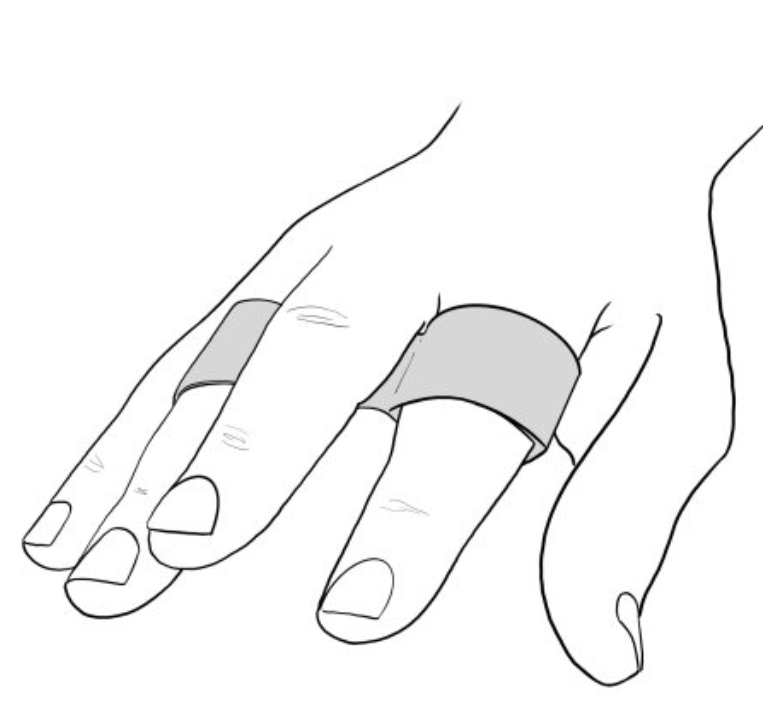
The Skinny: The aim of this study was to compare the data for two different types of orthoses for treating a zone 5-6 extensor tendon injury. Type one was a relative motion orthosis (RMO) plus, meaning the utilization of an RMO and a wrist support together. The second time was a dynamic wrist hand finger orthosis. Participant in both groups were fitted with a nighttime extension orthosis
In the Weeds: There were a total of 37 participants in the study with a mean age of 39 years old with an extensor tendon repair in zone five or six. The study design was a parallel group non-inferiority randomized controlled trial design. Non-inferiority design is used when an alternate intervention is not any worse than the current established treatment.
Outcome measures included primary and secondary outcomes. The primary outcome measure was the total active range of motion (TAM), and the secondary outcomes included patient satisfaction, Quickdash and quality of life. These were measured at 6 and 12 weeks post-operative. Grip strength was only assessed at 12 weeks.
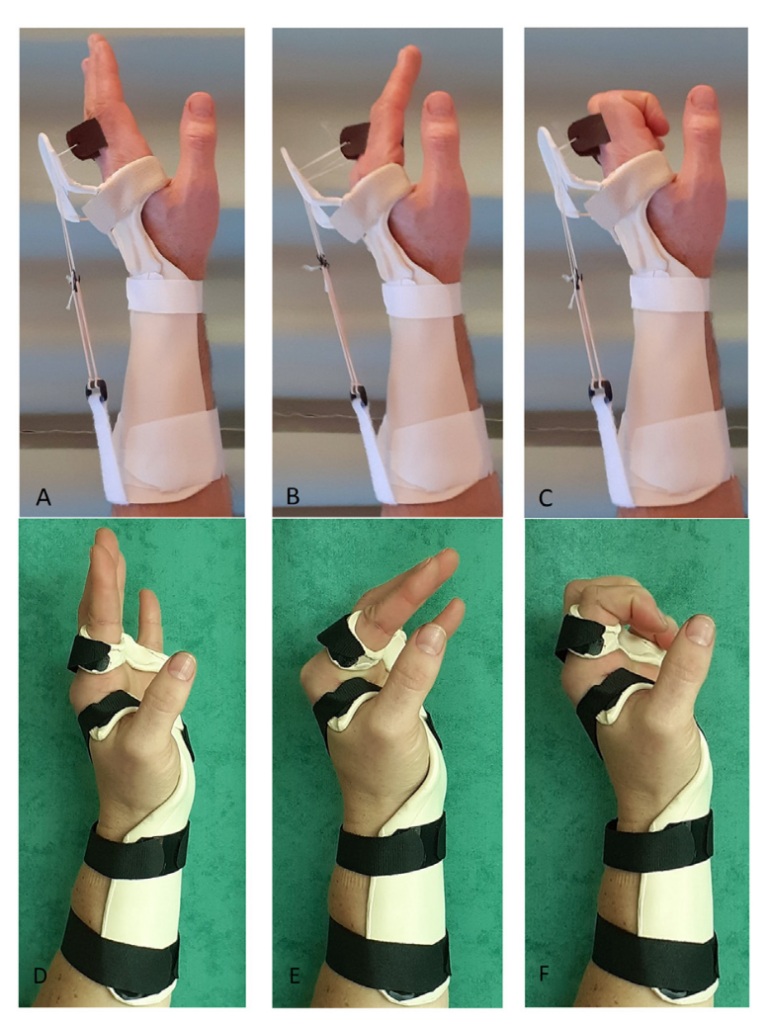
Image from article M. Bu ̋hler, D. Gwynne-Jones, M. Chin et al./Journal of Hand Therapy. Image A, B, and C depicts the dynamic orthosis group & image D, E, and F depicts the RMO plus group
Brining it Home:
There were no statistical differences in total active range of motion, orthotic or outcome satisfaction. Patient in the RMO plus group were more compliant in wearing the RMO plus compared to those wearing the dynamic orthosis. On average participants returned to work in both groups at 7 weeks post-operative. During the study there were two tendon ruptures in the RMO plus orthosis group compared to one in the dynamic orthosis group.
RMO plus management of extensor tendon injuries was determined to be non inferior to the dynamic orthosis group in terms of all outcome measures.
Rating : 4/5
Limitations to this study include the small sample size as well as the fact that all study participants were males showing a lack of generalizability. However even with the limitations of the study, it was shown that each patient group had equal findings and both types of orthotic designs are safe to use with zone 5 and 6 extensor tendons.
More To Read

Cyclist Injuries: Avoiding Hand Injuries and Treatment Strategies
RAPID REVIEW Chiaramonte, R., Pavone, P., Musumeci, G., Di Rosa, M., & Vecchio, M. (2022). Preventive strategies, exercises, and rehabilitation of hand neuropathy in cyclists: A systematic review. Journal of Hand Therapy, 35, 164-173. The Skinny: The study was a systematic review done to get clarification on the diagnostic process for cyclist injury specifically for…

Dorsal Wrist Pain?
Incorporating Emerging Evidence into Clinical Practice for Patients Experiencing Dorsal Wrist Pain During Weight-Bearing Activities By: Brittany Day Supporting Evidence A randomized control study recently published in the Journal of Hand Therapy found rigid carpal stabilizing taping (CST) to significantly increase passive range of motion, active range of motion, and decrease pain in patients experiencing…
Is therapy needed after a distal radius fracture?
Coughlin T, Norrish AR, Scammell BE, Matthews PA, Nightingale J, Ollivere BJ. Comparison of rehabilitation interventions in nonoperatively treated distal radius fractures: a randomized controlled trial of effectiveness. Bone Joint J. 2021Jun;103-B(6):1033-1039. doi: 10.1302/0301-620X.103B.BJJ-2020-2026.R1.Epub 2021 Apr 30. PMID: 33926211. The Skinny: Individuals with distal radius fractures are very common in the hand therapy world. This…

Multiple Avenues of Pin Site Care in Hand Therapy
By: Megan Prather The prevalence of external fixation with pins in the upper extremity setting and the high rates of pin site infection make identifying a protocol for pin site care important for therapists. Across literature, there are many different pin site care protocols varying in frequency, solutions, materials, and manual cleaning. Despite many studies…

Sign-up to Get Updates Straight to Your Inbox!
Sign up with us and we will send you regular blog posts on everything hand therapy, notices every time we upload new videos and tutorials, along with handout, protocols, and other useful information.